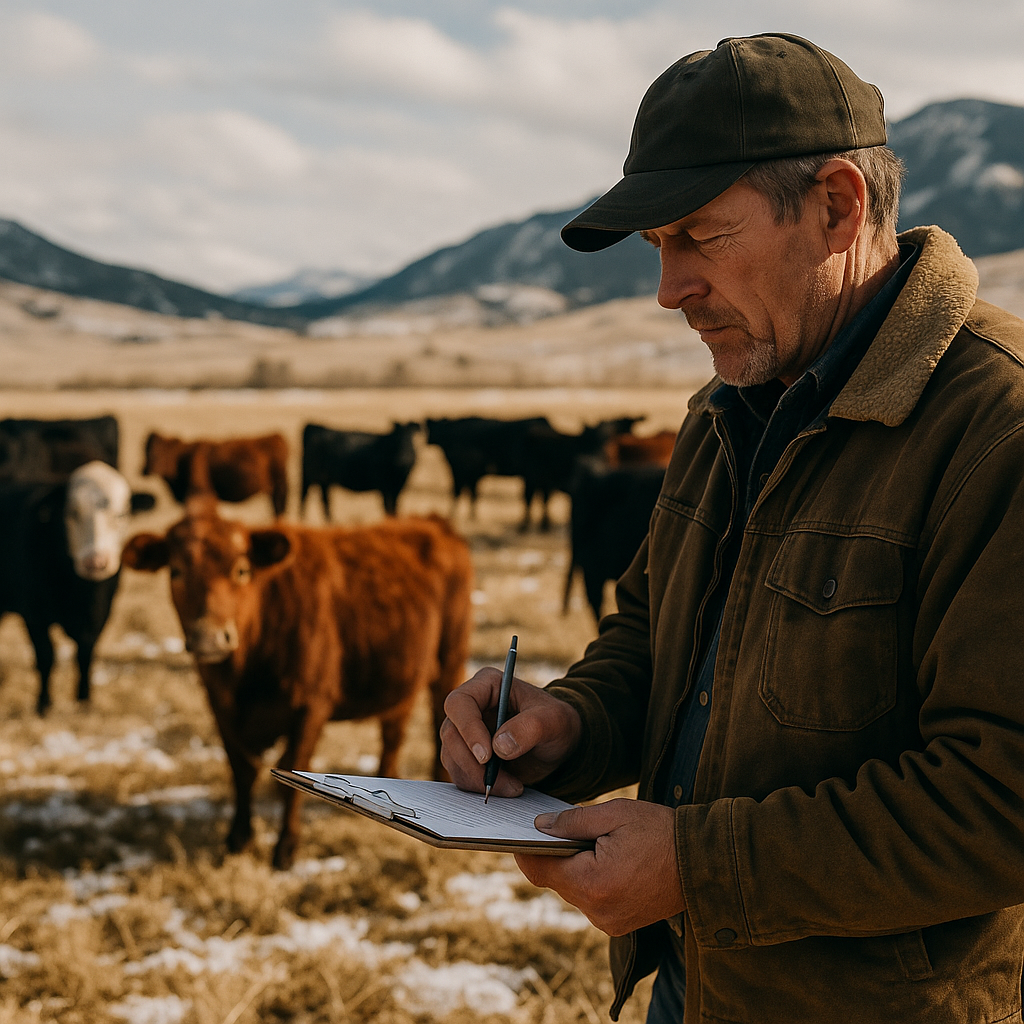
March 1 livestock reporting deadline: what Montana producers need to have ready
Across Montana, late winter is when paperwork meets the realities of feeding cows, calving, and keeping equipment running. Reports indicate that one of the key seasonal to-dos for many livestock owners is making sure annual livestock numbers are reported and any required per-capita fees are paid by March 1. If you run cattle, sheep, goats, horses, or other classes of livestock, it’s worth taking a few minutes now to confirm what you need to file, where to file it, and what records you’ll want in front of you before you start.
Quick takeaways
- March 1 is widely cited as the due date for annual livestock reporting and per-capita fee payments in Montana.
- Requirements can vary by livestock type and your situation; confirm details with the Montana Department of Agriculture or your local contacts.
- Have your best headcount by class of livestock ready, plus any supporting notes (sales, deaths, purchases, or pasture moves).
- Don’t wait until the last week—mail delays and office backlogs can turn a simple task into a headache.
What’s due March 1 (and why it matters)
Montana’s livestock industry is supported by a mix of state programs, market oversight, and animal health efforts. Annual livestock reporting and per-capita fees are part of that system. In plain terms, the state uses reported headcounts and fee collections to help fund and administer livestock-related services.
Because program details can change year to year, and because not every livestock owner fits the same mold, treat March 1 as a firm planning date and verify the specifics that apply to you. If you’re uncertain, start with the Montana Department of Agriculture and your county-level resources.
Who should pay attention
If you own livestock in Montana—even if you don’t consider yourself a large operator—it’s smart to confirm whether you’re expected to report and pay. That includes:
- Full-time ranches with breeding herds
- Small-acreage producers with a handful of animals
- 4-H/FFA families (depending on ownership and how animals are held)
- Operations that custom graze, background, or seasonally hold livestock
One common pitfall is assuming the requirement only applies to “big outfits.” Another is assuming sale barn transactions or brand inspections automatically cover everything. They help document movement and ownership changes, but they don’t necessarily replace annual reporting requirements.
Getting your numbers right: practical record tips
Most producers don’t need perfection down to the last head on every day of the year—but you do want a defensible, reasonable count by class of livestock. Before you sit down to fill anything out, gather:
- Current inventory by class (for example: cows, bulls, replacement heifers, calves; ewes/rams/lambs; etc.)
- Year-to-date changes: sales, purchases, deaths, culls
- Pasture notes: if animals are split across places or moved seasonally
- Business structure info: if ownership is under an LLC, partnership, or family arrangement
If you’re running multiple groups—say, a home place herd plus cattle at a leased place—write the counts down by location first, then total them. That approach reduces the “double count” mistakes that can happen when you’re working from memory.
Fees: what to expect and how to avoid surprises
Per-capita fees are typically set on a per-head basis and can vary by livestock category. Reports indicate the rates are established annually, so the amount you owe can change from year to year.
To avoid surprises:
- Confirm the current rate schedule before you write a check or submit payment.
- Match the fee category to your livestock class (for example, breeding animals versus other classes if the form distinguishes them).
- Keep proof of payment (receipt, confirmation number, or a copy of the check) with your ranch records.
If you’re unsure which category your animals fall into, it’s usually faster to call and ask than to guess and risk a correction later.
How to file: start with the official sources
Because forms, mailing addresses, and payment options can change, the safest approach is to start with official information. The Montana Department of Agriculture is a logical first stop. You can also check with local offices and industry groups that routinely help producers navigate annual requirements.
If you receive a notice in the mail, follow the instructions on that notice. If you didn’t receive anything, don’t assume you’re exempt—some producers move, some notices get missed, and some operations change hands. A quick phone call can save time later.
Common questions Montana producers ask
“I sold most of my cattle last year—do I still need to file?”
Possibly. Reporting requirements often relate to ownership during a specific period or as of a certain date. If your herd size changed, that’s exactly the kind of situation where you’ll want to verify what’s expected.
“What if I’m just getting started with a few head?”
Small herds can still fall under reporting rules. It depends on the program and how the animals are classified. It’s worth confirming rather than assuming.
“Do horses count?”
Some livestock reporting programs include horses, and some focus on other species. Check the current Montana guidance for the year you’re filing.
“What if I’m custom grazing someone else’s cattle?”
Ownership matters. If you don’t own the cattle, you may not be the one responsible for reporting them, but your grazing client might be. Clear communication helps prevent duplicates or omissions.
What this means for Montana
Montana’s livestock economy isn’t just a line item—it’s the backbone of many rural communities, from the Hi-Line to the Yellowstone Valley. When reporting and fee deadlines roll around, it’s easy to view them as paperwork, but they also tie into the systems that support animal health, market integrity, and the broader administration of the livestock sector.
For individual producers, getting this done on time can reduce the risk of late fees, follow-up letters, or administrative snags that always seem to hit at the worst possible moment—right when you’re juggling calving, lambing, winter storms, or spring planting prep.
For the state as a whole, accurate reporting helps decision-makers and industry partners understand livestock numbers and plan resources accordingly. In a year when weather, markets, and input costs can swing fast, having clean, up-to-date information matters.
A simple checklist to knock it out
- Confirm whether you’re required to report and pay this year.
- Pull together your best headcount by livestock class.
- Verify current per-capita fee rates and payment options.
- Submit well ahead of March 1 to account for mail or processing delays.
- File a copy of what you submitted (and proof of payment) with your ranch records.
If you’re already buried in chores, consider setting a 30-minute block on the calendar this week. Most of the frustration around annual reporting comes from trying to do it in a rush.
Inspiration: Northern Ag Network