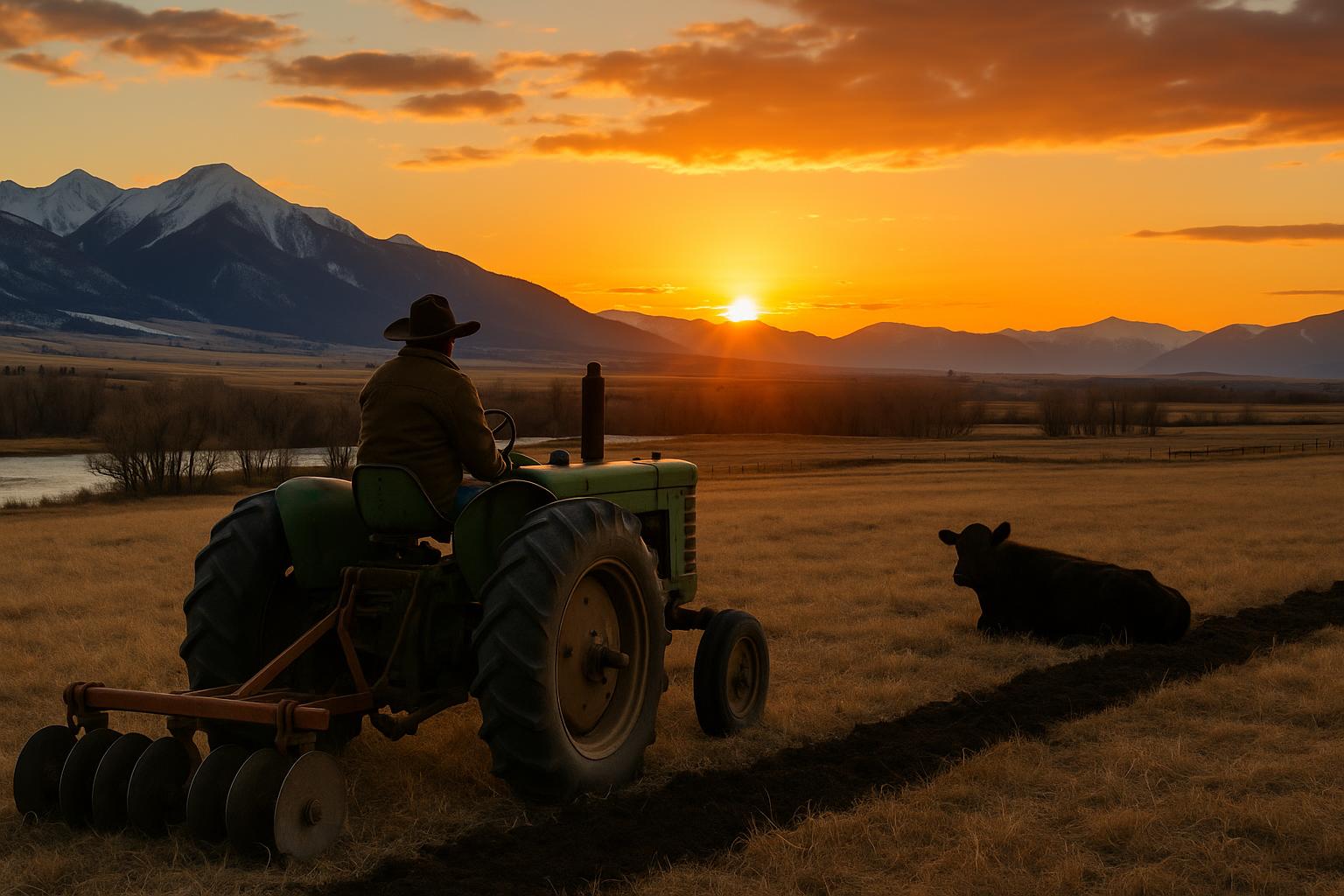
Montana Ag Through the Lens: A Week of Field Work, Calving Checks, and Big-Sky Sunsets
Scroll any feed long enough and you’ll see it: a header rolling off the Crazy Mountains, a windrow laid just right, a stock trailer framed by a red dawn. In Montana, the camera is often riding along in a pickup cupholder, bouncing on the dash of a combine, or tucked into a vest pocket during a late-night calving check.
This week’s theme is simple: the work shows up in the pictures. Not staged, not polished—just the everyday scenes that make the state’s farms and ranches run. Below is a Montana-angled look at the kinds of agricultural images people are sharing right now, why they resonate, and how to capture your own without getting in the way of the job.
What’s showing up in the best Montana ag photos right now
Across the state, the most compelling images tend to have two things in common: honest light and a clear sense of purpose. The “why” is visible—whether it’s putting up feed, checking water, or moving cattle ahead of weather.
- Hay and forage work: Windrows, balers, and stacks—especially when smoke-hazed sunsets or thunderheads add drama.
- Calving and lambing moments: Not just the cute shots, but the quiet ones—ear tags, colostrum bottles, and a tired rancher leaning on a gate.
- Water and irrigation: Headgates, pivots, and ditch checks. In dry years, photos of careful water management tell a bigger story.
- Equipment close-ups: Grease guns, wrenches, worn drawbars, and the “it’s still running” pride of older iron.
- People at work: Gloves, dust, and sweat. The best images often show hands and posture more than faces.
These themes aren’t new, but they matter because they’re recognizable. A good Montana ag photo doesn’t need a perfect backdrop—it needs a real moment.
Why these photos hit home in Montana
Montana’s seasons are a hard editor. You don’t get unlimited second chances when the forecast changes, when a pivot goes down, or when a gate chain snaps at the wrong time. That pressure—paired with big landscapes—creates images that feel both personal and wide-open.
There’s also a community effect. A well-timed post of a first cutting, a branding day, or a bin site at dusk becomes a quick check-in with neighbors across counties. In a state where folks can be spread out by hours of highway, photos turn into a kind of shared coffee shop.
For readers who want a deeper look at Montana agriculture beyond the photo, the MSU Extension site is a reliable place to dig into local research and practical guides that often intersect with what you’re seeing in the field.
Photo ideas worth trying this week (without slowing down the work)
If you’re looking for fresh angles, you don’t need to manufacture anything. Try documenting the parts of the day that usually go unremarked.
- The “start-up” shot: First light over a yard light, thermos on the tailgate, tractor warming up.
- Before-and-after pairs: A pasture before turnout and then the same gate line a week later.
- Details that tell the story: A moisture meter, a vaccination box, a seed tag, a notebook with rainfall totals.
- Weather moving in: A wall of cloud over a field, dust lifting off a road, or snow sneaking down a ridge line.
- Night work: Headlamps, shop lights, and the glow from a pickup’s interior during a late check.
One practical tip: wipe your lens. It’s obvious, but a dusty phone camera turns a sharp scene into a washed-out one in a hurry.
Safety and respect: the unwritten rules of field photography
The internet rewards dramatic angles, but agriculture has real hazards. If you’re taking photos around equipment or livestock, the safest photo is the one you can take without changing how you work.
- Stay clear of moving equipment: Don’t step into a field lane, behind a baler, or near PTO-driven machinery for a shot.
- Mind livestock pressure: If cattle are already tight, a person stepping out with a phone can be the thing that tips them into a wreck.
- Ask before posting people: A neighbor, hired hand, or brand inspector might not want their face online.
- Be careful with location details: Posting a close-up of a gate sign or a recognizable landmark can unintentionally advertise where equipment is parked.
And if you’re photographing on public land adjacent to private operations, remember Montana’s access rules. When in doubt, check the Montana Fish, Wildlife & Parks resources on land access and boundary awareness—especially during busy fall seasons when hunting pressure overlaps with agricultural work.
How to make a farm or ranch photo feel “real” (not staged)
The strongest images usually aren’t the loudest. They’re the ones that show something true without overexplaining it.
- Use the light you’ve got: Early morning and late evening make dust, steam, and breath visible—instant story.
- Include a clue of scale: A person, a pickup, a fence post—anything that helps the viewer understand distance.
- Keep the caption honest: If a field is tough or a day went sideways, you don’t have to sugarcoat it.
- Show the process: A series of three photos (setup, action, result) can tell more than one perfect shot.
It’s also worth remembering that not every good photo needs to be a “highlight.” A muddy boot, a broken shear bolt, or a frayed rope can be a better depiction of ranch life than a postcard sunset.
What this means for Montana
At a time when fewer Montanans are directly involved in production agriculture, the photos shared from fields, pastures, and shops do more than fill a feed—they shape public understanding. A steady stream of real-life images can help bridge the gap between town and country, especially when captions explain the “why” behind what’s happening.
There’s a business angle, too. Good visuals help markets and local brands, whether it’s a seedstock operation, a direct-to-consumer beef program, or a family farm selling hay. Clear, truthful photos build trust—and trust is hard to replace once it’s lost.
But the biggest takeaway may be cultural. Montana agriculture has always relied on neighbors: swapping labor, sharing equipment, checking in during storms, and showing up when something breaks at the worst possible time. Online photos don’t replace that, but they can reinforce it—reminding people they’re part of a working landscape that still depends on each other.
Want your Montana ag shots to stand out? Keep it simple
If you’re trying to earn a second look, don’t chase perfection. Chase clarity. Show what you’re doing, where you are (as specifically as you’re comfortable), and what matters today—moisture, timing, livestock health, or just getting the job done before the weather flips.
And if you’re posting publicly, consider adding a short note that educates without lecturing: what crop stage you’re in, why you’re moving cattle, or what a piece of equipment is doing. Those small explanations can turn a nice picture into a useful one.
Inspiration: www.agdaily.com