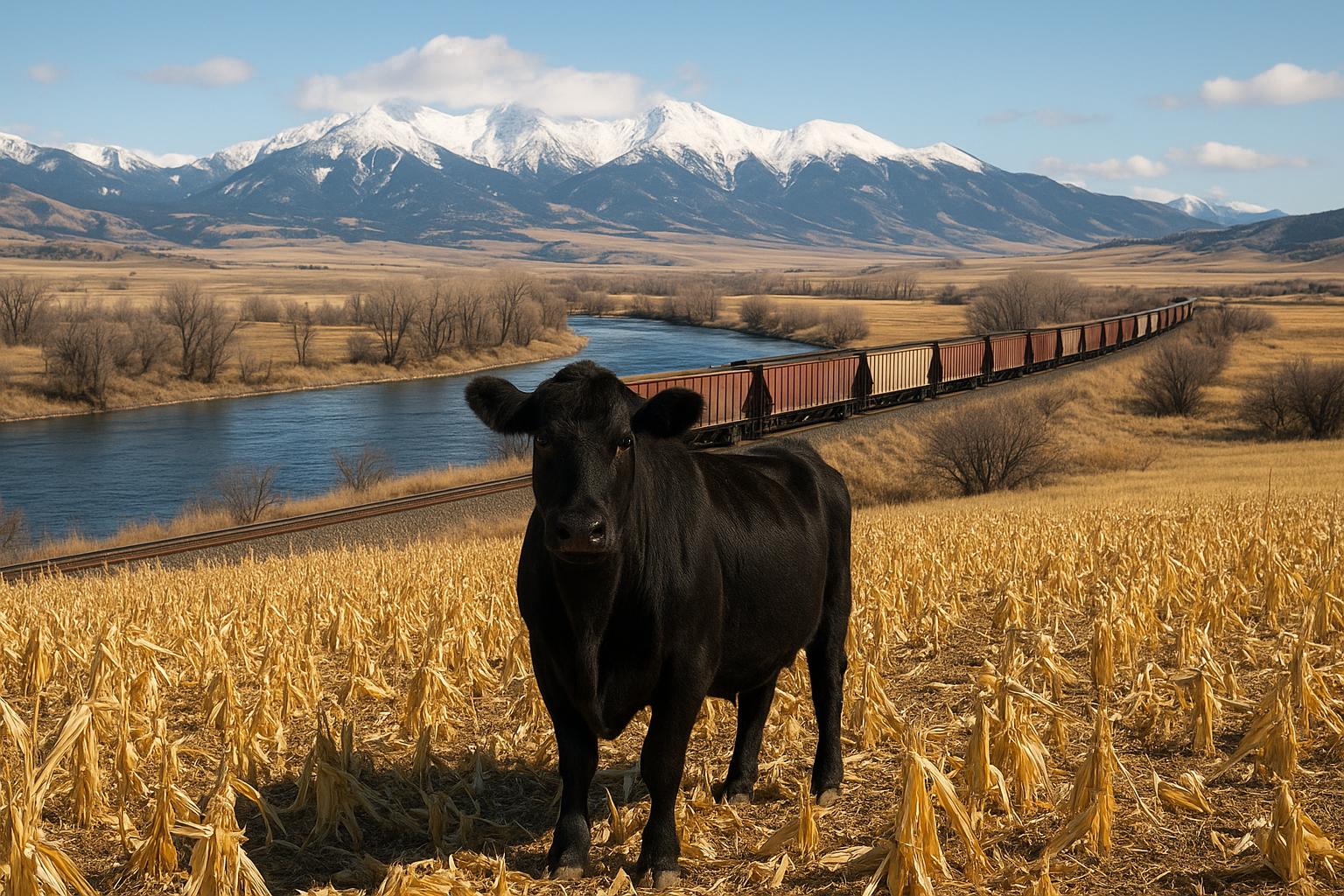
USDA reports fresh corn export sale; Montana feeders and grain growers watch basis and rail
USDA daily export reporting has the market’s attention again after reports indicated a fresh “flash sale” of U.S. corn to an unknown destination. These announcements don’t always move prices by themselves, but they can shape trader sentiment—especially when they show up during key planning windows for the next marketing year.
For Montana agriculture, the immediate question isn’t just whether the sale was big. It’s whether a steady pace of export demand can firm up national corn values, influence feed costs for cow-calf and backgrounding outfits, and ripple into basis bids and freight across the Northern Plains.
What happened
USDA’s Foreign Agricultural Service uses daily “export sales” reports—often called flash sales—when a large purchase meets a reporting threshold. In this case, reports indicate corn was sold for the 2025-26 marketing year to an “unknown” destination, meaning the buyer’s country wasn’t identified in the public release.
A few nuts-and-bolts points that matter for producers:
- Marketing year timing: The 2025-26 marketing year for corn and soybeans begins Sept. 1. Sales can be booked ahead of that date and counted for the upcoming year.
- “Unknown” isn’t unusual: Buyers may be listed as unknown for a variety of reasons. Sometimes the destination is later updated; sometimes it stays unknown.
- It’s a demand signal, not a guarantee: Export sales are commitments, but they can be shipped later, rolled, or in some cases canceled. That’s why the weekly export sales report and actual export inspections also matter.
Why it matters in Montana
Montana isn’t the nation’s largest corn state, but corn prices still reach into nearly every corner of our ag economy. When export demand strengthens, it can buoy futures and influence what Montana producers pay for feed or receive for grain that competes with corn in rations.
Here’s where the ripple effects can show up locally:
- Feed costs for cattle: If corn futures trend higher on sustained export demand, that can lift the price of corn shipped into Montana and support higher prices for energy feeds. For ranchers backgrounding calves in the Yellowstone Valley or finishing cattle near larger feed yards in the region, ration costs are a top-line budget item.
- Substitution with Montana-grown grains: When corn becomes more expensive, buyers often look harder at barley and wheat as alternatives, depending on relative prices and nutrition goals. That can matter for grain growers from the Hi-Line to the Gallatin Valley.
- Basis and freight: Montana is freight-sensitive. Rail performance, fuel costs, and regional demand can widen or tighten basis even when futures move only modestly. Export demand that pulls corn toward ports can change railcar competition and indirectly affect delivered feed prices here.
In short: a single sale doesn’t rewrite the outlook, but it’s one more data point in the demand story. If flash sales become a pattern, they can help put a floor under prices—or at least reduce the odds of a steep slide—while tightening feed margins for livestock producers.
Local angles: what producers may feel in different regions
Hi-Line: Many operations balance small grains, cattle, and purchased feed. If export-driven corn strength lifts competing grains, it could support cash bids for wheat and barley. But it can also raise the cost of imported energy feeds, especially where freight is a bigger slice of the delivered price.
Yellowstone Valley: With irrigated acres and a mix of crops and cattle, the valley often sees more active local feed channels. Watch how ethanol and feed demand in the broader region interacts with rail flows; delivered corn prices can move quickly when logistics tighten.
Gallatin Valley and Bitterroot Valley: For smaller-scale livestock and hay-heavy operations, corn still matters as a benchmark energy feed. When corn climbs, it can shift demand toward higher-quality hay and alternative feeds—sometimes firming hay prices if buyers start stretching roughage.
Flathead Valley: Dairy and diversified livestock producers can be especially sensitive to grain price swings. If corn strengthens while milk prices don’t, margins get pinched, and buyers may shop harder for local feed options.
What This Means for Montana Ranchers and Farmers
Montana producers don’t need to overhaul plans based on one USDA notice, but this kind of export activity is worth filing away—especially ahead of spring and early-summer marketing decisions.
- Cow-calf and backgrounding: If corn demand stays firm into spring, expect less relief on delivered feed costs. That can affect decisions on how long to retain calves, whether to background, and how aggressively to lock in feed needs.
- Hay producers: Stronger grain markets can increase interest in hay as operations rebalance rations. In drought-leaning years, that can tighten supplies quickly. Even in better moisture conditions, watch whether hay buyers get more active if grain prices lift.
- Small grain growers: Export-driven strength in corn can spill into wheat and barley through feed substitution and general market tone. It doesn’t guarantee higher cash bids in Montana, but it can improve the odds—especially if basis stays steady.
- Irrigated operations: If corn values rise, it can change crop budgeting and rotation conversations in places with reliable water, including parts of the Yellowstone and Gallatin valleys. Input costs and water availability still rule the decision, but price signals matter.
Bottom line: export demand is one of the few levers that can quickly tighten the U.S. balance sheet. If it persists, it can support prices for grains and oilseeds, while raising the cost side of the ledger for livestock producers.
What to Watch Next in Montana Agriculture
Producers should watch for confirmation and follow-through, not just headlines. Here are the next checkpoints that matter for Montana:
- Weekly USDA export sales: Flash sales are snapshots. The weekly report shows whether demand is broad-based or just a one-off. Consistent new-crop sales ahead of Sept. 1 can be a stronger signal.
- Export inspections and shipment pace: Sales are commitments; inspections show grain moving. If shipments lag, markets may discount the demand story.
- Basis in the Northern Plains: Track local elevator bids and delivered feed quotes. If futures rise but basis weakens, cash prices may not improve much for growers—while livestock operators could still face higher delivered costs.
- Rail and truck freight: Montana is at the end of long supply lines. Any hiccup in rail service or a jump in freight rates can matter as much as futures.
- Moisture and drought outlook: If dryness expands in parts of the state, hay and pasture conditions can become the bigger price driver than export news. Keep an eye on local snowpack, spring precipitation, and irrigation allocations.
- USDA supply-and-demand updates: The market will weigh export demand against planted acres, yield prospects, and ending stocks. A demand bump matters most when supplies are already tight.
For now, Montana producers should treat the reported sale as a modest but notable demand marker. If more new-crop export business shows up in the weeks ahead, it could firm up grain markets and keep feed costs from easing as much as some buyers hope.
Inspiration: www.farmprogress.com