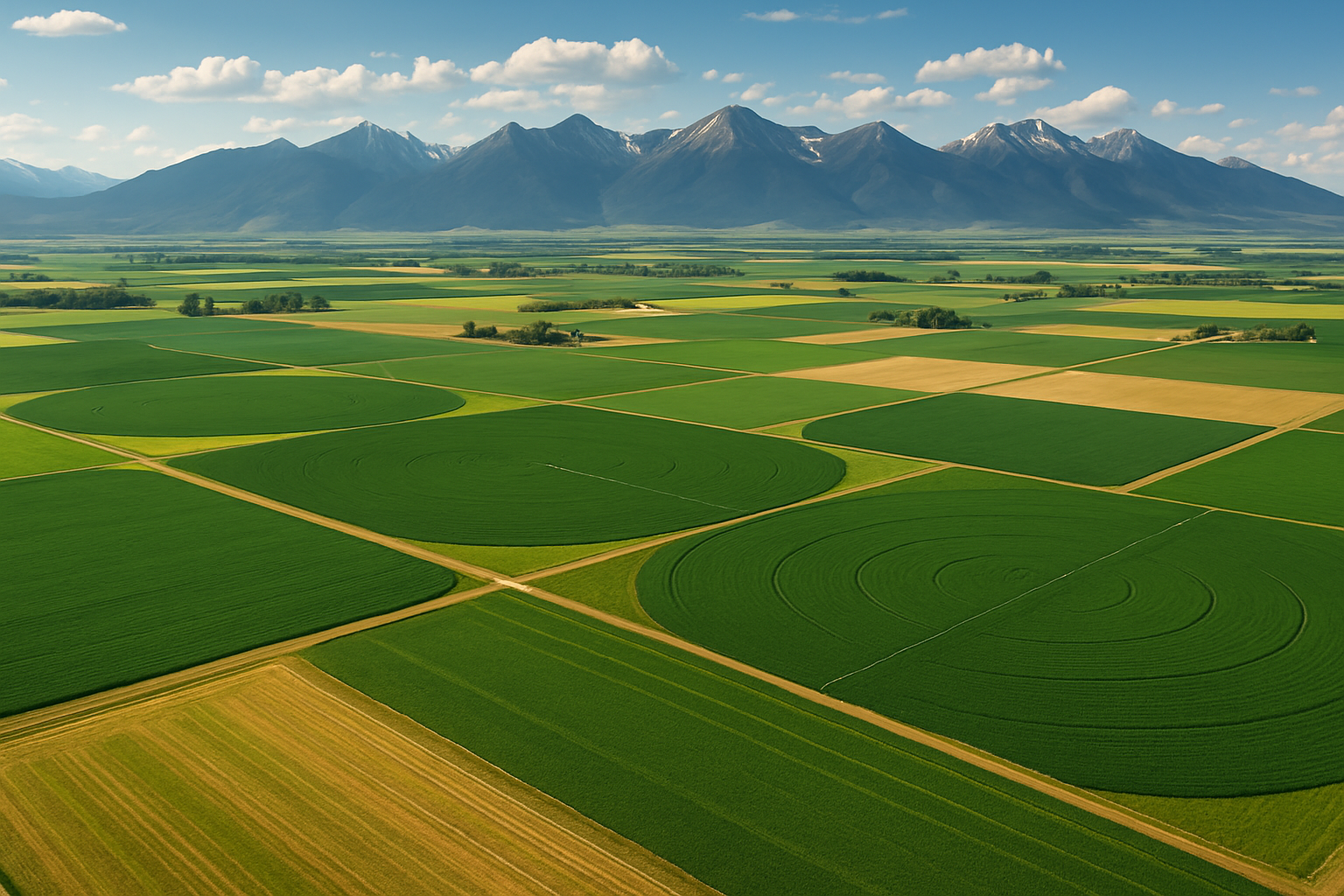
Economic Impact of Irrigated Agriculture in Montana
Irrigated agriculture is not just an agricultural practice; it’s the lifeblood of Montana’s rural economy. With its ability to significantly boost crop yields and sustain farming operations, irrigated agriculture plays a crucial role in the state’s economic landscape.
What’s Happening
Recent data underscores the substantial economic contribution of irrigated agriculture in Montana. According to the Northern Ag Network, this sector adds billions to the state’s economy each year. The practice of irrigating crops such as wheat, barley, and alfalfa allows farmers to overcome the limitations of Montana’s semi-arid climate, which can be unpredictable and challenging for dryland farming.
In Montana, over 2 million acres of farmland are irrigated, primarily utilizing water from the state’s vast network of rivers and streams. This region’s capacity to support irrigation is a critical factor in agricultural productivity and economic stability. The economic ripple effect extends beyond the fields, influencing local agribusinesses, equipment suppliers, and even rural communities dependent on agricultural prosperity.
Why It Matters
The importance of irrigated agriculture extends well beyond the farm gate. It is vital for food security, offering a reliable food supply not just locally but also contributing to national and international markets. This reliability is crucial, particularly in the face of climate change, which threatens to alter rainfall patterns and increase the frequency of droughts.
Moreover, irrigated agriculture in Montana supports thousands of jobs, both directly in farming and indirectly in related sectors such as transportation, processing, and retail. The economic stability provided by this sector helps sustain rural communities, many of which rely heavily on agriculture as a primary source of employment.
The Bigger Picture
Historically, Montana’s agricultural development has been deeply intertwined with irrigation. Large-scale irrigation projects date back to the early 20th century, fueled by federal initiatives such as the Carey Land Act and the Reclamation Act. These projects transformed vast stretches of arid land into productive farmland, laying the foundation for Montana’s agricultural economy.
Today’s irrigation systems are more sophisticated, incorporating advanced technologies like drip and pivot systems, which enhance water efficiency and crop yields. As water scarcity becomes an increasingly pressing issue worldwide, Montana’s approach to irrigation serves as an important model for sustainable agricultural practices.
What to Watch For
Looking ahead, the future of irrigated agriculture in Montana will depend on several factors. Water availability remains a critical concern, with ongoing debates about managing and conserving this precious resource effectively. Technological advancements in irrigation and water management will be pivotal in addressing these challenges, ensuring that Montana’s agriculture remains resilient and sustainable.
Additionally, policy decisions at both state and federal levels will significantly impact the sector. Initiatives to support infrastructure development, research into more efficient irrigation technologies, and strategies to mitigate climate impacts will be key areas to monitor.
As the dynamics of agriculture continue to evolve, stakeholders in Montana’s agricultural sector must remain proactive, adapting to changes and seizing opportunities to enhance the economic and environmental benefits of irrigated farming.
For more insights and detailed information, visit the Northern Ag Network.
Frequently Asked Questions
What is the economic impact of irrigated agriculture in Montana?
Irrigated agriculture significantly boosts Montana’s economy, adding billions annually and supporting rural communities and jobs.
How much farmland is irrigated in Montana?
Montana has over 2 million acres of irrigated farmland, primarily using water from rivers and streams.
Why is irrigation important for Montana’s agriculture?
Irrigation is crucial for overcoming climate challenges, enhancing crop yields, and ensuring economic stability in rural areas.
What are the challenges facing irrigated agriculture in Montana?
Water availability, climate change impacts, and the need for sustainable management practices are significant challenges.
What technological advancements are influencing Montana’s irrigation practices?
Advanced irrigation technologies like drip and pivot systems are enhancing water efficiency and crop productivity.
Source: Northern Ag Network