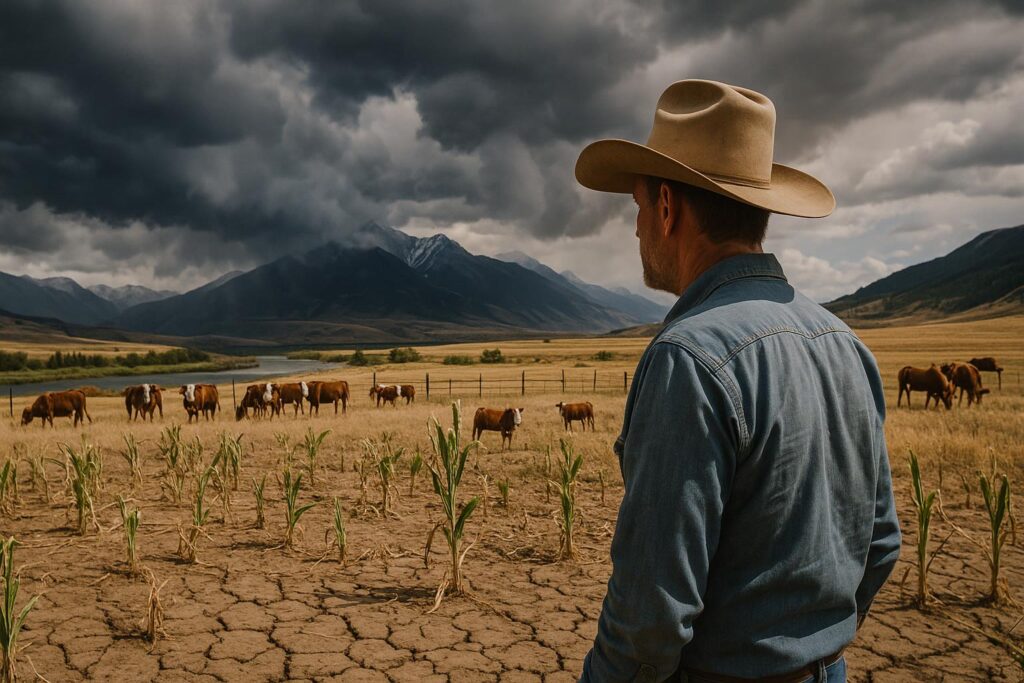
Across Montana, it doesn’t take long for a season to turn. One week you’re watching clouds slide past the Judith Basin with nothing to show for it; the next, a fast-moving storm can shred a barley field or lodge wheat flat enough to make harvest decisions feel like guesswork. Reports from across the Northern Plains indicate drought stress remains widespread in many areas, and hail continues to be a localized but costly wildcard.
If you’re staring at a stressed crop and wondering “Now what?”, the best answers usually start with a calm assessment: what’s actually damaged, what can recover, and what decisions need to be made this week versus later. Below are practical steps Montana growers and mixed operations can use to protect yield potential where possible and salvage value where it’s not.
Start with a clear field assessment
It’s tempting to make a call from the road, but drought and hail both create uneven damage patterns. Walk multiple parts of the field. Take notes. Pull plants. If you have yield maps, compare problem areas to historic trends.
- Timing matters: After hail, damage can look worse than it is for the first few days. Waiting 3–7 days can help you see whether growing points and new leaves are coming back.
- Check growing points: In cereals, split stems to see if the growing point is intact (especially pre-jointing). In broadleaf crops, look for surviving buds and regrowth.
- Look for stand loss vs. leaf loss: Leaf shredding reduces photosynthesis, but stand loss changes yield potential more dramatically.
- Scout for disease: Hail wounds can open the door to fungal problems. If humidity follows the storm, keep an eye on leaf spots and head diseases.
If you’re unsure what you’re seeing, your local county Extension office is often the fastest route to crop-specific guidance and thresholds. Montana State University Extension resources are available at extension.montana.edu.
Drought-stressed crops: focus on protecting what’s left
Drought stress is rarely fixed with a single decision, but you can avoid making it worse. The key is to prioritize inputs that still pencil out and avoid “good money after bad” where yield potential has already slipped.
- Nitrogen decisions: If you haven’t applied all planned nitrogen, consider current moisture and realistic yield potential before adding more. In some situations, extra N without moisture can increase burn risk or simply go unused.
- Weed control: Weeds steal moisture first. Timely control can protect remaining yield and reduce seedbank pressure next year.
- Watch for nitrate issues in forages: Drought-stressed small grains or sorghum-type forages (where used) can accumulate nitrates. Testing before grazing or chopping is a low-cost safety step.
For producers weighing whether to hay, graze, or take a crop to grain, moisture outlook matters—but so does calendar reality. A crop that’s already behind may not catch up even if late rains arrive.
Hail damage: don’t rush the decision, but don’t delay documentation
Hail can look catastrophic, and sometimes it is. But the degree of yield loss depends on crop stage, intensity, and how quickly plants can regrow. While you’re waiting for regrowth to show, there are two things you can do immediately: document and communicate.
- Photograph damage: Take wide shots and close-ups with date stamps if possible. Include several field locations.
- Flag representative areas: Mark spots you’ll revisit for follow-up counts and head/ear development checks.
- Contact your crop insurance agent: If the crop is insured, report the loss promptly and ask what actions could affect eligibility (replanting, grazing, chopping, or destroying the crop).
For a basic overview of the federal crop insurance program and timelines, the USDA Risk Management Agency provides resources at rma.usda.gov. Your specific policy and county rules still control, so treat this as a starting point, not a green light.
Salvage options: haying, silage, greenfeed, and grazing
When grain yield potential drops, the conversation often shifts to feed. In a mixed crop-livestock state like Montana, that can be the difference between a total loss and a partial recovery—especially when hay supplies are already tight.
Common salvage paths include:
- Greenfeed or baleage: Small grains cut at the right stage can still provide decent energy and fiber. Moisture management and proper wrapping are critical for baleage quality.
- Chopped silage: If you have access to a chopper and storage, silage can capture feed value quickly, but test moisture and pack well to avoid spoilage.
- Grazing: Turning cattle onto a failed crop can reduce harvest costs, but watch nitrates, prussic acid risk in certain forages, and soil compaction if conditions turn wet.
Before you cut or graze, consider testing for nitrates—especially after drought, a sudden rain, or heavy nitrogen application. Many Montana feed labs and regional labs can turn results quickly during the season.
Quality and safety: test before you feed
Stressed crops can create feed that looks fine but carries risks. A basic forage test can help you ration correctly and avoid wrecking performance in a year when every pound matters.
- Nitrates: Elevated nitrates can cause acute toxicity. Risk tends to be higher in drought-stressed plants and can spike after rain triggers new growth.
- Mold and mycotoxins: Hail-damaged heads and late-season moisture can increase mold risk in some crops. If you suspect issues, ask the lab about mycotoxin screening options.
- Protein and energy: Drought can reduce yield and shift nutrient profiles. Testing helps you stretch hay by pairing it with the right supplement.
When in doubt, work with a veterinarian or nutritionist to interpret results—especially if you’re feeding pregnant cows, young calves, or high-intake animals.
Don’t forget the long game: soil and next year’s rotation
In a tough year, it’s easy to focus only on surviving to harvest. But drought and hail can also set up next season’s problems if residue, weeds, and fertility are ignored.
- Volunteer and weed pressure: Thin stands are an invitation for late-season weeds that can set seed. A cleanup plan now can save money next year.
- Fertility carryover: In drought years, some nutrients may remain unused. Soil testing this fall can help you right-size next year’s inputs.
- Residue and erosion: If you salvage as hay or graze hard, you may remove protective cover. Consider leaving stubble height where possible to reduce wind erosion—especially in open country.
What this means for Montana
Montana agriculture is built around variability, but the combination of drought stress and spotty hail can compress decision-making into a narrow window. For dryland grain producers, the most important move is often an honest yield potential check—then matching inputs and harvest plans to what the crop can realistically deliver. For mixed operations, salvage feed can be a bright spot, but only if you protect animal health with testing and pay attention to insurance and program rules before changing a crop’s intended use.
Just as importantly, these weather hits ripple beyond the farm gate. Tight hay supplies can push prices higher, and damaged grain can affect local basis and trucking patterns. If you’re buying feed, line up testing and delivery early. If you’re selling, document quality and be prepared to communicate clearly with buyers about moisture, test weight, and any damage factors.
Weather will do what it does. The controllable part is the next set of choices: verify damage, protect remaining yield, salvage value safely, and keep next year’s fields in mind while you manage this year’s stress.
Inspiration: www.agdaily.com