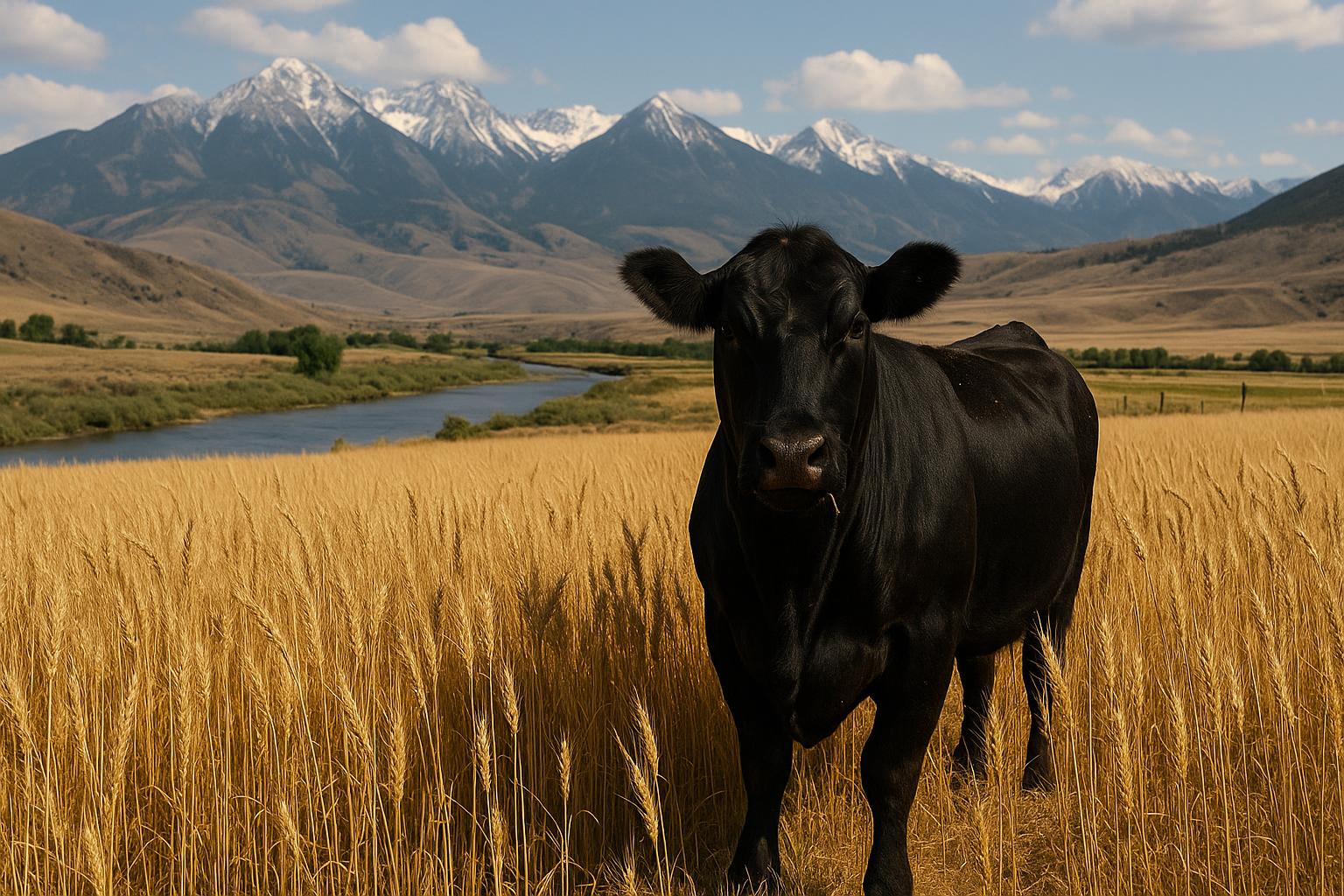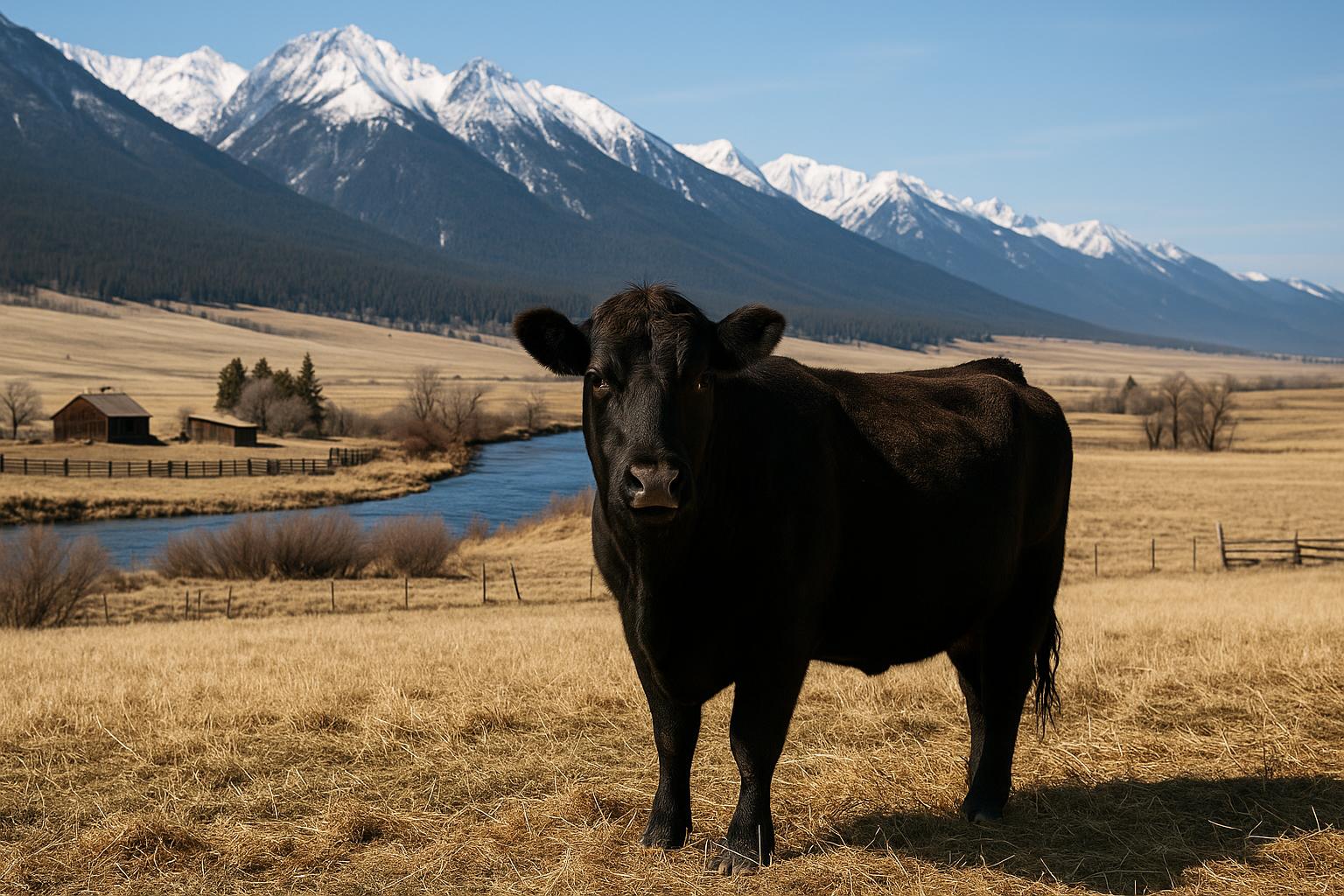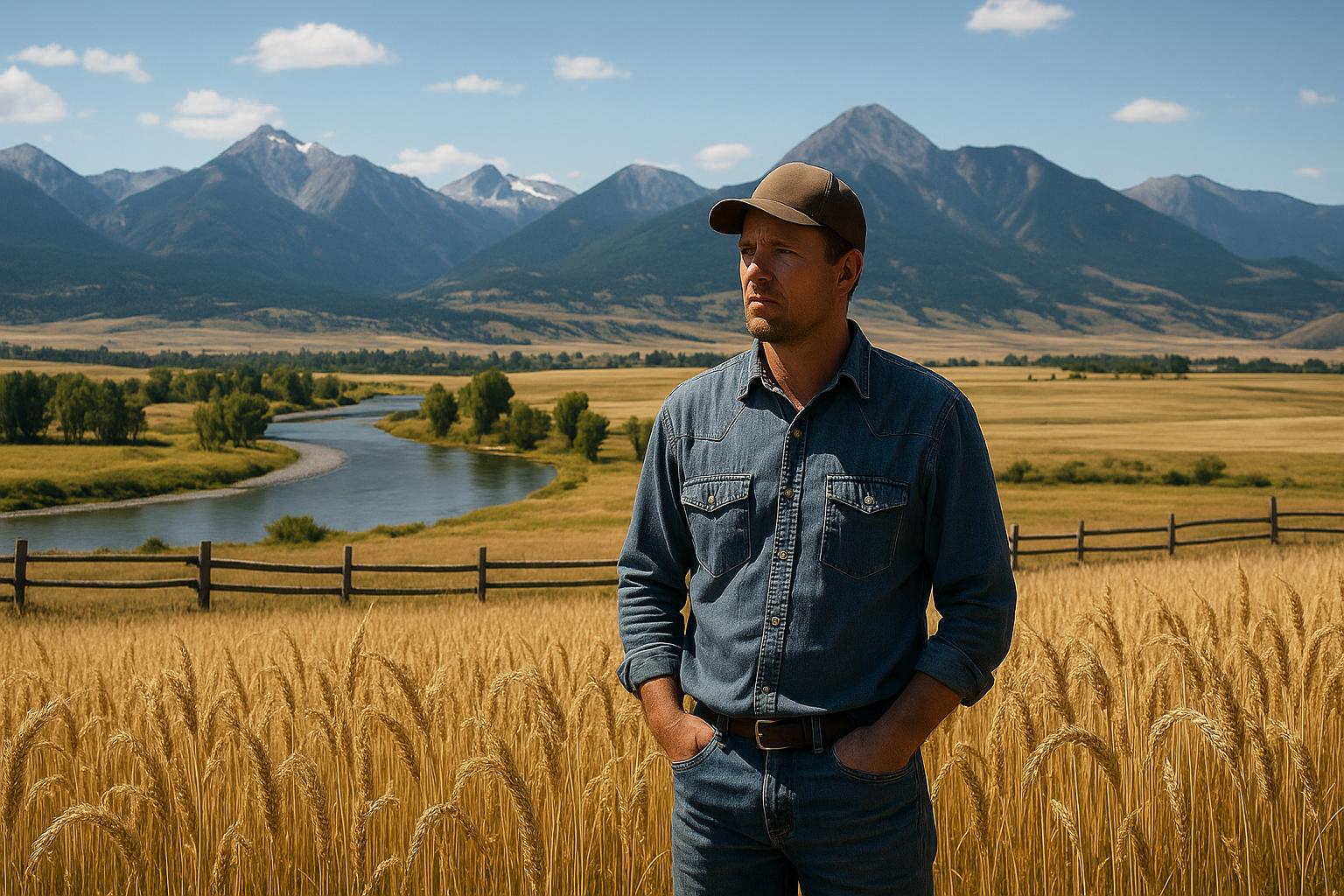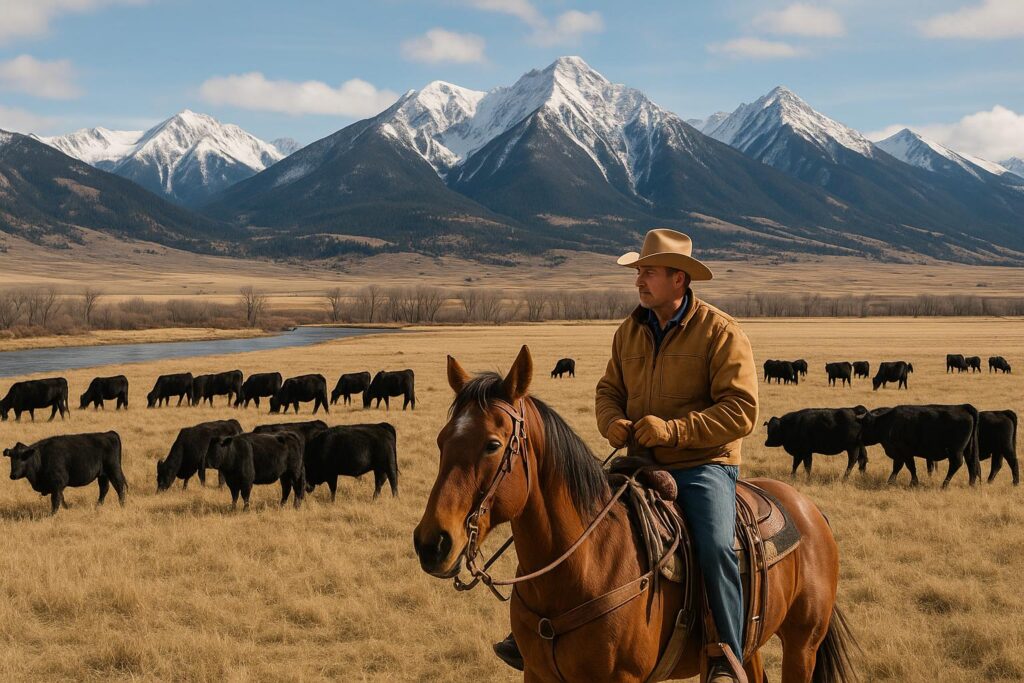
Montanans don’t need an infographic to know we’re a big-land state. You can drive for hours across wheat country, skirt irrigated valleys, then hit open rangeland that seems to run clear to the horizon. But when you stack states side-by-side, two different pictures emerge: one about how much land is in farms and ranches, and another about how much money those operations bring in through farm receipts.
Reports comparing states by total farm acreage and by total farm receipts show a familiar pattern: some states lead because they have enormous footprints, while others lead because they produce high-value crops or livestock in dense, highly productive regions. Montana often shows up near the top on acres and more middle-of-the-pack on receipts—an outcome that says as much about climate, water, and markets as it does about management.
Two measures that get mixed up: acres vs. receipts
“Farm acreage” and “farm receipts” sound like they should move together, but they don’t always.
- Total farm acreage is the land area counted as farms and ranches. In the West, that can include vast rangelands where production is extensive rather than intensive.
- Total farm receipts generally refers to the gross income from agricultural products sold (before expenses). It can be driven by high-value specialty crops, dairy, feedlots, or large-scale row-crop production.
In other words: a state can have fewer acres but very high receipts if it’s producing high-value commodities at scale. Another state can have huge acreage but lower receipts per acre if much of that land is semi-arid rangeland or dryland production with lower yields and higher year-to-year volatility.
Where Montana tends to land in national comparisons
In state-by-state roundups, Montana is often highlighted as one of the nation’s leaders in total farm and ranch acreage. That’s consistent with what the USDA National Agricultural Statistics Service (NASS) and USDA Economic Research Service (ERS) datasets generally show: Montana has a lot of agricultural land relative to population.
On the receipts side, reports indicate Montana typically sits behind the heavy hitters—states with massive dairy sectors, high-value fruit and vegetable production, or dense concentrations of livestock and feeding operations. That doesn’t mean Montana agriculture is “small.” It means our production model is different, and our constraints (water, growing season, distance to markets) shape what pencils out.
Why big acres don’t automatically equal big receipts
Montana’s agricultural footprint includes a lot of grazing ground and dryland acres. That matters for receipts because:
- Climate and precipitation limit yield potential in many areas, especially in dryland systems.
- Long distances to processors and markets add freight costs and can reduce the share of the consumer dollar that stays local.
- Commodity mix leans toward cattle, wheat, barley, hay, and other staples that often operate on thinner margins than specialty crops.
- Year-to-year variability (drought, early freezes, wildfire impacts) can swing production and revenue.
At the same time, Montana producers often build resilience through diversified rotations, careful grazing management, and risk tools like insurance and forward contracting. Receipts alone don’t capture that story—or the value of keeping families on the land.
A quick look at what drives receipts in other top states
If you’ve ever wondered why some states dominate farm receipts even without Montana-sized acreage, it usually comes down to a few categories:
- Dairy concentration in states with large processing capacity and consistent feed supplies.
- Specialty crops (fruits, vegetables, nuts) that bring high value per acre but require labor, water, and infrastructure.
- Row-crop scale in high-yield regions with long growing seasons and established export channels.
- Livestock finishing and processing where animals are fed out and harvested near major facilities.
Montana participates in several of those value chains, but not always at the same density. That’s not a knock—it’s a reflection of geography and economics.
What this means for Montana
For a Montana audience that includes ranchers, farmers, hunters, and anglers, the acreage-versus-receipts contrast isn’t just trivia. It touches land access, habitat, and rural stability.
- Working lands are wildlife lands. Large blocks of ranch and farm ground can support pronghorn, mule deer, pheasants, and waterfowl, especially where producers maintain riparian areas and winter range. Programs like the Montana FWP Block Management Program depend on landowners who can afford to keep land in production.
- Receipts affect resilience. When margins tighten, pressure can increase to subdivide, convert, or shift land use. That can fragment habitat and reduce access corridors.
- Water is the multiplier. Irrigated valleys can produce high-value hay, seed, and specialty crops, but they also sit at the center of water allocation debates. Anglers feel this directly in low-flow summers. For current conditions and drought context, the U.S. Drought Monitor is a useful weekly snapshot.
- Local processing matters. More in-state capacity for meat, grains, and specialty products can help capture value closer to home—potentially strengthening receipts without needing more acres.
In plain terms: Montana’s advantage is space, stewardship, and production know-how. The challenge is turning that into stable, competitive revenue while keeping the land open and intact.
What hunters and anglers should take from these rankings
It’s easy to look at “farm receipts” and think it’s a farm-only issue. But the economics of working lands ripple into recreation.
When agriculture is financially healthy, landowners are more likely to invest in fencing that protects riparian areas, manage weeds, and maintain stockwater systems that can benefit wildlife. When agriculture is struggling, the opposite can happen—deferred maintenance, higher conflict over access, and increased interest in selling parcels.
That’s one reason partnerships matter. If you hunt, fish, or recreate on private land through permission or programs, being a good neighbor isn’t just etiquette—it’s part of keeping Montana’s access culture alive.
Reading the numbers with caution
State rankings can be helpful, but they’re not the whole story. A few reminders when comparing acres and receipts:
- Receipts are gross, not net. High receipts don’t necessarily mean high profit, especially with high input costs.
- Commodity prices swing. One year’s ranking can shift with cattle markets, grain prices, or export disruptions.
- Definitions vary. “Farm” and “acreage” categories can differ by dataset and reporting year.
If you want to dig into the underlying data rather than the headlines, start with USDA NASS Quick Stats and the USDA ERS farm income resources.
The Montana takeaway
Montana’s agricultural identity is built on big country and working landscapes. Rankings that separate acreage from receipts underline a truth locals already know: we don’t farm and ranch the way the Central Valley or the Corn Belt does, and that’s okay. The more useful question is how Montana can keep its land base productive and intact—through water planning, market access, processing capacity, and policies that help families stay on the land.
Because for Montana, “ag numbers” aren’t just numbers. They’re the backdrop for our towns, our seasons, and the places we hunt and fish.
Inspiration: www.agdaily.com