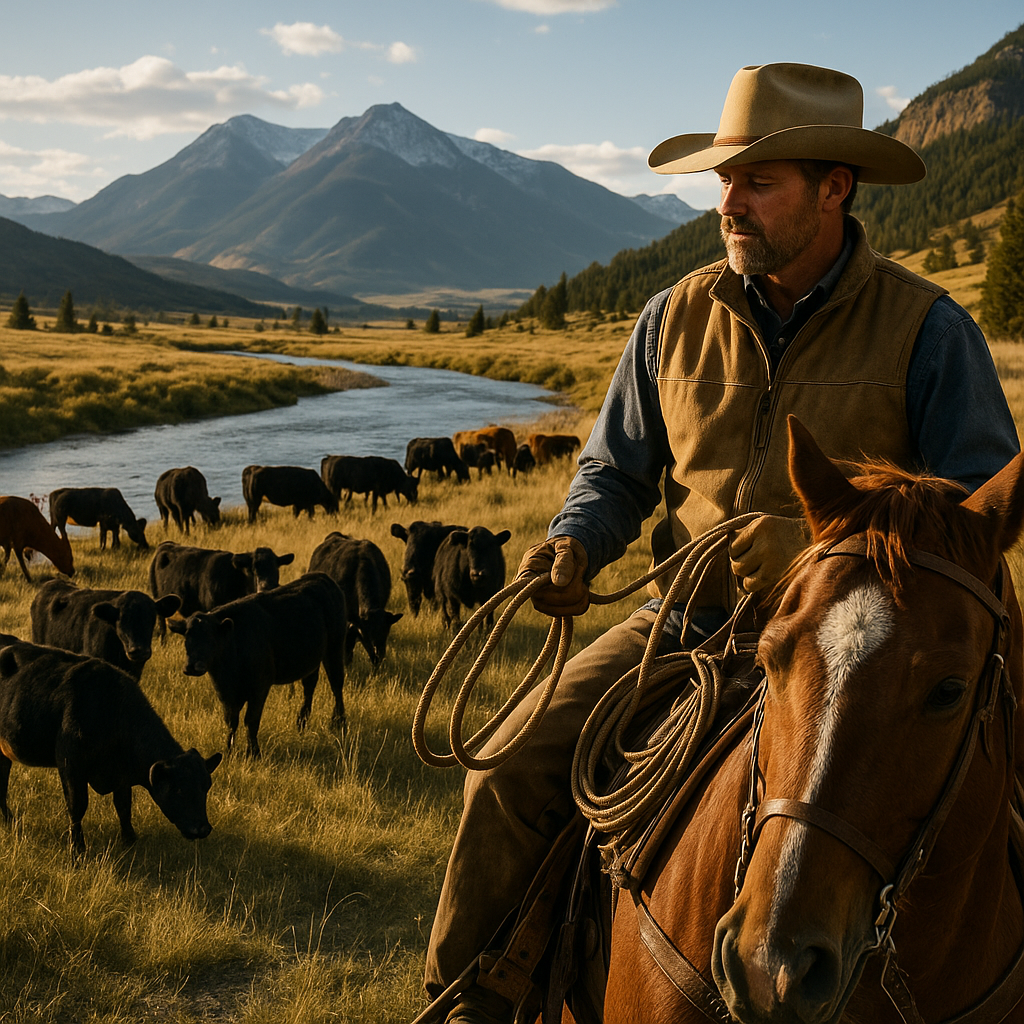
Along the Lower Yellowstone River, the conversation isn’t just about fish or water—it’s about keeping a working river working. Reports indicate Montana Farm Bureau is backing federal legislation aimed at native fish conservation on the Lower Yellowstone, a stretch where irrigation intakes, bank stabilization, and spring runoff are part of the annual rhythm for ranch families.
For cattle and hay producers from the Glendive side down toward the North Dakota line, any river-focused bill raises two immediate questions: Will it change how we irrigate? and Will it change what we can do when the river eats a field? The details matter, and so does how the bill gets implemented on the ground.
Quick takeaways
- The focus is native fish conservation on the Lower Yellowstone, a reach tied closely to irrigation infrastructure and bank work.
- Producers should watch for how “conservation” is defined—especially around diversion structures, screening, and bank stabilization.
- Support from an ag organization suggests an effort to balance fish needs with irrigation reliability and private property concerns.
- Local implementation will matter more than headlines: permitting timelines, cost-share, and flexibility during emergencies are key.
Why the Lower Yellowstone is different
The Lower Yellowstone is one of Montana’s most heavily “worked” rivers. It’s not just a scenic corridor—it’s a delivery system for irrigation water, a boundary line for fields and pastures, and a place where high water can take out roads, headgates, and chunks of productive ground in a single season.
At the same time, this river reach is often discussed in the context of native fish—species that need certain flows, passage, and habitat conditions to persist. In practice, that can intersect with ranching and farming in a few predictable ways:
- Diversion structures and fish passage: older intakes and drop structures can be scrutinized for how they affect movement of fish.
- Screening and entrainment: irrigators may face pressure to reduce the number of fish pulled into ditches.
- Bank stabilization: rock, riprap, and emergency work can trigger permitting requirements and agency review.
- Flow management: in some basins, conservation discussions eventually touch water timing and availability.
That’s why any new federal “native fish” bill gets attention from producers: it can influence the rules of the road for infrastructure that keeps hay fields green and stock water dependable.
What the bill appears to be trying to do
Based on reports and public summaries, the proposed Lower Yellowstone River Native Fish Conservation Act is intended to support conservation actions for native fish in the Lower Yellowstone River system. While the full text and final language will determine the real-world impacts, bills of this type typically aim to do some combination of:
- Authorize or coordinate habitat projects and research
- Direct agencies to develop conservation strategies
- Support partnerships among federal agencies, the state, local entities, and landowners
- Set priorities for funding or technical assistance
When ag groups support a conservation bill, it often signals that they believe the language includes protections for existing water uses, recognizes private property rights, or provides a framework for voluntary, incentive-based projects rather than mandates. Still, producers will want to read beyond the title and track any amendments as the legislation moves.
Where ranchers may feel it first: irrigation and infrastructure
The most immediate intersection between fish conservation and ranch economics is irrigation reliability. In eastern Montana, one missed watering window can mean lower yields, lower-quality hay, and a tighter winter feed budget.
Here are the practical points producers tend to watch:
- Permitting timelines: If a headgate fails mid-season, producers need to know whether emergency repairs can happen quickly.
- Cost-share availability: If screening or passage upgrades are encouraged, financial assistance can determine whether projects are feasible.
- Engineering flexibility: Standardized designs don’t always fit local conditions—ice, sediment, and flood debris can wreck “textbook” solutions.
- Maintenance expectations: New structures can bring new monitoring or reporting responsibilities.
For producers who already work with conservation districts, the Natural Resources Conservation Service, or state programs, the best outcome is often a clearer pathway to funding and technical help—especially when upgrades also protect the irrigator’s investment.
Bank erosion, riprap, and the reality of a moving river
On the Lower Yellowstone, erosion isn’t theoretical. It’s a pasture fence hanging over a cutbank. It’s a pivot corner that used to be a quarter-mile from the river. It’s a county road that suddenly needs a detour.
Fish habitat goals can sometimes conflict with hard-armoring banks, because riprap and channelization can simplify habitat. But from a ranch perspective, losing ground to the river can mean losing grazing capacity and long-term value—especially when the river is taking the best bottomland.
Producers will want to watch whether the legislation pushes more “soft” stabilization approaches, encourages setback projects, or changes how agencies evaluate bank work. None of those options are automatically bad, but they require time, design, and often more acreage than a quick rock fix.
In a best-case scenario, conservation planning recognizes that some emergency actions are unavoidable, while longer-term projects can be designed to protect both habitat and agricultural ground.
Voluntary vs. regulatory: the question behind the question
In Montana ag country, the word “conservation” is usually welcomed when it means voluntary tools, local control, and cost-share. It’s resisted when it feels like a new layer of regulation that turns routine work into a paperwork problem.
Because this is a federal bill, producers should pay attention to:
- Whether participation is voluntary for landowners and irrigators
- Whether the bill creates new regulatory triggers or expands agency authority
- How it interacts with existing water rights and state water administration
- Whether it emphasizes collaboration with local irrigation districts and conservation districts
Even when a bill is written as cooperative, implementation can drift over time—especially if future funding or agency guidance changes. That’s why it’s worth tracking not just the bill’s passage, but also how agencies plan to carry it out.
What this means for Montana
For Montana ranchers and farmers along the Lower Yellowstone, the most likely near-term impact is more attention to river infrastructure—diversions, screens, and passage improvements—paired with potential funding opportunities. If the bill is structured around partnerships, it could help bring federal resources to projects that producers already know are needed but can’t pencil out alone.
At the same time, any conservation initiative tied to a working river can create uncertainty about future flexibility: how quickly emergency repairs can be made, whether bank work will face additional scrutiny, and whether irrigation operations will be pressured to change during certain flow conditions.
Montana’s best outcome is a framework that:
- Protects native fish without undermining existing water use
- Respects private property and keeps landowner participation voluntary
- Speeds up—not slows down—common-sense fixes to aging infrastructure
- Provides real cost-share and technical help for upgrades
For producers, the practical move is to stay engaged through local irrigation districts, county conservation districts, and statewide ag groups. If a bill is going to affect how you operate, it’s better to shape it early than react later.
Questions ranch and farm operators should ask now
- Does the legislation explicitly protect existing water rights and beneficial use?
- What funding, if any, is authorized for screening, passage, and intake upgrades?
- How will emergency bank stabilization and headgate repairs be handled?
- Which agencies will lead implementation, and will local entities have a seat at the table?
- Will projects be voluntary for landowners, and what happens if a landowner opts out?
The Lower Yellowstone has always required compromise between a river that moves and communities that rely on it. If this legislation advances, the next chapter will depend on whether the people who make a living on that river are treated as partners—or obstacles.
Inspiration: “montana farming” – Google News (link)