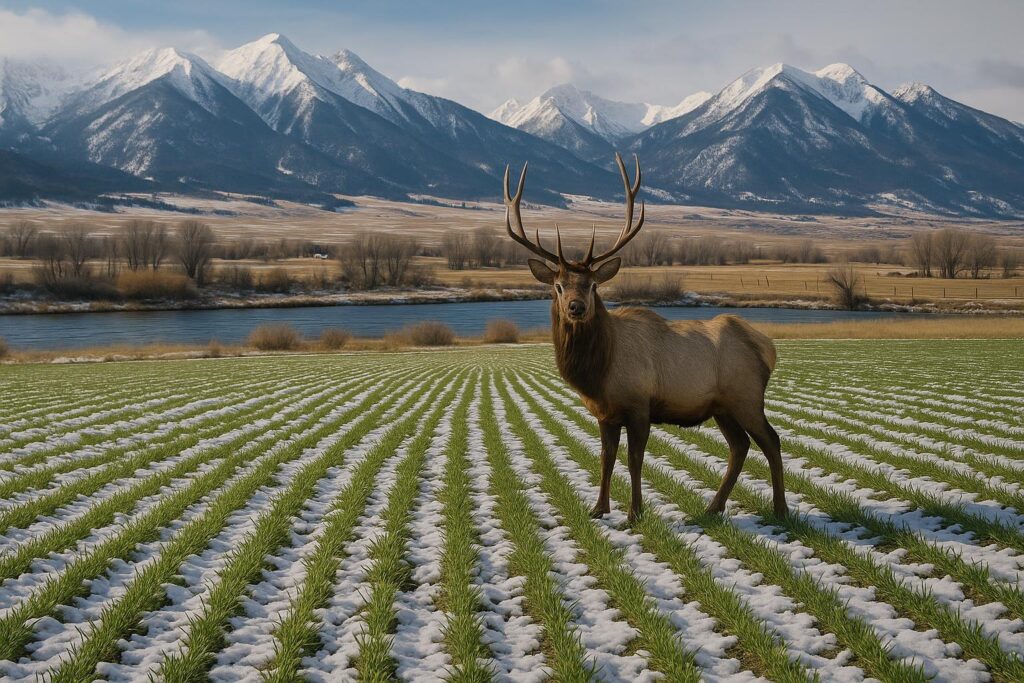
Across Montana’s Golden Triangle, Judith Basin, and the Hi-Line, winter wheat remains a cornerstone crop—often the one that helps spread workload, capture early moisture, and keep equipment moving when spring turns busy. But winter wheat is also a crop where small management decisions can stack up fast, for better or worse. A tough fall, open winter, or windy spring can trim yield potential before the combine ever rolls.
Below are practical, Montana-angled considerations that agronomists and university guidance commonly emphasize for protecting winter wheat yield potential. Not every step fits every field—especially in a state where “local conditions” can mean anything from irrigated ground near the Yellowstone to dryland ridges north of Havre—but a checklist approach can help you prioritize what matters most on your acres.
1) Start with the right variety for your county and rotation
Variety choice is still one of the biggest levers you can pull without adding a lot of extra cost. Consider winter hardiness, standability, and disease package alongside yield. If you’re pushing higher fertility or have a history of lodging, standability becomes more than a brochure line.
- Use local performance data when possible, including multi-year results.
- Match maturity to your harvest window and residue/rotation plans.
- Pay attention to stripe rust and leaf spot ratings if you’ve seen pressure in your area.
Good starting points include Montana State University Extension resources and variety trial summaries: MSU Extension.
2) Treat seeding like a stand establishment project, not a calendar date
“Plant early” and “plant late” both get repeated in coffee shops for a reason: timing depends on moisture, forecast, residue, and how fast the crop can establish before winter. Reports indicate that winter survival and spring vigor often track back to fall crown development and root growth—things you influence through seeding depth, seed-to-soil contact, and managing residue.
- Depth: Aim for consistent placement; many Montana growers target roughly 1 to 1.5 inches, adjusting for moisture and soil type.
- Uniformity: Calibrate openers and check emergence across the drill width.
- Residue: Heavy straw can create cold, damp zones and uneven stands—manage chaff spread and consider shallow residue sizing where appropriate.
3) Don’t guess on fertility—sample, then budget nitrogen with moisture in mind
Nitrogen is often the biggest yield driver and the biggest check you’ll write. Soil testing is the cheapest “input” you can buy. In dryland Montana, it’s also smart to tie N plans to realistic yield goals based on stored moisture and long-term field history.
- Sample at a consistent depth and timing; include nitrate where applicable.
- Consider split applications where logistics allow, especially if spring moisture is uncertain.
- Watch sulfur on lighter ground and in higher-yield environments; deficiency can limit protein and yield.
For nutrient planning and soil testing guidance, see MSU Soil Fertility.
4) Protect the stand: seed quality, seed treatments, and planter hygiene
Stand loss is expensive because winter wheat doesn’t always have time to compensate. Using clean, high-germ seed and keeping drills maintained helps reduce variability. Seed treatments may reduce early-season disease and insect impacts in some situations; the best fit depends on field history and local pressure.
- Ask for a seed tag or test results, especially if using bin-run seed.
- Clean up volunteer grain and “green bridge” hosts when feasible to reduce disease carryover.
- Sanitize equipment moving between fields with known weed or disease issues.
5) Scout early and often—especially from green-up through flag leaf
In Montana, spring can flip from mud to dust in a week. Scouting keeps you from being surprised by weeds, winterkill patches, or disease that takes off during a warm spell. The goal isn’t to find problems; it’s to catch them while you still have options.
- Green-up: Check stand density, winter injury, and heaving.
- Tillering to jointing: Evaluate weed pressure and herbicide timing.
- Flag leaf to heading: Watch for rusts and leaf spots; this is where yield is protected.
6) Weed control: prioritize timing and rotation, not just product
Winter annuals and early spring flushes can rob moisture and nutrients right when the crop is trying to rebuild after winter. Herbicide choices matter, but timing and mode-of-action rotation often matter more over the long haul.
- Map problem patches (kochia, downy brome, wild oat, etc.) and treat strategically.
- Rotate herbicide groups to slow resistance development.
- Use label-guided crop stage windows—mis-timed applications can cost yield or create carryover issues.
For integrated weed management tools, the IPM framework offers useful concepts even outside California, and MSU Extension often publishes Montana-specific recommendations.
7) Disease: know what’s common in your area and plan for the weather you’re getting
Stripe rust and leaf spot complexes can show up when conditions line up—cooler temps and moisture can push rust, while residue and rotation can influence leaf spots. Fungicide decisions are most profitable when they’re tied to risk: susceptible variety, favorable forecast, and disease presence.
- Learn the key growth stages (jointing, flag leaf, heading) and what each protects.
- Confirm disease ID before spraying when possible; not every yellowing leaf is rust.
- Follow resistance-management guidance and rotate fungicide modes of action.
For disease updates and identification help, growers also watch regional alerts and university diagnostics. Where available, local agronomists and Extension agents can help confirm what you’re seeing.
8) Watch for insects, but treat based on thresholds
Insect issues vary by year and location. Aphids, wheat stem sawfly, and other pests can be part of the conversation depending on county and conditions. Reports indicate that unnecessary insecticide applications can flare secondary pests or reduce beneficial insects, so threshold-based decisions tend to pencil out better over time.
- Scout field edges and known hotspots.
- Identify the insect and life stage—timing is everything.
- Use economic thresholds when available, and consider beneficial activity.
9) Manage water you can control—and conserve what you can’t
Most Montana winter wheat acres are dryland, so “water management” often means residue management, traffic control, and avoiding practices that leave soil bare and vulnerable to wind. For irrigated acres, uniformity and scheduling matter—especially around stem elongation and grain fill.
- Keep residue anchored to reduce evaporation and erosion.
- Minimize compaction in wet springs; ruts can haunt you all season.
- In irrigated systems, check distribution and avoid overwatering that can increase disease risk.
10) Harvest and post-harvest: protect quality, then learn from the field
Yield is only half the story—test weight, protein, and dockage can swing the final check. Harvest timing and combine settings can reduce shatter and losses, especially when wind picks up or straw gets tough.
- Calibrate the combine for changing moisture and straw conditions.
- Consider a pre-harvest plan for lodged areas to reduce losses.
- After harvest, review yield maps or weigh wagon notes and tie them back to soil tests and scouting records.
What this means for Montana
Montana’s winter wheat success often hinges on managing risk across big acres and bigger weather swings. The practical takeaway isn’t that every field needs more inputs—it’s that the best returns tend to come from:
- Getting the stand right (uniform emergence, winter survival, spring vigor).
- Matching fertility to moisture and yield potential so you’re not over- or under-feeding the crop.
- Scouting with intent from green-up through heading, when many yield-limiting issues can still be addressed.
- Targeted protection (weed, disease, insect) based on thresholds and local pressure, not habit.
If you’re looking for a simple way to apply this: pick two fields—one “easy,” one “tough”—and commit to tighter notes and more timely scouting on both this season. In a state where a half-inch of rain can change the whole outlook, better information is often the most valuable tool in the pickup.
Inspiration: www.agdaily.com