Farmers market season in Montana is never just about tomatoes and bouquets. For small and mid-sized operations—whether you’re growing greens in the Gallatin Valley, raising beef in the Yellowstone Valley, or putting up honey in the Flathead—direct-to-consumer sales can be a real revenue stream when it’s done right. It can also be a time sink if you show up unprepared, price wrong, or run afoul of local rules.
Across the state, markets vary widely: some are heavy on tourists and weekend traffic, others are built around local regulars who want consistent supply and clear labeling. Reports indicate more shoppers are asking where food comes from, how it was raised, and whether it’s local. That’s an opportunity for Montana producers—but only if you can deliver a reliable product and a professional booth.
Getting Started: The Montana Checklist Before You Load the Pickup
Before you commit to a season, treat a farmers market like any other outlet: know your costs, your rules, and your capacity.
- Pick the right market for your operation. A market in the Bitterroot Valley may reward variety and season extension; a Hi-Line community market may prioritize staple produce, eggs, and baked goods. Visit as a shopper first. Count vendors, watch customer flow, and note what sells out early.
- Ask for the vendor rules in writing. Every market has its own requirements for product mix, reselling, booth setup, and attendance. Some require proof of insurance or specific signage.
- Confirm licensing and food safety requirements. If you’re selling meat, eggs, dairy, canned goods, or prepared foods, you may have additional rules. Start with the Montana DPHHS Food and Consumer Safety Section and the Montana Department of Agriculture. If you’re unsure, call before you produce a batch you can’t legally sell.
- Run the numbers. Market fees, fuel, coolers, tables, packaging, and your time add up. If you don’t know your per-unit cost, you’re guessing.
Product Strategy: Start Narrow, Sell Out, Repeat
One common mistake is trying to bring “a little of everything” on week one. A better approach is to start with a focused line you can deliver consistently, then expand once you understand demand.
For produce growers: pick a handful of crops that are reliable in your microclimate and can be harvested on a predictable schedule. In the Flathead Valley and Gallatin Valley, growers who can offer early greens and later storage crops often keep customers coming back. In drier pockets, plan around water availability and labor—especially if irrigation allocations tighten or wells run low.
For ranchers: if you’re selling beef, pork, lamb, or poultry, decide whether you’re offering freezer beef by the quarter/half, individual cuts, or both. Individual cuts can move well at markets, but require cold-chain discipline and more inventory management. Make sure your processing dates and packaging align with market days. If you’re relying on a small processor schedule, book early and have a backup plan.
For value-added products: jams, pickles, baked goods, and dairy-based items can be strong sellers, but they also tend to trigger more regulatory questions. Keep batch records, label clearly, and don’t assume that what worked at a community fundraiser automatically meets market rules.
Pricing and Packaging: Professional Beats “Homemade”
Montana shoppers will pay for quality, but they also compare booths. Pricing needs to reflect your costs and the local market—without undercutting yourself.
- Post prices clearly. Handwritten signs are fine if they’re readable and consistent. Customers don’t like guessing.
- Use consistent units. Price by the bunch, pound, or package—then stick with it. Consistency builds trust.
- Build in your shrink and leftovers. If you routinely bring home product, that cost belongs in your pricing model.
- Make packaging functional. Ventilated bags for greens, sturdy cartons for eggs, leak-proof containers for sauces. A broken egg or spilled salsa doesn’t just lose that sale—it loses the customer.
For meat vendors, invest in a reliable cooler setup and a thermometer. If you can’t keep product at safe temperatures, don’t sell it at the market. It’s not worth the risk to your customers or your business.
Booth Setup and Sales: Treat It Like a Storefront
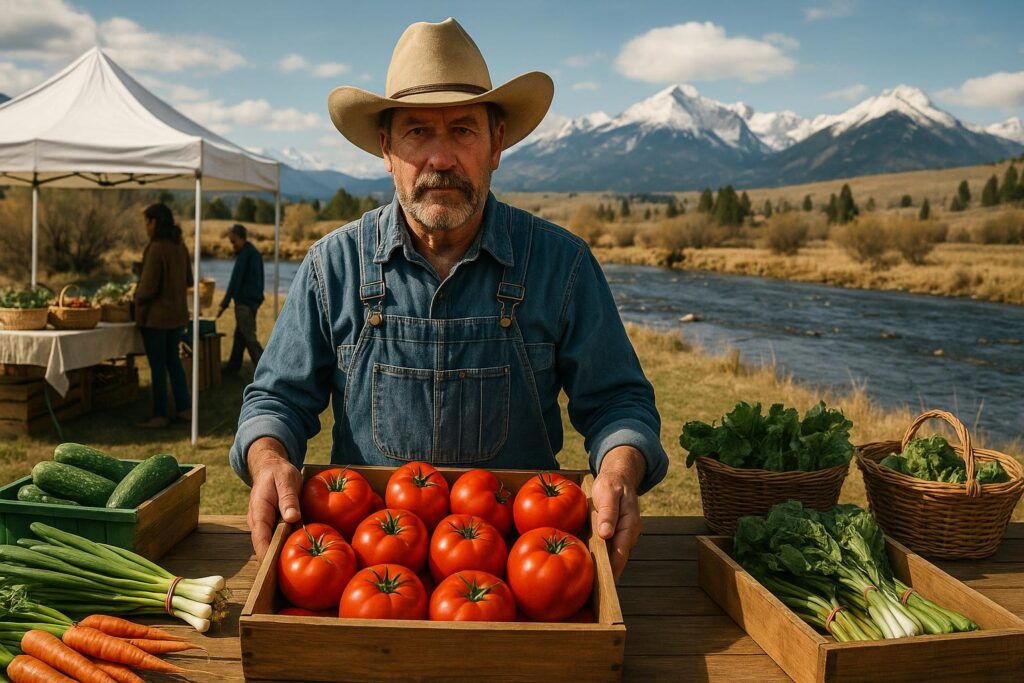
A farmers market booth is a mobile retail shop. The producers who do well tend to look organized and ready, even when the wind kicks up and the line gets long.
- Bring the basics: canopy, weights, tables, tablecloth, signage, bags, change, card reader, sanitizer, and a way to keep products shaded and clean.
- Accept cards if you can. Many shoppers don’t carry cash. A simple point-of-sale setup can pay for itself, but factor in fees and spotty service in some locations.
- Tell your story briefly. A one-sentence explanation—“grass-finished in the Yellowstone Valley” or “grown under irrigation in the Bitterroot”—helps customers connect without holding up the line.
- Track what sells. Write down what you brought, what sold, and what you discounted. After three to four weeks, you’ll have real data to plan production.
Don’t overlook repeat customers. A simple sign-up sheet for an email list, or a card with your ordering info, can turn a Saturday sale into a year-round relationship.
Planning for Montana Realities: Weather, Water, and Miles
Direct marketing in Montana comes with unique challenges: long drives, sudden weather swings, and water constraints that can change mid-season.
In the Yellowstone Valley, wind and heat can stress crops quickly and shorten shelf life at the booth. In the Gallatin Valley, shoulder-season cold snaps can wipe out early plantings. In the Hi-Line, distance to markets can make the economics tough unless you’re moving enough volume per trip.
Water is another variable. If you’re irrigating, stay in close contact with your ditch company or irrigation district and keep an eye on runoff forecasts. If you’re dryland, plan conservative yields and avoid overcommitting to weekly market volumes you can’t meet.
What This Means for Montana Ranchers and Farmers
Farmers markets won’t replace the cattle market, a hay contract, or a grain check for most operations. But they can diversify income and reduce exposure to one volatile price signal—especially for smaller farms and ranches looking to capture retail value.
- Cash flow timing can improve. Weekly sales can help cover in-season expenses like feed, fuel, and irrigation power bills.
- Brand value matters more. If you’re already doing the work—good genetics, careful grazing management, clean hay, or specialty crops—direct sales can pay you for that effort.
- Labor is the hidden cost. Market days are long days. For family operations, that can collide with haying, branding, or irrigating. The best-fit vendors are the ones who can staff the booth without sacrificing the rest of the operation.
- Local relationships can carry you through tough years. In drought years, when production drops and costs climb, a loyal customer base may be more forgiving than an anonymous commodity market—if you communicate early and deliver what you promise.
What to Watch Next in Montana Agriculture
- Water supply and drought signals. Watch NRCS updates and local irrigation advisories. If allocations tighten, expect less market volume and higher prices for certain crops. A useful starting point is the NRCS and Montana-specific local offices.
- Processing capacity for direct-market meat. If more ranchers move into retail cuts, scheduling pressure at inspected facilities could increase. Book dates early and confirm labeling requirements.
- Market rule changes. Some markets adjust policies on reselling, product categories, or insurance requirements. Read vendor emails and attend meetings.
- Consumer demand for traceability. Shoppers are asking more questions about origin and practices. Clear labeling and consistent messaging will matter, especially in tourist-heavy areas like the Flathead.
- Rising input costs. Packaging, fuel, and labor costs can erode margins quickly. Producers who track costs weekly will be better positioned to adjust prices without guessing.
Farmers markets reward the same thing ranching and farming always have: planning, consistency, and a willingness to adapt when conditions change. Start small, learn fast, and treat every Saturday like you’re building next season’s customer base.
Inspiration: www.farmprogress.com