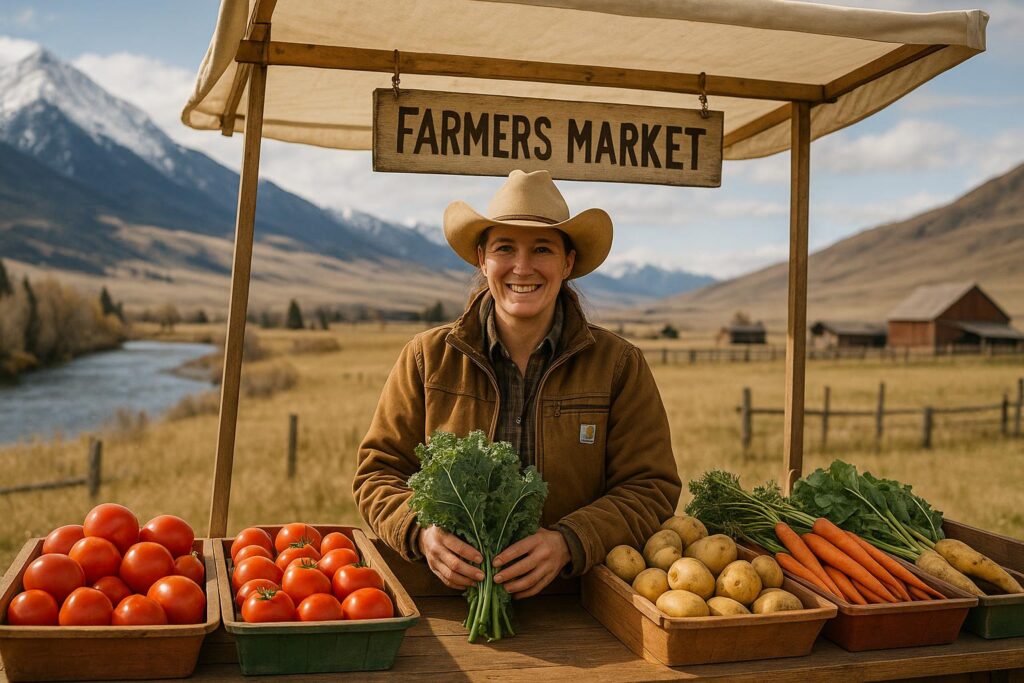
Farmers market season in Montana is more than a Saturday morning tradition. For small farms, ranch families, and value-added operators, it can be a reliable way to move product, test new ideas, and keep cash flowing when the cattle market or hay demand turns sideways. Reports from around the region indicate customer expectations are rising too: consistent supply, clean presentation, and clear pricing matter as much as the tomatoes.
If you’re considering a booth in the Bitterroot Valley, Gallatin Valley, Flathead Valley, Yellowstone Valley, or up on the Hi-Line, the basics are the same: know the rules, show up prepared, and treat it like a business—not a hobby that might pay for fuel.
Getting Started: The Montana-Specific Checklist
Before you invest in tents, coolers, and labels, confirm what your target market actually allows and what it requires. In Montana, market policies can vary by town and organizing group, even when the products look similar.
- Read the market’s vendor rules early. Most markets publish rules online (vendor categories, fees, insurance, booth size, power access, and whether reselling is allowed). Start with the Montana Farmers Market Network to find markets and contacts.
- Match your product to the customer base. A market in the Gallatin Valley may reward specialty greens, cut flowers, and branded meat bundles. A smaller town market might move more eggs, potatoes, and straightforward beef packs.
- Sort out licenses and food safety. Requirements depend on what you sell: raw produce is different from canned goods, baked items, dairy, or meat. For state guidance, check the Montana DPHHS (food and consumer safety) and the Montana Department of Agriculture (weights/measures and certain commodity rules). If you’re unsure, call before you print labels.
Product Choices That Fit Montana Farms and Ranches
Montana’s growing season and geography shape what sells and when. A good market plan leans into what you can produce consistently, not just what looks good once.
- Produce growers: Plan for “shoulder season” demand—greens, starts, and early root crops—especially in the Flathead and Bitterroot valleys where customer traffic can be strong before peak harvest.
- Ranchers selling beef/lamb: Decide whether you’ll sell frozen cuts, mixed boxes, or take deposits for quarters/halves. Markets can be good for customer acquisition even if the big sale happens later.
- Hay and feed producers: You likely won’t sell hay at a market booth, but markets can help you connect with horse owners and small-acreage buyers. A simple flyer and a clear delivery policy can turn into steady off-farm sales.
- Value-added: Jams, pickles, baked goods, and dried herbs can pencil out well if you’re compliant and consistent. Just be realistic about labor and packaging costs.
Across Montana, one common mistake is bringing too many different items at once. Start narrow, get your workflow right, then expand.
Pricing, Margins, and the Real Cost of “Local”
Farmers markets are retail. Retail can pay, but only if you know your costs. Fuel from the Hi-Line into Great Falls, ice for coolers in the Yellowstone Valley heat, and labor for harvest and setup can eat margins fast.
- Know your break-even price. Include inputs, packaging, stall fees, labor, and shrink (unsold product). If you can’t price above break-even, the market is advertising—not profit.
- Price clearly and consistently. Customers will pay for quality, but they don’t like surprises. Use simple signage: price per pound, per bunch, or per package.
- Consider “good/better/best.” Example: ground beef packs (entry), steak bundles (mid), and mixed grill boxes (premium). For produce: small/medium/large bags with a clear value difference.
Keep an eye on broader conditions too. When grocery prices rise, some customers trade down; others lean harder into local because they trust the source. Either way, transparency helps.
Presentation and Cold Chain: Where Markets Are Won or Lost
In July, a market booth in the Yellowstone Valley can be hot enough to punish sloppy cold storage. For meat, dairy, eggs, and cut produce, temperature control is not optional.
- Bring the right equipment. A stable canopy, tables, weights for wind, and enough coolers to keep product safe for the full market window.
- Keep it clean and organized. Customers notice messy coolers, unclear labels, and sticky tables. A tidy booth signals a careful producer.
- Have a plan for leftovers. If you’re selling greens or berries, know whether you can move extras through a CSA, a restaurant account, or quick processing at home.
If you sell meat, customers often ask about processing, inspection, and how animals were raised. Be ready with short, factual answers and avoid overpromising. If you use a USDA-inspected facility or a state-inspected program, say so accurately. If you don’t, don’t imply that you do.
Marketing That Works in Small Montana Communities
Most market sales are built on repeat customers. In Montana, word travels fast—both good and bad.
- Use simple branding. A farm/ranch name, a consistent sign, and a handout with contact info goes a long way.
- Collect customer contacts. A clipboard for an email list or a QR code to a newsletter sign-up helps you sell outside market hours.
- Be reliable. Showing up consistently matters. If you miss weeks during haying or branding, communicate it so customers don’t assume you’re done for the season.
Hyper-local partnerships can also help. Some vendors in the Gallatin and Flathead valleys report steady growth by cross-promoting with other booths (for example, a beef vendor pairing with a spice or sauce maker). Keep it straightforward and legal—no bundling that violates market rules.
What This Means for Montana Ranchers and Farmers
Direct-to-consumer sales won’t replace the calf check or the hay contract for most operations, but they can stabilize income and build a customer base that follows you year to year. In a state where drought cycles, irrigation limits, and input costs can change plans quickly, a market booth can be one more tool in the toolbox.
- Ranchers: Farmers markets can function as customer acquisition for freezer beef and lamb. Even if you sell only a few packages at the booth, the real payoff may be deposits and repeat bulk orders.
- Hay producers: Markets are a relationship play—connecting with horse owners and hobby farms that buy smaller loads or need delivery. A clear policy on minimum order, delivery radius, and moisture/quality specs prevents headaches.
- Irrigated and dryland growers: Markets reward consistency. If water supplies tighten, plan crops that can handle variability and communicate honestly about availability.
- Beginning producers: A market can be a low-risk test compared to wholesale. You’ll learn quickly what customers actually buy in your region.
Bottom line: a well-run market program can improve cash flow, reduce reliance on a single buyer, and create resilience when weather or commodity swings hit.
What to Watch Next in Montana Agriculture
- Market rule updates and local enforcement. Some markets adjust policies on reselling, labeling, and sampling. Watch for pre-season vendor meetings and updated handbooks.
- Food safety and inspection guidance. If you’re adding value-added products or expanding into meat, watch state and federal guidance and confirm what applies to your operation through agr.mt.gov and dphhs.mt.gov.
- Drought, irrigation allocations, and heat. Water availability affects crop timing and volume in the Bitterroot, Gallatin, and Yellowstone valleys. Heat also affects cold-chain demands and shrink at market.
- Consumer demand and pricing pressure. If household budgets tighten, expect more price comparison and smaller basket sizes. Vendors who can offer clear value—without racing to the bottom—tend to hold customers.
- Processing and freezer capacity for local meat. Scheduling at inspected plants, freezer space, and packaging lead times can bottleneck direct beef sales. Book early and keep customers informed about timelines.
For producers willing to treat it like a disciplined sales channel, Montana farmers markets can be a practical step toward better margins and stronger community ties—without losing sight of the realities of weather, labor, and regulation.
Inspiration: www.farmprogress.com