Montana producers have learned to budget for weather risk, but 2026 could bring another variable that’s harder to predict: energy price volatility. Reports indicate economists are watching diesel and broader energy markets because fuel touches nearly every line item on a farm or ranch budget—hauling hay, running tractors, moving cattle, pumping irrigation water, and getting grain to an elevator or rail terminal.
Even if commodity prices hold, energy swings can squeeze margins fast. When diesel climbs, so do freight rates, input delivery charges, and custom work costs. When it drops, the relief can be real—but brief. The challenge for Montana is the distance factor: many operations are a long haul from major markets, and the state’s agriculture relies heavily on trucking.
What Happened
Energy markets have been choppy, and ag economists are flagging diesel price risk as a potential driver of farm costs heading into 2026. The concern isn’t just what you pay at the pump. Diesel is built into:
- Transportation of calves, feeder cattle, and finished animals
- Freight for fertilizer, seed, mineral, fencing supplies, and equipment parts
- Fieldwork from spring tillage to haying and harvest
- Irrigation where pumping depends on electricity or fuel
In Montana, those costs can stack up quickly during peak seasons. A hot, dry summer in the Yellowstone Valley or Bitterroot Valley can already push irrigation hours higher. Add higher diesel or power costs, and the cost per ton of hay or per bushel of grain goes up—sometimes enough to change marketing decisions.
Why Energy Prices Matter So Much in Montana
Montana agriculture is a volume business spread across big geography. That means fuel affects both production and marketing. Consider a few Montana realities:
- Long distances to buyers and feed: Calves shipped from the Hi-Line or northeastern Montana often travel far to feedlots and sale barns. Freight is part of the basis.
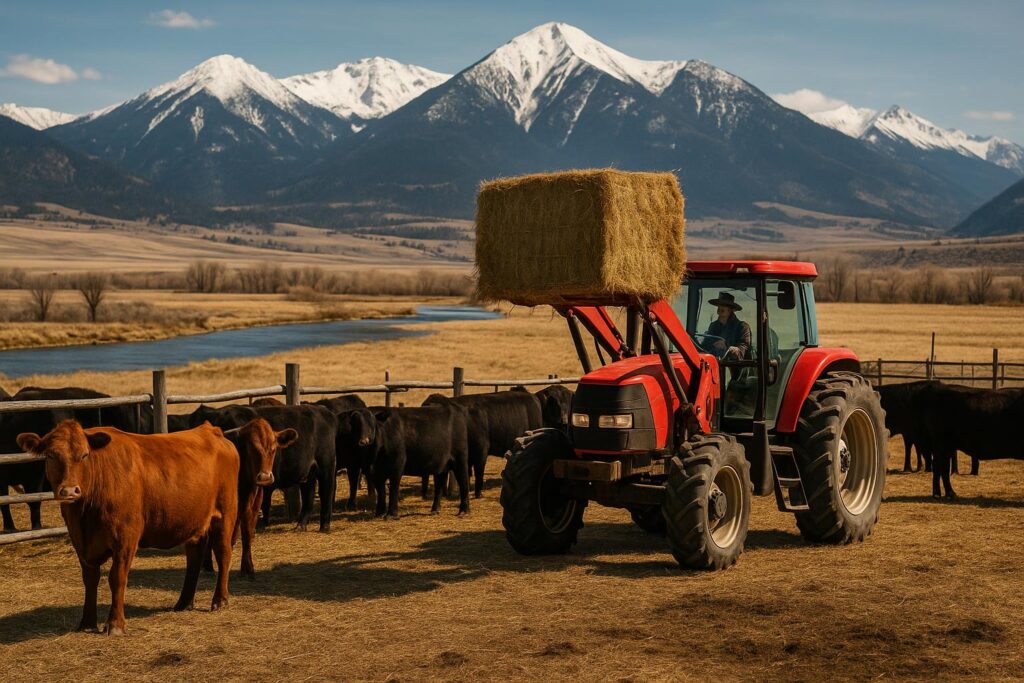
- Hay is bulky: In drought years, hay moves across counties and across state lines. Diesel can decide whether a load pencils out.
- Short weather windows: When the Gallatin Valley or Flathead Valley gets a narrow haying window, producers run hard. Fuel use spikes right when demand for trucking and custom work is highest.
- Input supply chains: Fertilizer and chemicals arrive by truck and rail, and local delivery costs rise when fuel rises.
Energy volatility also complicates planning. It’s one thing to budget for “higher fuel.” It’s another to manage sudden swings that hit mid-season, after you’ve already priced hay, booked trucking, or committed to fertilizer rates.
Where It Shows Up First: Freight, Basis, and Local Prices
Montana producers often feel energy costs through freight and basis before they notice it in other places. If diesel rises:
- Trucking rates tend to follow, especially during fall shipping and spring input delivery.
- Grain basis can widen if it costs more to move wheat, barley, or pulse crops to a terminal.
- Hay trade shifts, with fewer long-haul loads and more localized buying if freight eats the margin.
For ranchers, higher freight can also affect the economics of backgrounding versus selling at weaning. If it costs more to haul calves, some buyers may adjust bids, and the hit can show up in local sale barn prices.
Equipment and Repairs: The Quiet Energy Cost
Diesel isn’t the only energy-linked expense. Repair parts, tires, oils, and many equipment components move through energy-intensive supply chains. When freight is high, it can also mean:
- Longer lead times for parts during busy seasons
- Higher shop rates and service call fees
- More pressure to pre-order filters, belts, and common wear items
That matters for hay producers who can’t afford downtime during first cutting, and for grain farms on the Hi-Line where a breakdown during harvest can turn into a quality loss if weather turns.
Irrigation: Power Bills and Pumping Decisions
In irrigated pockets of the Yellowstone Valley, parts of the Bitterroot Valley, and other river corridors, energy costs influence how much water gets moved and when. Electric rates, diesel for pumps, and maintenance on pivots or pumping plants can all shift the cost of production.
If energy prices climb, producers may re-check:
- Whether marginal acres still pay under current hay or grain prices
- Whether to prioritize higher-value fields for water
- Maintenance schedules to avoid inefficient pumping
It’s also a reminder that water and energy risks can stack. In a dry year, you pump more. If power is also expensive, the cost per ton climbs even if yields hold.
What This Means for Montana Ranchers and Farmers
For 2026 planning, energy volatility is less about predicting a single price and more about building flexibility into your operation.
- Re-check cost of gain and freight assumptions: For cattle operations, update budgets with a range of diesel scenarios, not one number. Freight can be the difference between a profitable and break-even marketing plan.
- Know your break-evens by enterprise: Hay, small grains, and cow-calf enterprises respond differently to fuel swings. Tighten enterprise accounting so you know where you’re most exposed.
- Talk early with truckers and suppliers: If you rely on commercial hauling for hay or cattle, ask how fuel surcharges are handled and how far ahead you can lock in loads.
- Consider timing on big fieldwork: Where feasible, earlier fertilizer or chemical deliveries can reduce peak-season freight risk. That’s not always possible, but it’s worth discussing with your retailer.
- Plan for irrigation energy: If you pump, review motor efficiency, leaks, and pivot maintenance. Small efficiency gains matter more when power is expensive.
None of this guarantees protection from price swings, but it can prevent surprises. Montana margins can be thin in years when hay quality is variable, pasture is short, or cattle prices soften. Energy costs can be the extra weight on the scale.
What to Watch Next in Montana Agriculture
Heading into 2026, Montana producers should keep an eye on a few practical indicators that tend to show up before the full cost impact is obvious:
- Regional diesel trends: Track local rack prices and retail diesel in your area—Hi-Line towns can behave differently than the Gallatin or Flathead valleys depending on supply and demand.
- Freight availability during peak windows: If truck capacity tightens during fall shipping or drought hay movement, rates can jump fast even if diesel is only modestly higher.
- Fertilizer and chemical delivered prices: Watch not just the product price but the delivered cost and any fuel or freight surcharges.
- Local basis and buyer bids: For wheat, barley, and pulses, widening basis can be an early sign that transportation costs are rising.
- Irrigation power rates and maintenance costs: If you’re in an irrigated corridor, monitor rate changes and schedule maintenance before heavy-use months.
It’s also worth watching how energy risk interacts with drought and pasture conditions. If 2026 turns dry in parts of eastern Montana or the Hi-Line, hay and feed will move farther, and freight becomes a bigger piece of the ration cost. If moisture is good and hay stays local, energy volatility may still matter—but it won’t bite as hard.
For producers making marketing decisions, the takeaway is straightforward: energy costs can change the “real” price you receive or pay, even if the headline cattle or grain market looks strong. Building budgets with realistic fuel and freight ranges—and revisiting them mid-season—may be one of the most practical risk-management steps available.
Inspiration: brownfieldagnews.com