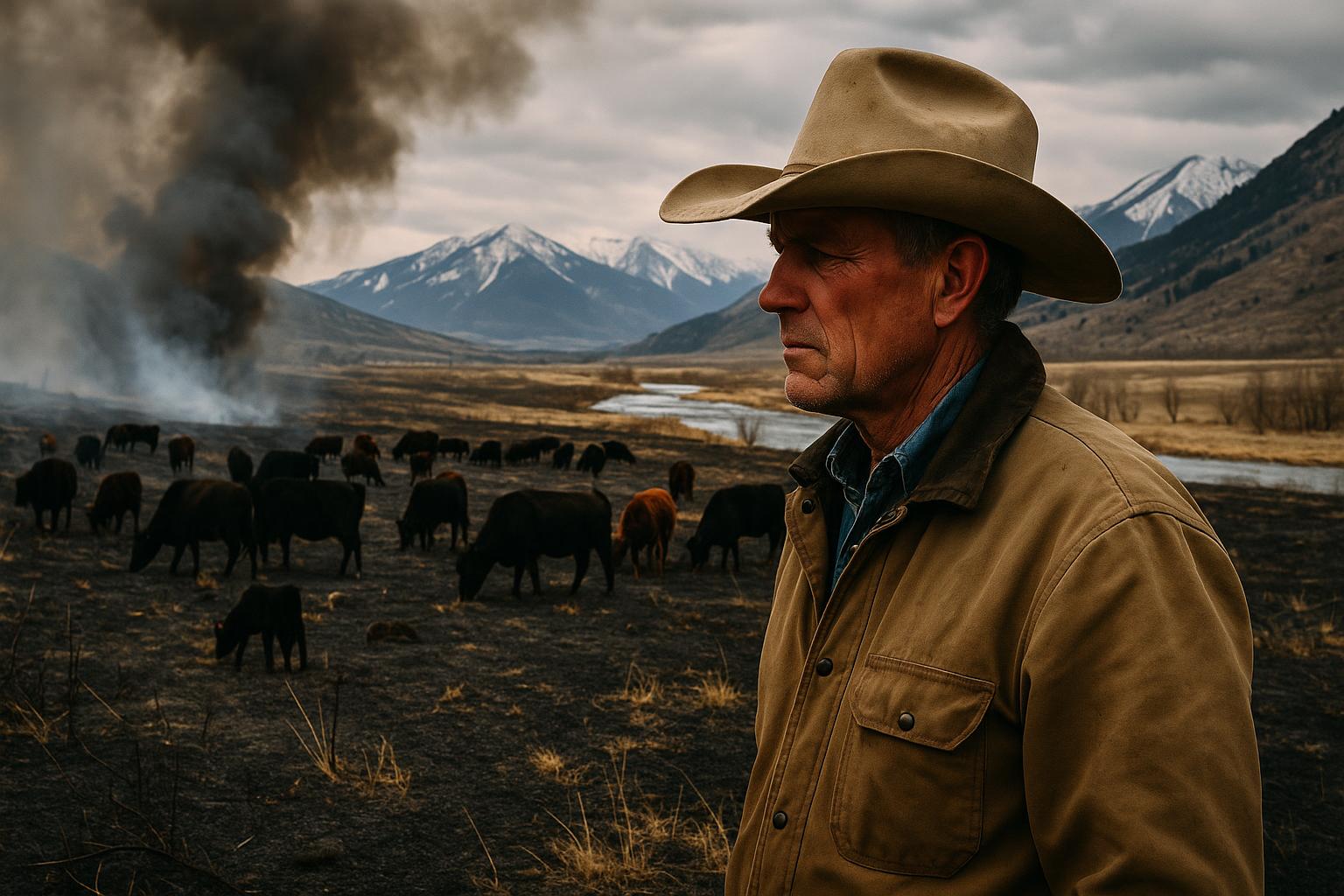
After Plains Wildfires, Montana Ranchers Brace for Tighter Feed and Cattle Markets
Wildfires in the central Plains are adding a new layer of uncertainty to a cattle industry that was already trying to rebuild herds under dry conditions. Reports from the region indicate pasture losses, damaged fencing and water infrastructure, and short-term displacement of cattle. While the fires were not in Montana, the ripple effects can reach north quickly through cattle prices, hay movement, and grazing pressure.
For Montana producers—from the Hi-Line to the Yellowstone Valley—the immediate question isn’t just what burned elsewhere. It’s how those losses could shift demand for feed, where replacement cattle will come from, and whether drought and fire risk at home will tighten the squeeze during turnout and haying season.
What Happened on the Plains—and Why Montana Should Care
Across parts of the Plains, wildfires flared in areas that have been dealing with dry fuels and wind-driven fire behavior. When large rangeland fires hit cow-calf country, the damage is often less about buildings and more about the basics that keep a ranch running:
- Forage loss on native range and planted pasture, which can force early shipping or emergency feed purchases.
- Fencing damage that takes time, labor, and materials to rebuild—often when crews are already stretched thin.
- Water system impacts including melted poly pipe, damaged tanks, and compromised power to wells.
- Short-term cattle movement as operators try to find grass, stubble, or feedlots with space.
Those disruptions can alter regional cattle flows. If more cows get sold because grass is gone, the near-term supply of slaughter cows can increase. At the same time, demand for hay, pellets, and byproduct feed can jump. Montana sits close enough to those markets that truck traffic, price signals, and availability can change quickly—especially in years when the Northern Plains is already watching moisture maps.
How Wildfire Impacts Can Show Up in Cattle and Feed Markets
Market outcomes after a fire depend on timing, scale, and the moisture outlook. But there are a few patterns Montana producers will recognize.
1) More near-term cow movement, uncertain longer-term herd growth. If ranchers in burned areas liquidate cows due to lost grazing, that can add supply to the cow market in the short run. Longer term, it can slow herd rebuilding if females are sold instead of retained. That matters because national cow numbers influence calf prices and replacement costs everywhere, including the Bitterroot Valley and Gallatin Valley.
2) Feed demand can tighten quickly. When grass disappears, feed becomes the bridge. Hay that might have stayed local can start moving. Montana hay producers may see more phone calls from out-of-state buyers, particularly if drought persists across the Plains. But higher demand doesn’t automatically mean better margins—freight, fuel, and the risk of overcommitting inventory still matter.
3) Replacement cattle could get more expensive. If fire-affected operators need to restock later, and if national herd expansion is already slow, competition for bred heifers and young cows can intensify. That can show up at Montana sales and video auctions, especially for reputable, health-managed females.
4) Inputs and logistics become part of the story. Fence supplies, posts, wire, and even hired labor can get pulled toward disaster recovery. If you’re planning major fence work on summer range in the Flathead Valley or along the Missouri Breaks, availability and pricing of materials are worth checking early.
On-the-Ground Montana Concerns: Drought, Grass, and Fire Season
Montana doesn’t need a headline fire elsewhere to be reminded how quickly conditions can turn. The key local variable is moisture—both what’s in the soil now and what arrives during spring and early summer.
- Hi-Line: Producers will be watching spring precipitation and wind events. Fine fuels cure fast, and a dry, windy stretch can create early fire starts that stress already-thin pasture growth.
- Yellowstone Valley: Irrigated hay and pasture can be a buffer, but water supply and delivery reliability matter. If allocations tighten or infrastructure issues crop up, feed planning changes.
- Gallatin Valley: Competition for hay and pasture can be influenced by both livestock and horse demand. If regional hay starts moving out, local availability can feel tighter.
- Bitterroot and Flathead valleys: Wildland-urban interface issues can complicate prescribed burning, access, and response times. Smoke and fire restrictions can affect fieldwork and equipment use.
Montana ranchers also know that wildfire isn’t just a summer problem. A dry spring can set up a long season, and early starts are hard on volunteer fire capacity and on ranch crews trying to calve, brand, and prep for turnout.
What This Means for Montana Ranchers and Farmers
Plan for more volatility in feed and cull markets. Even if Montana range looks decent, the broader region can pull on hay and byproducts. If you market hay, consider how much you can commit without risking your own winter needs. If you buy hay, line up options early and ask about delivery windows.
Re-check grazing and turnout assumptions. If spring stays dry, grass may not be ready when the calendar says it should be. Build a contingency plan: delayed turnout, smaller pasture rotations, or a short-term sacrifice area to protect key range. Where irrigation is available, confirm water timing and infrastructure readiness.
Fence and water are risk points—don’t wait for July. Wildfire recovery stories often hinge on how fast a ranch can get livestock contained and watered. Montana operators can reduce risk by:
- Clearing grass and debris around corrals, tanks, and pump houses
- Staging spare fittings, clamps, and hose for quick water repairs
- Walking major fence lines before peak fire season
- Keeping a current map of shutoffs, wells, and access routes
Think through insurance and documentation. If you haven’t reviewed coverage for fence, outbuildings, and livestock, now is the time. Photos of infrastructure, equipment serial numbers, and pasture records can speed claims and disaster reporting if something happens.
Coordinate locally before smoke is in the air. County DES offices, local fire districts, and neighboring ranches can help clarify response plans and access. For statewide fire updates and restrictions as the season develops, producers can monitor Montana Fire Info. For drought conditions and outlooks, the U.S. Drought Monitor is a commonly used baseline.
What to Watch Next in Montana Agriculture
1) Spring moisture and grass growth by region. Watch how quickly pastures green up on the Hi-Line versus river valleys with irrigation support. If green-up lags, expect more feed use and potentially earlier marketing decisions.
2) Hay market signals and freight. If out-of-state demand increases, hay prices can firm, but trucking availability can become the limiting factor. Producers should watch:
- Delivered hay quotes, not just stackyard prices
- Diesel and freight surcharges
- Quality spreads (good grass, alfalfa, and tested dairy-quality hay often move first)
3) Cull cow and bred female trends. If more cows move due to fire-affected forage, cull prices can see pressure at times. Meanwhile, replacement females may stay supported if herd rebuilding remains slow. Keep an eye on auction reports and regional video sales for direction.
4) Fire restrictions and fieldwork timing. As temperatures rise, restrictions can affect welding, mowing, and even travel on certain roads. Farmers should plan equipment maintenance and hot work for cooler windows and keep water and extinguishers on service rigs and swathers.
5) Water outlook for irrigators. In the Yellowstone and other irrigated corridors, water supply and delivery schedules will shape second cutting potential and aftermath grazing. If allocations look uncertain, consider conservative yield assumptions and communicate early with buyers or custom operators.
Bottom line: wildfires hundreds of miles away can still tighten the margins in Montana through feed movement and market psychology. The best defense is a realistic forage budget, early conversations with suppliers and neighbors, and a fire-season plan that treats fence, water, and access as the critical infrastructure they are.
Inspiration: www.farmprogress.com