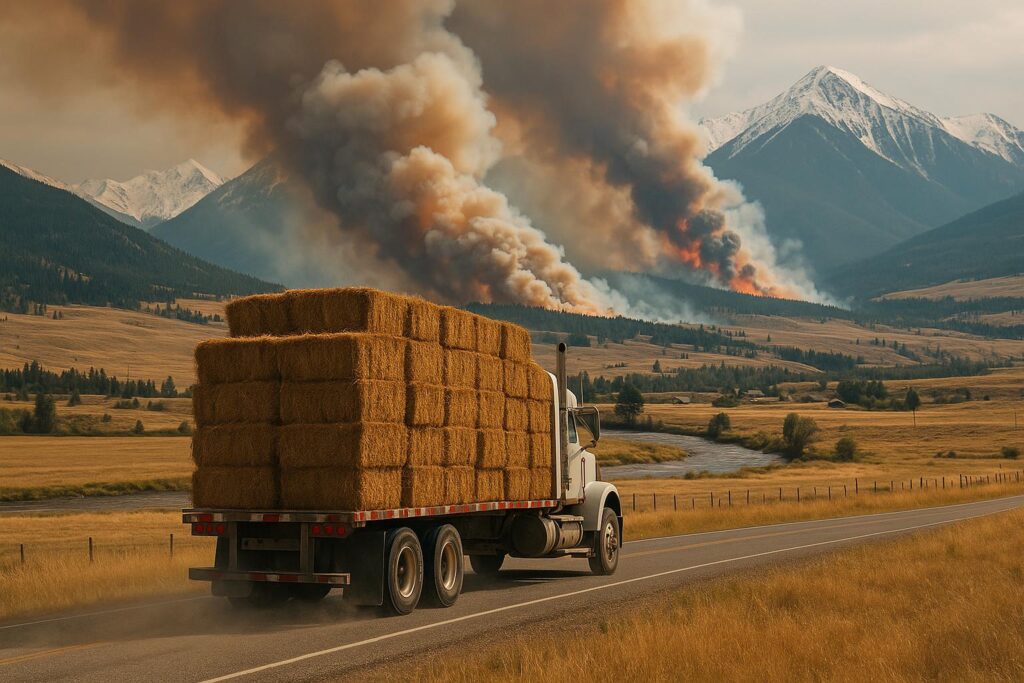
Reports from national farm outlets indicate a nonprofit group, Farm Rescue, has mobilized hay deliveries to ranchers hit by wildfire, using a coordinated effort sometimes described as an “Operation Hay Lift.” While that work is happening outside Montana in some cases, the message lands close to home: when flames take fences, pasture, and winter feed, the recovery clock starts immediately—and it’s measured in bales, trucking capacity, and weeks of grazing left.
Montana has lived this story. From the Hi-Line to the Bitterroot Valley, wildfire and drought have repeatedly collided with tight hay supplies, high freight costs, and short grazing windows. Even in years when statewide hay production looks decent on paper, local shortages can show up fast when smoke closes roads, irrigated ground loses power, or a fire pushes cattle off summer pasture early.
Hay Relief Efforts: What Happened
Farm Rescue is best known for stepping in when farm families face a crisis—illness, injury, or natural disaster—by providing volunteer labor and donated services. According to Farm Progress reporting, the group has activated a hay-delivery effort aimed at ranchers affected by wildfires. The basic model is straightforward: secure donated hay, line up trucking, and move feed to operations that suddenly lost pasture or stored forage.
In wildfire country, that kind of response fills a real gap. Insurance may eventually help with buildings and equipment, but it doesn’t instantly replace grass. And when a ranch is forced to feed earlier than planned, every day of unexpected feeding increases costs—especially if hay has to be hauled long distance.
Why Hay Becomes the First Emergency After a Fire
For ranchers, wildfire damage isn’t just blackened timber. It’s a chain reaction that can stretch across an entire production year:
- Lost grazing and forced early weaning: If pasture is gone or access is blocked, cows come home early. That can mean early weaning, lighter calves, or higher supplementation costs.
- Haystack and feed losses: Stored feed can burn quickly, and even near-miss stacks may be contaminated by ash or firefighting foam depending on the situation.
- Fences and water systems: Rebuilding fence and restoring pipelines, tanks, pumps, and power takes time. Until that’s done, grazing options stay limited.
- Pasture recovery time: Some grass comes back fast; some doesn’t. Weed pressure often increases, and burned ground can be vulnerable to erosion.
Montana ranches also deal with distance. If hay has to move from the Yellowstone Valley to the Hi-Line—or from Idaho into the Bitterroot—freight becomes a major line item. In a bad fire year, trucking availability can tighten at the same time demand spikes.
Where This Hits Home in Montana
Wildfire impacts aren’t uniform across the state, and neither are hay options.
- Bitterroot Valley: Steep terrain and timbered interfaces can make fires fast-moving and access challenging. When smoke and closures hit, hauling and staging feed can get complicated.
- Flathead Valley: A mix of small-acreage hay producers and larger operations means local hay can be spoken for early. Competition from hobby demand can tighten the market in dry years.
- Gallatin Valley: Strong development pressure and high land costs can limit hay acreage, pushing some ranchers to source feed from other regions when drought cuts yield.
- Yellowstone Valley: Irrigation supports reliable hay in many areas, but water availability, infrastructure issues, and heat can still pinch tonnage or quality. When regional demand surges, prices can move quickly.
- Hi-Line: Dryland hay and range conditions can swing sharply with rainfall. When fires or drought stack up, long-haul hay becomes common—and expensive.
The key point: even if your county isn’t burning, wildfire elsewhere can influence your input costs. When a major fire knocks out pasture, the buying pressure hits the hay market and the trucking market at the same time.
What This Means for Montana Ranchers and Farmers
Hay-relief stories are a reminder that feed security is part of wildfire preparedness, not just winter planning. For Montana producers, a few practical takeaways stand out:
- Know your feed “break glass” plan: Identify who you’d call for hay, trucking, and temporary pasture if you had to feed 30–60 days earlier than normal.
- Inventory now, not later: Count bales, estimate days-on-hand, and be realistic about waste. If you’re short, it’s generally cheaper to solve it early than during the first cold snap or during a regional fire event.
- Test hay and match it to class of livestock: If you end up buying emergency hay, quality can vary. A quick forage test can prevent wrecks with protein/energy balance, especially for bred cows and replacement heifers.
- Plan for freight: In a tight year, the delivered price matters more than the stack price. Line up trucking contacts and ask what lanes they can realistically cover during fire season.
- Think beyond cattle: Farmers with hay ground, straw, or aftermath grazing may see increased demand. That can be an opportunity, but it also raises questions about contracts, delivery timing, and liability when smoke and closures are in play.
For producers in irrigated corridors like parts of the Yellowstone Valley, hay can be a stabilizer for the state’s cattle sector in rough years—but only if water, power, and equipment stay online through summer. For dryland areas along the Hi-Line, the risk is more about yield swings and the cost of importing feed when local production falls short.
How to Engage With Assistance (Without Counting on It)
Nonprofit hay deliveries can be a lifeline, but they’re not a guaranteed supply chain. If wildfire hits your operation, consider these steps while also working your normal channels:
- Document losses early: Photos, dates, and maps help with insurance and disaster programs.
- Contact local networks: County Extension, local conservation districts, and Montana Department of Livestock contacts can help connect producers with resources and grazing options.
- Check disaster program eligibility: USDA’s Farm Service Agency programs and grazing-related assistance may apply depending on the event and county designations. Start the conversation early; paperwork takes time.
- Be cautious about donated feed: Ask about hay origin, weed risk, and storage conditions. Invasive weeds and poor-quality feed can create long-term headaches.
Relief is most effective when it bridges a short-term gap—getting cattle through a pinch period—while the ranch rebuilds fence, water, and a workable grazing plan.
What to Watch Next in Montana Agriculture
- Fire weather and fuel conditions: Keep an eye on lightning patterns, wind events, and extended hot/dry forecasts, especially in timbered valleys and range country with heavy fine fuels.
- Hay market signals: Watch local classifieds, auction notes, and delivered quotes. If trucking tightens, price spreads between “in the stack” and “delivered” can widen fast.
- Irrigation reliability: In irrigated regions, monitor water supply, canal issues, and power disruptions. One week of downtime during peak growth can reduce second cutting potential.
- Pasture and range recovery: After a burn, watch for weed flushes and grazing pressure. Some areas may need rest to recover; others may be opened with restrictions.
- Policy and program updates: State and federal disaster declarations, USDA program timelines, and any Montana-specific emergency measures can affect how quickly assistance reaches the ground.
Wildfire will always be part of the West, but the financial shock doesn’t have to be. The operations that come through best usually have three things lined up ahead of time: feed options, freight options, and a realistic plan for what happens when cattle have to come off grass early.
Inspiration: www.farmprogress.com