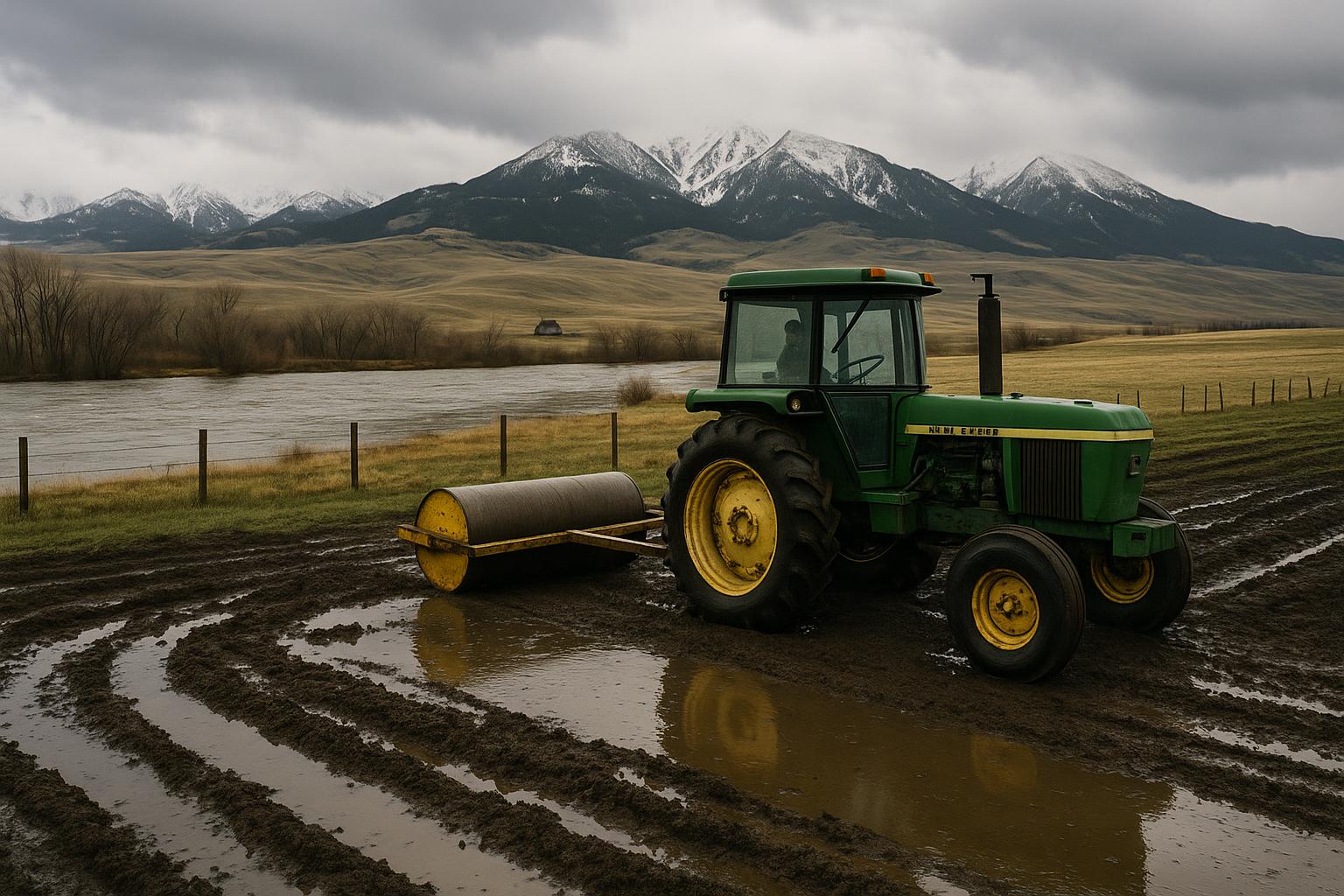
Spring Moisture Splits Montana: Some Fields Too Wet to Roll, Others Still Waiting
Reports from around Montana suggest spring is arriving with a familiar twist: moisture is not landing evenly. Some producers are looking at fields that are finally recharging after a dry stretch, while others are watching showers stack up fast enough to delay early fieldwork. That split matters in a state where a couple inches at the right time can make the difference between a decent hay crop and a summer of buying feed.
Across the valleys and plains, the practical question is the same: when can you get on the ground without making a mess, and will moisture hold long enough to carry pasture and small grains into June? Soil conditions right now will influence everything from fertilizer timing to whether hay stands green up evenly.
Wet Spots, Dry Spots: What’s Being Seen Across the State
Montana’s spring pattern often comes in bands—one region gets a soaking rain while another watches it miss by 20 miles. This year appears no different. Producers in parts of the Gallatin Valley and Flathead Valley have described intermittent rain and snowmelt creating soft ground conditions that can slow early passes with equipment. In contrast, portions of the Hi-Line and eastern Montana frequently enter spring needing steady, gentle moisture to rebuild subsoil reserves after winter winds and limited snowpack.
In the Bitterroot Valley, where irrigation and early-season temperatures can move quickly, wet periods can be a mixed blessing: good for soil moisture, but tough on field access and early weed control if it turns into a prolonged muddy stretch. In the Yellowstone Valley, the conversation often turns to timing—getting spring work done ahead of heat and wind, while watching river and canal conditions for irrigation reliability later.
None of this is unusual, but it’s consequential. A heavy rain can set up topsoil crusting in some fields, while leaving other areas just moist enough to seed into. The difference often shows up later as uneven emergence, patchy stands, or delayed first cutting on hay.
Why Spring Moisture Matters More Than Just Planting Dates
Spring precipitation does more than determine when the drill can roll. It sets the tone for:
- Soil structure and compaction risk: Running heavy equipment on wet ground can create compaction that sticks around for years, especially in finer-textured soils.
- Weed pressure: Moisture and warming temperatures can trigger early flushes of kochia, cheatgrass, and broadleaf weeds, raising the stakes for timely control.
- Fertilizer efficiency: Nitrogen management is tricky when fields are saturated. Leaching and denitrification risks can rise in wet conditions, while dry topsoil can keep fertilizer from moving into the root zone.
- Hay carryover planning: If spring starts slow and wet, first cutting can slide later. If spring turns dry fast, tonnage can drop. Either way, hay inventory decisions get made now.
- Pasture turnout: Wet springs can delay turnout to prevent pugging and damage to sod. Dry springs can force earlier turnout on short grass, which can stress pastures heading into summer.
Montana producers have learned that “moisture is moisture” isn’t always true. Two inches over 48 hours can be helpful; two inches in one shot can cause runoff, erosion, and lost field time. That’s why the next few weeks matter as much as the total precipitation number.
Fieldwork Decisions: Patience vs. Pressure
When the calendar says go but the soil says no, operators face a real tradeoff. Waiting protects soil structure and reduces ruts that can complicate harvest. But waiting too long can compress the spring workload into a narrow window, increasing the risk of seeding into less-than-ideal conditions.
In wetter pockets, the first temptation is often to “just try a corner.” That can be a costly test if equipment sinks or smears the seedbed. In drier pockets, the temptation is to chase moisture deeper, which can hurt stand establishment if seed ends up too deep or if the top layer dries and crusts.
What many agronomists emphasize in these conditions is simple: let soil conditions drive the decision. If you can form a ball of soil that stays together and smears, it’s likely too wet for tillage or heavy traffic. If it crumbles, you’re closer to workable.
For producers looking for regional updates, the USDA’s weekly state crop and weather reports can provide a broad snapshot, and the U.S. Drought Monitor for Montana offers a drought-status baseline—though local rain gauges and field checks still tell the real story.
What This Means for Montana Ranchers and Farmers
1) Hay producers should plan for variability. If spring stays wet in some valleys, expect delays in fertilizer application and first cutting timing. If areas on the Hi-Line or in eastern Montana miss the next systems, the first cutting could be short even if it’s early. Consider lining up twine, wrap, and fuel early—weather windows can be tight when everyone is cutting at once.
2) Cattle operators may need flexible turnout and supplementation plans. A wet spring can produce grass, but it can also keep cattle off certain pastures longer. A dry spring can force early use of hay or cake. Either scenario can affect body condition and breeding performance. Watch water development and stock ponds closely; they can look fine in April and be a concern by July if runoff is limited.
3) Irrigators should watch both soil moisture and supply outlook. In the Yellowstone Valley and other irrigated corridors, early moisture can reduce the need for the first set, but it doesn’t guarantee mid-summer supply. Keep an eye on local irrigation district updates and mountain snowpack discussions where applicable. The NRCS Montana snow resources can be a helpful starting point for basin-level context.
4) Equipment timing and maintenance matter. Wet delays often compress fieldwork into fewer days. That’s when breakdowns hurt most. Use any weather downtime to get drills, openers, and sprayers ready, and double-check calibration—especially if you’re switching varieties or fertilizer blends.
5) Market planning stays connected to weather. Weather-driven hay uncertainty can ripple into local feed prices. If you’re short on carryover, it may be worth penciling out multiple scenarios now: average hay year, short hay year, and a year where you have to buy. Locking in trucking or supply relationships early can matter if the state turns dry later.
What to Watch Next in Montana Agriculture
- 7–14 day precipitation and temperature trends: A warm, windy stretch can erase topsoil moisture quickly, especially on lighter ground and exposed benches.
- Soil temperature and emergence conditions: Cold, wet soils can slow germination and increase disease risk in some crops. Watch for uneven stands after heavy rain events.
- Wind events: Spring winds can strip moisture and create blowing soil on worked ground. If you’re in open country on the Hi-Line or eastern Montana, residue management can make a difference.
- Pasture growth rate vs. turnout timing: Track grass height and soil firmness, not just the calendar. Overgrazing early can reduce total season production.
- Water outlook updates: Pay attention to irrigation district notices, reservoir discussions, and basin-level snowmelt timing. Early moisture helps, but it’s not the whole water story.
- Hay ground fertility windows: If fields stay wet, the best fertilizer timing can get squeezed. If it turns dry, surface-applied nutrients may not move into the root zone without a rain.
Montana’s spring always tests patience. The producers who come out ahead are usually the ones who match decisions to field conditions—protecting soil when it’s too wet, conserving moisture when it’s too dry, and keeping plans flexible as the weather pattern shifts from week to week.
Inspiration: brownfieldagnews.com