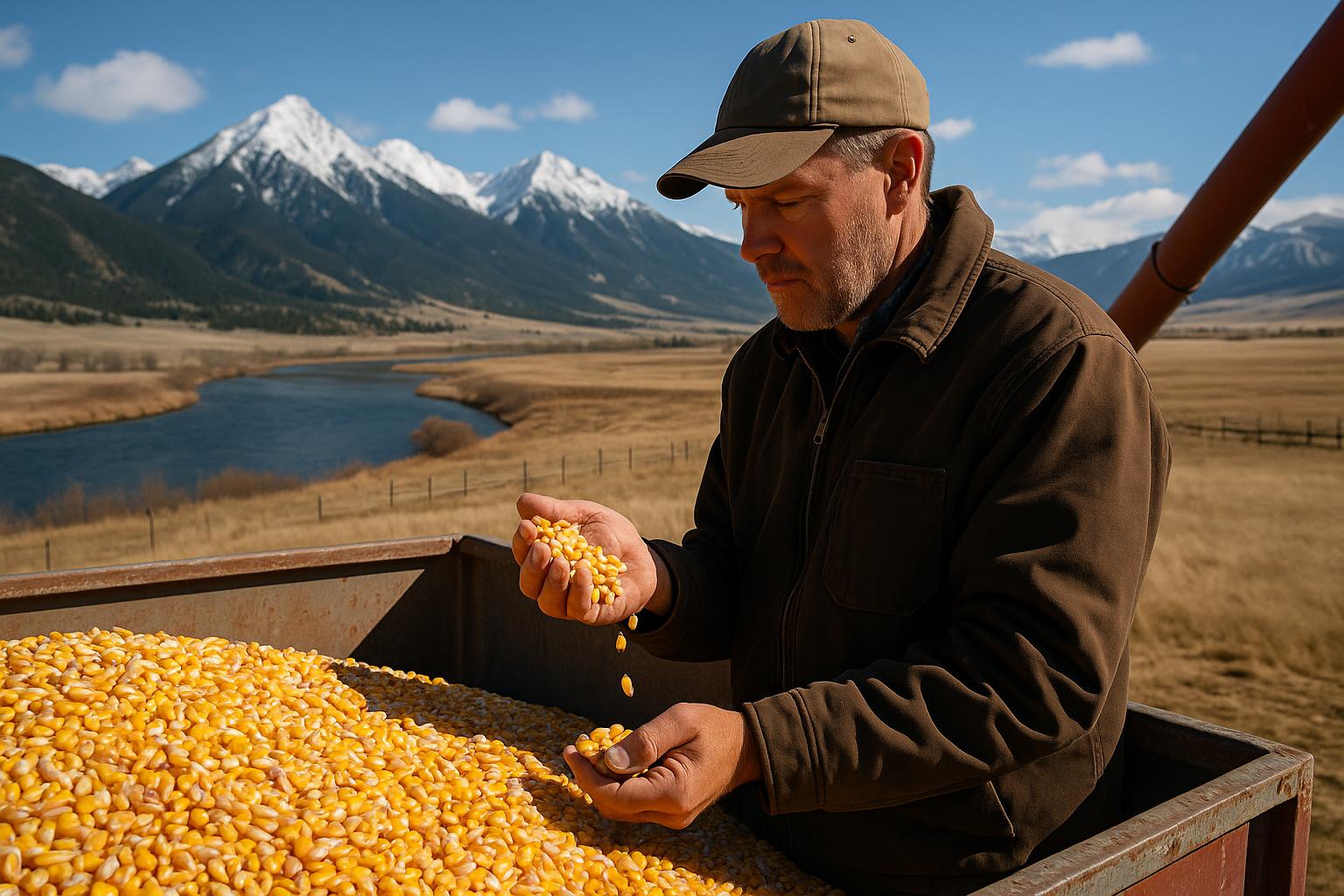
Grain Markets Slip: What Lower Corn and Soybeans Could Signal for Montana Feed and Input Costs
Corn and soybean futures finished lower at the end of the week, with market watchers pointing to a familiar mix of uncertainty: shifting export expectations, ongoing sensitivity to trade headlines, and fresh attention on biofuel policy. Reports indicate soybeans gave back some earlier gains, while corn also moved down as traders positioned ahead of upcoming federal supply-and-demand updates.
Montana doesn’t grow corn and soybeans at the scale of the Midwest, but these markets still reach into the state through feed costs, freight, and the broader tone of commodity prices. When grain markets get jumpy, it can show up quickly in ration costs for backgrounding yards, winter feed planning, and even fertilizer decisions for irrigated hay and small grains in places like the Yellowstone Valley and Gallatin Valley.
What happened in the markets
Friday’s trade saw both corn and soybeans close lower, according to market reports. The slide appeared tied to:
- Trade sensitivity: Soybeans, in particular, tend to react quickly to any perceived change in export demand, especially involving China. Even rumor-level headlines can move prices.
- Biofuel policy crosscurrents: Soybean oil weakened as traders weighed the implications of blending mandates and related policy signals. Biofuel demand can be a major driver for soybean oil values, which then feeds back into the soybean complex.
- Positioning ahead of USDA reports: Traders often reduce risk or rebalance positions before major updates. The next set of USDA WASDE reports and related data can adjust expectations for yields, carryout, and global demand.
None of those factors are new, but together they can create a “two steps forward, one step back” pattern—especially during periods when weather risk isn’t the only story.
Why it matters in Montana
Montana agriculture is heavily anchored in cattle, hay, and small grains, with regional differences that shape how national grain prices hit home. A down day in corn and beans doesn’t automatically mean cheaper feed in the Bitterroot Valley or the Hi-Line, but futures direction often sets the tone for what local buyers and sellers expect next.
Here’s where the connection shows up for Montana producers:
- Cattle feeding economics: Corn is still the benchmark energy feed. Even if a ranch is feeding hay, screenings, or a custom mix, corn price direction influences replacement costs and the negotiating range for byproducts.
- Hay demand and pricing: When grain is expensive, feedlots and some cow-calf operators lean harder on forage. When grain backs off, some rations shift. That can affect hay movement out of irrigated regions like the Yellowstone Valley and parts of the Gallatin Valley, especially for higher-quality alfalfa.
- Freight and basis realities: Montana’s distance from major Corn Belt supply means local cash prices don’t always mirror futures. Rail availability, trucking capacity, and seasonal demand in the Flathead Valley and Bitterroot Valley can widen or tighten basis quickly.
- Input decisions for crop producers: Corn and soybean markets influence broader commodity sentiment. That can spill into spring wheat, durum, and barley psychology—even when fundamentals are different. On the Hi-Line, where small grains dominate, producers watch the whole board for clues about money flow and risk appetite.
Montana angle: feed, hay, and the cattle market
For ranchers, the practical question isn’t whether soybeans were down on Friday. It’s whether this move hints at a trend that changes feed budgets before turnout, weaning, or wintering decisions.
If corn stays softer, backgrounding and finishing margins can improve on paper. That can support demand for Montana calves—especially if cattle prices remain strong and buyers feel they can lock in feed at workable levels.
If the weakness is short-lived and trade or policy headlines reverse the market, feed costs can jump back up fast. That’s when producers who delayed pricing on supplements or custom rations can get caught with higher costs right when they’re trying to pencil fall and winter plans.
Hay producers should also pay attention. In years when drought trims pasture and hay yields, forage values can decouple from grain. But when moisture is adequate and hay stacks rebuild, grain direction matters more. Irrigated operators in the Yellowstone Valley will be watching both water outlook and demand signals from cattle and dairy buyers.
What This Means for Montana Ranchers and Farmers
1) Re-check feed budgets, not just futures. A lower close on the board doesn’t always translate to a cheaper delivered load in Montana. Ask your supplier what they’re seeing on basis, freight, and availability for corn, distillers grains, and protein meals.
2) Consider incremental pricing if you’re exposed. For operations that buy a lot of feed, a stair-step approach—pricing a portion now and leaving some open—can reduce the risk of being wrong all at once. The right approach depends on cash flow and storage.
3) Watch soybean meal and oil, not just beans. Many Montana rations lean on protein supplements. If soybean oil policy headlines are moving the complex, meal can react too. That matters for cow-calf mineral/protein programs and backgrounding diets.
4) Hay marketing could get more competitive if grain stays cheaper. If corn remains under pressure, some buyers may resist top-end hay prices. Premium dairy-quality hay can still command a market, but mid-grade hay may feel more price sensitivity.
5) Crop producers should separate local fundamentals from national noise. On the Hi-Line and in the Golden Triangle, local moisture, disease pressure, and protein premiums often matter more than what soybeans did in a single session. Still, broader commodity sentiment can affect hedging opportunities.
Policy and demand: why the market is jumpy
Two themes are keeping traders on edge: export demand and biofuel rules. Soybeans are particularly tied to global trade flows. Any hint of stronger or weaker buying can swing prices, and the market often reacts before the details are confirmed.
On biofuels, soybean oil demand is influenced by renewable diesel growth and blending requirements. Policy adjustments can change projected usage, which then ripples back through crush margins and soybean values. Producers who don’t follow biofuel policy day-to-day can still feel the outcome through feed and commodity price relationships.
What to Watch Next in Montana Agriculture
- USDA reports next week: Traders will be looking for any changes in U.S. and global corn/soybean carryout, export projections, and yield assumptions. Even small adjustments can move futures.
- Local basis and delivered feed quotes: Check how elevators and feed suppliers in your area—whether you’re in the Flathead Valley, Bitterroot Valley, or eastern Montana—are pricing delivered corn and supplements. Basis tells the real story.
- Moisture and irrigation outlook: For hay producers in irrigated corridors like the Yellowstone Valley and parts of the Gallatin Valley, water supply and timing will shape tonnage more than futures screens will.
- Calf and feeder demand signals: If feed costs ease and cattle prices remain supported, buyers may stay aggressive. If grain bounces back, watch whether bids soften for heavier feeders.
- Biofuel policy updates: Any new signals on blending mandates or renewable fuel programs can move soybean oil and, by extension, the broader oilseed complex.
For Montana producers, the takeaway is simple: the grain market’s direction matters, but the translation to your operation runs through freight, basis, and weather. A couple of lower closes can be meaningful if they turn into a trend—especially heading into the heavy planning window for fall feeding and winter hay movement.
Inspiration: brownfieldagnews.com