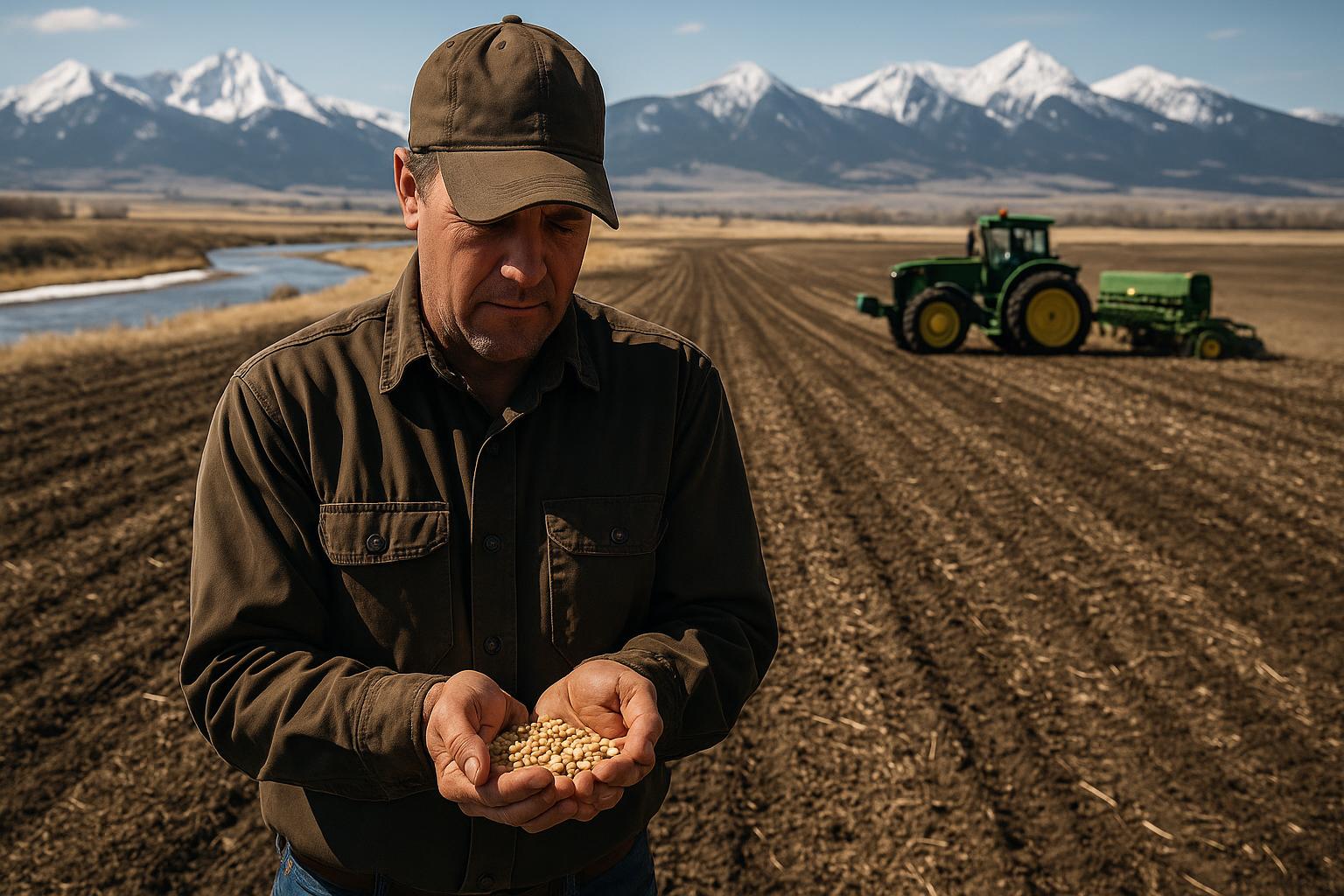
USDA Planting Intentions Nudge Soybeans Higher — What Montana Producers Should Take From It
USDA’s annual Prospective Plantings report is one of those market events that can move prices fast, even though it’s built on producer intentions rather than acres actually seeded. Recent market coverage indicates soybean prices strengthened after the report suggested more soybean acres are planned nationally, but the shift wasn’t as large as many traders expected going into the release.
That kind of “bigger than last year, smaller than the rumor” outcome can still jolt futures because the market is constantly repricing risk: how many acres will end up in beans, what that means for fall supplies, and whether U.S. row-crop acreage is still trending lower overall.
For Montana, soybeans aren’t a dominant crop statewide the way they are in the Midwest, but the soybean complex matters here anyway. Soybean meal is a core protein ingredient in many rations, soybean oil influences broader oilseed pricing, and soybean futures often spill over into other commodities that Montana producers do raise and market.
What happened
Reports on the USDA Prospective Plantings release indicate:
- National soybean acres were expected to rise compared to the prior year.
- The corn-to-soybean acreage shift was smaller than many pre-report estimates, which was interpreted as supportive for soybean prices.
- Overall U.S. crop acreage continues to be watched closely as land moves among crops and other uses, tightening the margin for error when weather turns.
Keep in mind: Prospective Plantings is a snapshot of intentions. Weather delays, input costs, prevented planting, and late price moves can all change what ends up in the ground. USDA will update acreage estimates in later reports, and the market will keep adjusting as spring fieldwork progresses.
Why it matters to Montana agriculture
Montana producers feel soybean moves through three main channels: feed, competing acres, and broader commodity sentiment.
1) Feed and livestock margins
Soybean meal is a key protein source for cattle, dairy, and other livestock. Even if you’re not buying meal directly, it can influence the price of commercial supplements and some backgrounding rations. When soybean futures jump, it can add cost pressure—especially for operations already juggling hay availability, freight, and pasture conditions.
2) Oilseeds and small grains price relationships
In Montana’s cropping country—whether that’s the Yellowstone Valley under irrigation, dryland acres on the Hi-Line, or mixed rotations in the Gallatin and Flathead valleys—price moves in one major row crop can affect the whole complex. Traders often reposition across corn, soybeans, wheat, and canola. That can influence basis and futures spreads that ultimately show up in local bids for wheat, barley, and other grains.
3) Acreage competition and 2026 planning
Even if Montana soybean acres are modest, national acreage decisions matter because they shape total feedgrain and oilseed supplies. Those supplies set the tone for next year’s input decisions: what pencils out for spring wheat vs. barley vs. pulse crops, whether to chase oilseed premiums, and how aggressively to forward price.
For producers in the Bitterroot Valley and other hay-heavy regions, the soybean connection is less direct—but still real. If soybean meal rises, some buyers look harder at alternative protein sources, and that can ripple into local forage and supplement markets. It’s not a one-to-one relationship, but it’s part of the bigger feed-cost picture.
Montana market angle: don’t ignore the “intentions vs. reality” gap
Montana producers are used to plans changing quickly—whether it’s a late snow, a dry April, irrigation water uncertainty, or a stretch of wind that shuts down spraying. The same is true nationally. A report can say “more beans,” but the actual outcome depends on:
- Spring weather across the Corn Belt (planting pace, replant, prevented planting).
- Input costs (fertilizer, seed, chemical availability) that can push acres toward or away from certain crops.
- Relative prices (corn/bean ratio) that can still shift decisions right up to planting.
- Export demand for soybeans and meal, which can change quickly with currency moves and global policy.
That’s why a post-report rally doesn’t necessarily mean “beans are solved” or “beans are scarce.” It means the market is recalibrating probabilities. For Montana, the practical question is how those probabilities affect your costs and your marketing windows.
What This Means for Montana Ranchers and Farmers
Ranchers: watch protein supplement costs and replacement options. If soybean meal stays firm, it can show up in higher-priced tubs, cakes, and custom rations. Operations in the Hi-Line and central Montana that rely on shipped-in supplements should keep an eye on freight and availability, not just the futures board. If you’re buying, ask your supplier what they’re seeing on forward pricing and whether there are alternative formulations that still meet your protein targets.
Hay producers: keep an eye on overall feed demand signals. Stronger protein costs can change how some feeders balance rations, but drought and pasture conditions will still be the bigger driver for hay movement in Montana. In the Yellowstone Valley and other irrigated areas, water outlook and first-cut timing will matter more than soybeans—but feed markets are connected, and price volatility in one corner can shift buying behavior elsewhere.
Grain farmers: treat the rally as a reminder to review marketing plans. If soybeans are pulling money and attention in commodity markets, wheat and barley can get dragged along at times—or get left behind. Producers in the Golden Triangle/Hi-Line corridor and the Gallatin Valley should watch basis and spreads, not just headline futures moves. If you have on-farm storage, consider what price targets would justify incremental sales versus holding for seasonal basis improvement.
Irrigated operations: don’t let futures headlines override water reality. In places like the Yellowstone Valley, the economics of switching acres only work if water, labor, and equipment timing line up. A national intentions report can move prices, but it doesn’t change your canal delivery schedule or pumping costs. Use the market move as information—not as a reason to force a rotation that doesn’t fit your ground.
What to Watch Next in Montana Agriculture
- USDA follow-up acreage and supply reports: Prospective Plantings is not the final word. Watch subsequent USDA updates and how the trade responds. (USDA reports are posted at nass.usda.gov.)
- Planting pace and spring weather: National planting delays can support prices; fast progress can pressure them. Local Montana weather will matter for small grains and hay, but national weather drives the soybean narrative.
- Protein and feed markets: Track soybean meal trends and compare them against local hay and supplement quotes. If meal stays elevated, it could influence how backgrounders and feedyards bid for calves.
- Basis and freight: Montana is a freight state. Pay attention to what local elevators and feed suppliers are doing on delivered pricing, not just Chicago futures.
- Rotation economics for 2026: If the U.S. continues to see tight competition for acres, price volatility is likely to stick around. Use that to stress-test budgets for seed, fertilizer, and chemical—especially in dryland regions where yield risk is already high.
Bottom line: the soybean pop tied to planting intentions is a reminder that acreage—real or rumored—can move markets quickly. Montana producers don’t need to chase every headline, but they do need to track how these shifts translate into feed costs, local basis, and the next set of marketing decisions.
Inspiration: brownfieldagnews.com