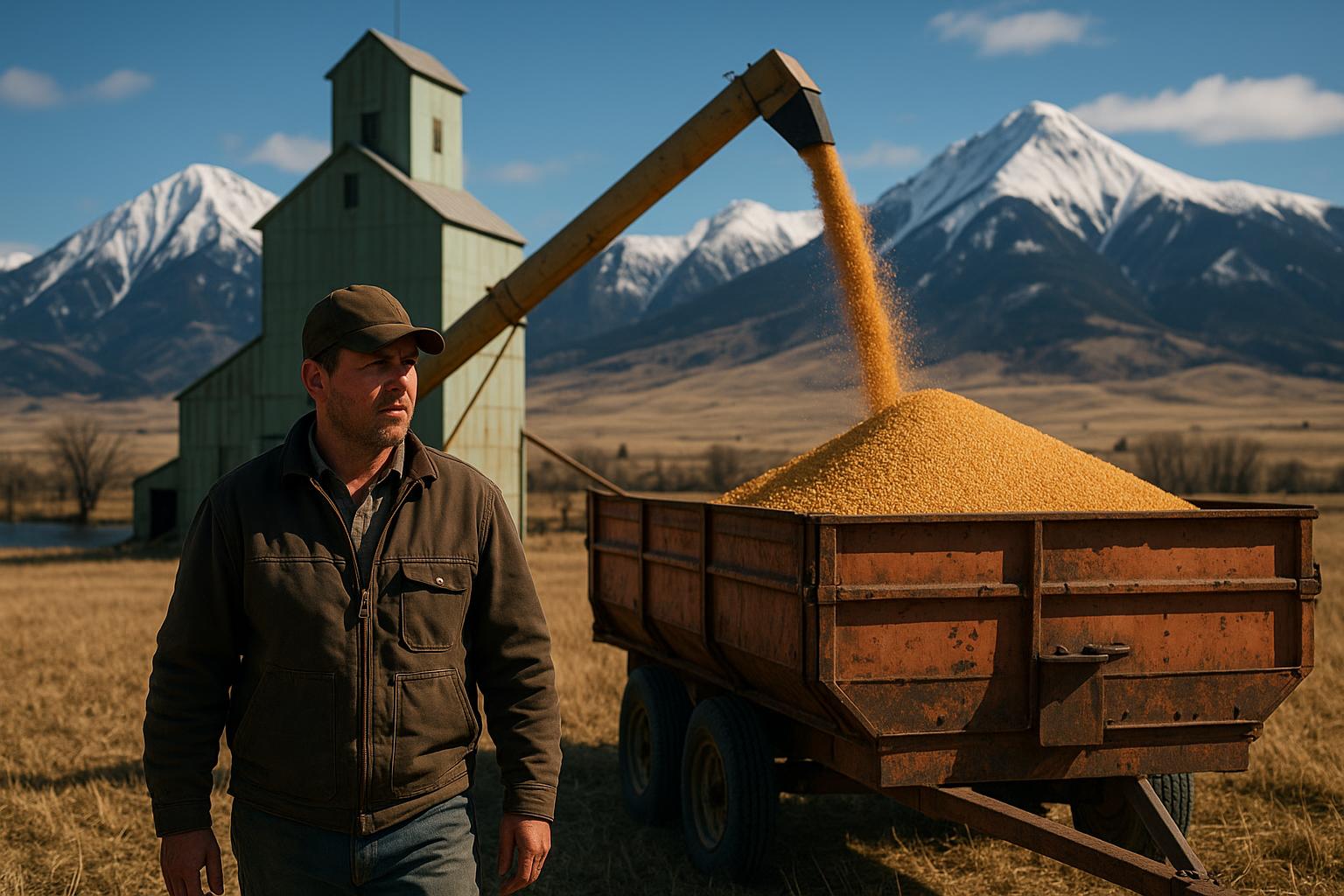
Grain Markets Slip After USDA Reports: What Montana Feed and Fuel Costs Could Do Next
Grain futures turned lower after a round of USDA data and a softer tone in outside markets, with reports pointing to profit taking and technical selling as key drivers. For Montana producers, the day-to-day moves in Chicago don’t always translate directly to the local elevator bid, but the direction still matters—especially for ranches and dairies that buy feed, and for row-crop growers in places like the Yellowstone Valley and parts of the Hi-Line who watch corn and soybean pricing as benchmarks.
According to market reporting, traders weighed two big USDA releases: acreage estimates that some viewed as slightly supportive, and quarterly grain stocks that were seen as more bearish. Once those numbers hit the market, attention reportedly shifted back to demand questions—particularly export demand—and to weather risk in major U.S. growing areas. Crude oil weakness was also cited as a factor pulling on the broader commodity complex.
What Happened in the Grain and Oilseed Trade
Reports indicate soybeans and corn futures moved modestly lower as traders locked in gains and reacted to chart signals. That kind of selling often shows up right after major government reports: the market gets the data it’s been waiting for, then participants adjust positions quickly.
- USDA acreage estimates: Some analysts characterized the numbers as slightly bullish, implying fewer acres or a tighter outlook than expected in certain categories.
- Quarterly grain stocks: The stocks side was described as bearish, suggesting more grain in storage than the market wanted to see.
- Demand remains the big question: With supply estimates debated, traders reportedly returned to watching export demand, including uncertainty around buying interest from China.
- Energy markets in the background: A pullback in crude oil can pressure biofuel-related sentiment and drag on commodity indices, even when the direct fundamentals are mixed.
For Montana, the key takeaway isn’t one day’s close. It’s that the market may be shifting from “report-driven” trading back to “weather and demand” trading—where volatility can return fast.
Why It Matters to Montana Agriculture
Montana’s ag economy touches grains, cattle, hay, and energy costs all at once. Even if you’re not raising corn or soybeans, futures prices influence what you pay for feed, what you can forward-contract, and how aggressive you want to be with input purchases.
Here are the main Montana connections:
- Feed costs for cow-calf and backgrounding: In the Gallatin Valley and across the Hi-Line, many operations rely on a mix of hay, silage, and purchased commodities. Softer corn can ease ration costs, but only if local basis and freight cooperate.
- Hay demand and substitution: When corn and soybean meal get cheaper, some buyers can substitute away from higher-priced hay or reduce hay feeding rates. That matters for hay growers in the Bitterroot Valley, Flathead Valley, and irrigated benches where dairy-quality grass and alfalfa compete with other feed ingredients.
- Calf and feeder margins: Lower feed inputs can support feedlot margins. That can be constructive for feeder cattle demand, but it’s not automatic—cattle prices also depend on beef demand, placements, and weights.
- Fuel and freight: Crude oil weakness doesn’t always show up immediately at the pump in rural Montana, but energy is still a major line item. Diesel affects everything from haying to hauling calves to shipping grain to market.
Montana producers also have to translate national headlines into local realities: irrigation water availability, drought conditions, and regional basis levels can outweigh what the futures board did in a single session.
Local Angle: How This Could Play Out in Montana Regions
Yellowstone Valley: For irrigated growers and feed users, the next few weeks of market focus on demand and weather could keep bids jumpy. If futures stay soft but basis strengthens, local cash prices may not fall much. Watch how elevators adjust bids around harvest expectations and transportation constraints.
Hi-Line: Many operations are more cattle-and-small-grains oriented, but corn and soybean meal still show up in purchased rations. If futures continue to sag, it could create opportunities to lock in part of next season’s feed needs—especially if you’re planning to retain ownership or background longer.
Gallatin Valley: With a mix of hay, seed, and livestock operations, price signals travel quickly. If grain stays cheaper, some buyers may push harder on hay pricing later in the season. Hay producers should watch not just futures, but local inventories and dairy demand.
Bitterroot and Flathead Valleys: These valleys can be heavily influenced by irrigation timing, second cutting prospects, and local horse/dairy demand. If national feed ingredients soften, premium hay still sells on quality, but mid-grade hay can feel more price pressure.
What This Means for Montana Ranchers and Farmers
For most Montana operations, the practical move is not to chase the market—it’s to use the shift in sentiment as a prompt to tighten up your marketing and input plan.
- If you buy feed: Consider pricing a portion of corn, soybean meal, or complete rations if your supplier offers a transparent formula tied to futures and basis. Don’t assume lower futures automatically mean lower delivered feed—freight and local availability still matter.
- If you sell hay: Keep an eye on competing feed prices. Cheaper corn/meal can cap what some buyers will pay for average hay, while top-end dairy hay may hold value if quality is there.
- If you market calves: Feed-cost relief can be supportive for feeder demand, but it’s only one piece. Monitor auction volumes, buyer attendance, and weight spreads. If you’re retaining ownership, pencil your breakevens with conservative price assumptions.
- If you grow small grains or special crops: Even if you’re not directly tied to corn/soy, broad commodity weakness can weigh on overall sentiment. Basis and local demand will be the deciding factors.
One caution: the market’s interpretation of USDA reports can change over several sessions as analysts dig into details. A “bearish” stocks headline can be offset later if demand improves or weather turns threatening.
What to Watch Next in Montana Agriculture
- Export demand signals: Traders are watching signs of renewed buying interest. Any confirmed shifts in export pace can move futures quickly. For reference on official export and supply numbers, producers can track USDA updates at USDA.gov and market summaries through USDA AMS Market News.
- U.S. weather risk: Reports indicate the trade is refocusing on weather and crop conditions. If heat or dryness expands in key production areas, the tone can flip from bearish to supportive fast.
- Crude oil and diesel: Continued weakness in crude could ease some cost pressure, but regional pricing and refinery issues can override national trends. Keep an eye on delivered diesel quotes ahead of haying and harvest windows.
- Montana drought and irrigation: Water availability will decide yield potential in irrigated valleys and influence hay supply statewide. Track conditions through the U.S. Drought Monitor and local NRCS/SNOTEL reporting.
- Basis and freight: For Montana, basis can be the whole story. Rail performance, trucking availability, and local processor demand often determine whether a futures drop shows up in your checkbook.
The bottom line: with the USDA report window behind the market—at least for now—pricing may hinge on demand headlines and weather forecasts. Montana producers should use any calmer stretches to update breakevens, talk with buyers, and decide what portion of feed needs or production to price while opportunities are still on the table.
Inspiration: brownfieldagnews.com