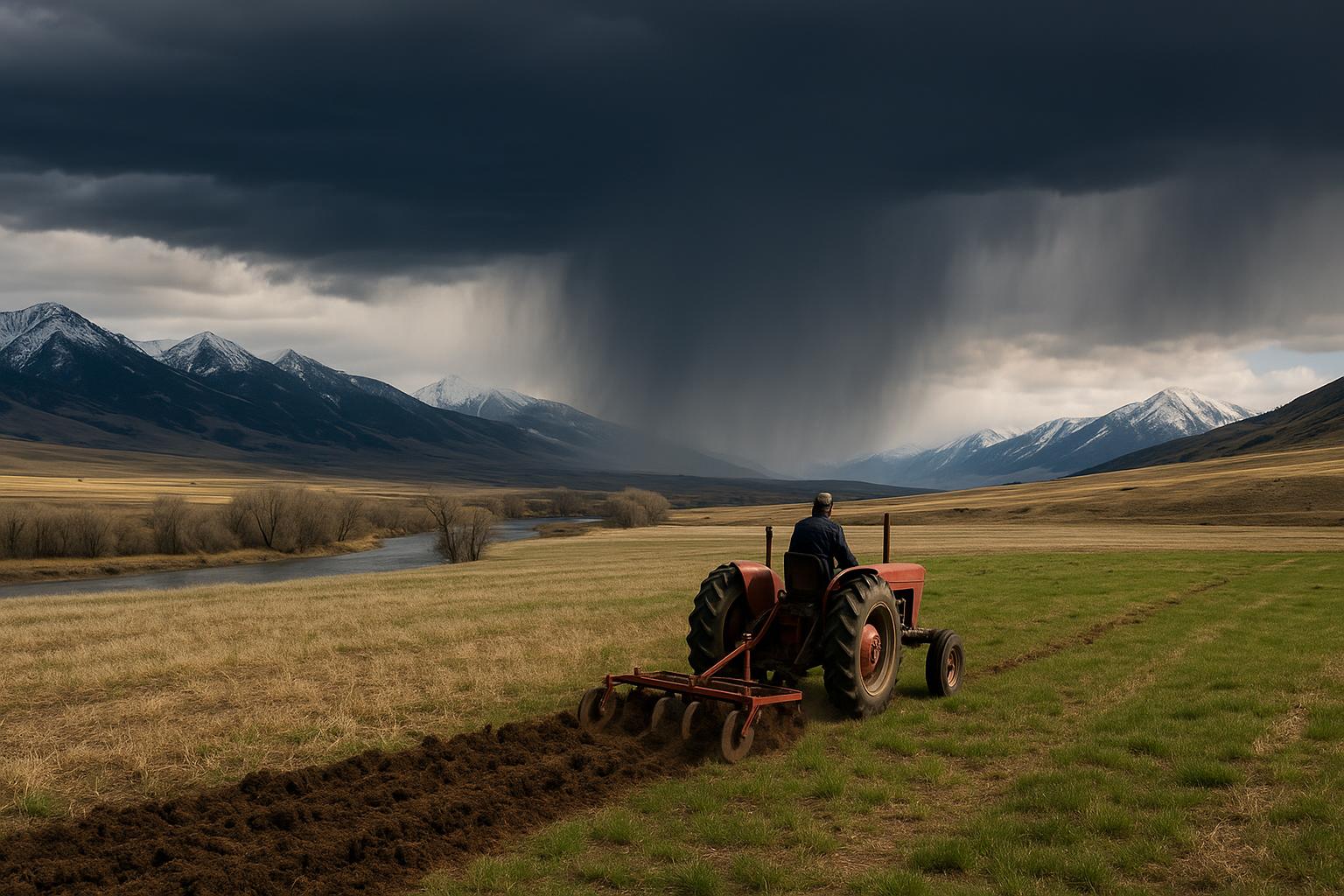
Patchy Spring Moisture Sets Up a Uneven Start for Montana Small Grains and Pastures
Reports from around the West suggest a familiar pattern heading into the heart of the growing season: some areas are catching timely moisture while others are watching topsoil dry out fast. Montana is no stranger to that kind of “have and have-not” spring, and it can show up within a single county—one place greening up, the next place already turning dusty.
Montana doesn’t grow wheat or put up hay the same way across the map. The Hi-Line’s dryland small grains, the Bitterroot and Gallatin valleys’ irrigated hay and pasture systems, and the Yellowstone Valley’s mix of irrigated and dryland acres all respond differently to a few weeks of weather. Still, the theme is the same: early-season moisture sets the ceiling for yield, and it sets the floor for how hard ranchers will have to work to keep grass under cows this summer.
What Happened: A Split Map for Moisture and Crop Outlook
Across Montana, spring conditions often break into three buckets:
- Areas with decent subsoil moisture where winter carryover and timely spring precipitation support strong early growth.
- Areas relying on “the next system” where topsoil moisture is marginal and germination, tillering, and pasture growth depend on regular rain.
- Areas already behind where wind and warm days pull moisture out faster than it can be replaced, raising drought concerns early.
That variability matters because Montana’s wheat and hay crops are decided in stages. For winter wheat, spring moisture supports green-up, stem elongation, and head development. For spring wheat and barley, it influences stand establishment and early root development. For hay and pasture, it determines how quickly plants can rebound after turnout and how much first cutting potential is on the table.
When moisture is uneven, it also creates uneven management decisions. Some producers can hold to normal stocking rates and fertilizer plans. Others start contingency planning: delaying turnout, lining up hay, adjusting grazing rotations, or making early marketing calls on calves and cull cows.
Region Check: How This Can Play Out Across Montana
Hi-Line: Dryland wheat and barley country on the Hi-Line is highly sensitive to spring rains and wind. If topsoil is short, stands can look fine early and then stall when temperatures jump. Producers often watch for:
- Germination uniformity and stand density in spring grains
- Winter wheat tiller counts and weed pressure
- Wind erosion risk on lighter soils
Yellowstone Valley: In the Yellowstone Valley, irrigation can buffer the crop side, but water supply and timing still matter. A strong runoff year can stabilize hay and corn silage plans; a short runoff year forces hard choices. Even with irrigation, heat and wind can drive up evapotranspiration and raise pumping costs.
Gallatin Valley: The Gallatin Valley’s mix of hay, pasture, and some small grains means moisture affects both feed supply and livestock performance. Cooler nights can help hold moisture, but a warm, windy stretch can change pasture growth in a hurry. First cutting timing and quality are often the big story here—especially for operations selling horse hay or dairy-quality alfalfa.
Bitterroot Valley: The Bitterroot Valley is often a tale of irrigation scheduling and water availability. When spring stays cool and moisture is steady, pasture can come on strong. When it turns hot early, producers may need to rotate faster, manage regrowth carefully, and watch for irrigation constraints later in summer.
Flathead Valley: The Flathead Valley can benefit from a later spring and more consistent moisture, but it’s not immune to dry spells. Hay producers watch soil moisture closely because a dry June can shrink tonnage even when fields looked great in May.
Why It Matters: Wheat Yield, Hay Tonnage, and Cattle Decisions
In Montana, crop and livestock decisions are tied at the hip. When moisture is short in one region, it can ripple into hay prices, pasture rental rates, and cattle movement statewide.
Small grains: Moisture at key growth stages can influence:
- Yield potential (heads per square foot, kernels per head, test weight)
- Protein (often higher in droughty conditions, but with lower yield)
- Input payback (nitrogen decisions look different when yield potential drops)
Hay and pasture: For hay producers, the first cutting sets the tone for the year. If spring is dry, first cutting can be lighter and regrowth slower—especially without timely irrigation. For ranchers, pasture growth determines whether turnout is smooth or whether cattle start chasing grass by mid-June.
Cattle markets: Weather doesn’t just change forage; it changes marketing behavior. When drought worries build, more calves and more cows can hit the market earlier, pressuring prices locally even when national fundamentals are supportive. Conversely, when moisture is good, producers can be more patient, and fewer forced sales can help stabilize prices.
For market reference points and broader context, producers often track weekly summaries from USDA AMS Market News and Montana auction reports.
What This Means for Montana Ranchers and Farmers
1) Make moisture-based decisions earlier, not later. If your country is behind on precipitation, it’s worth penciling out options now—before the grass is gone and everyone is shopping for the same hay.
- Re-check stocking rates and grazing plans by pasture, not by the ranch average.
- Price hay and freight early; availability can tighten fast in a dry year.
- Consider flexible weaning and backgrounding plans in case pasture fades early.
2) Watch wheat and barley stands with a “yield ceiling” mindset. If dryland acres are short on subsoil moisture, every management dollar should be evaluated against realistic yield potential.
- Scout for weeds that steal moisture early.
- Be cautious about chasing yield with late inputs if rain odds are low.
- Track crop condition reports and local extension notes for your area.
3) Irrigators: plan for timing, not just total water. Even in years when total supply is decent, the timing of runoff and hot spells can create pinch points. Irrigation scheduling, pump readiness, and ditch maintenance matter most when demand spikes.
4) Keep an eye on pasture health. Overgrazing in a dry spring can cost you two seasons—this year’s production and next year’s root reserves. Rotations, rest periods, and conservative utilization targets can protect the base.
What to Watch Next in Montana Agriculture
- Short-term forecasts and wind events: A week of wind and warm temps can erase a lot of gains. Track local National Weather Service updates at weather.gov.
- Drought and soil moisture indicators: Watch updates from the U.S. Drought Monitor and Montana state drought resources. These can influence disaster programs and lender conversations.
- Streamflow and irrigation supply: For the Yellowstone, Gallatin, Bitterroot, and Flathead systems, streamflow and reservoir conditions will guide irrigation decisions and hay tonnage expectations.
- Crop condition trends: Weekly condition ratings and local agronomy observations can signal whether wheat is holding yield potential or sliding into “survival mode.”
- Hay market signals: Watch early cutting reports, dairy and horse hay demand, and trucking availability. In Montana, freight can be as important as price per ton.
- Cattle movement and early marketing: If drought talk increases on the Hi-Line or in other dry pockets, expect earlier runs of feeders and culls. That can change basis and local price spreads.
Montana producers have managed through enough variable springs to know the drill: keep scouting, keep options open, and don’t wait for a crisis to start planning. The next few weather systems—and how they line up with crop stages and pasture growth—will do a lot to determine whether 2026 feels like a normal year or another year of tough decisions.
Inspiration: www.farmprogress.com