Reports from hay country outside Montana are pointing to earlier-than-usual alfalfa weevil activity this spring. Montana isn’t Missouri, and timing can vary widely from the Bitterroot Valley to the Hi-Line. Still, the takeaway for Montana producers is straightforward: it’s time to dust off the sweep net, start checking fields on a schedule, and be ready to adjust cutting or control plans if larvae show up ahead of normal.
Alfalfa weevil is a familiar pest in Montana, especially in irrigated stands and sheltered valleys where heat units accumulate early. Larvae feed on developing leaves and terminals, leaving a “frosted” or skeletonized look that can knock yield and quality—particularly in dairy hay and export-grade horse hay where leaf retention matters.
What Happened
According to reports shared by agricultural media and state-level contacts in the Midwest, some producers are seeing alfalfa weevil pressure earlier than expected, with a few already making insecticide applications. Those reports don’t automatically translate to Montana conditions, but they do suggest that in years with an early warm-up, weevil development can get out in front of the calendar.
In Montana, the pest’s development is driven more by temperature and microclimate than the date on the calendar. South-facing fields, areas with light soils that warm quickly, and sheltered valley bottoms can see earlier activity than higher-elevation benches or wind-swept ground.
Why It Matters for Montana Hay and Cattle Operations
Most Montana ranches feel alfalfa weevil one way or another—either directly through hay production or indirectly through feed costs and availability. When larvae clip leaf tissue, the stand can lose:
- Yield (less tonnage in the first cutting, sometimes followed by weaker regrowth)
- Quality (leaf loss, higher relative stem content, lower protein and energy)
- Flexibility (producers may be forced into earlier cutting or treatment decisions)
That matters in a state where the hay crop is a major stabilizer for cow-calf outfits, backgrounders, and dairies—and where drought cycles can turn a “normal” hay year into a tight one quickly. If weevil damage reduces first-cut yield or quality in places like the Yellowstone Valley or the Gallatin Valley, the ripple can show up later as higher-priced replacement hay or more pressure on pasture turnout timing.
Where Montana Producers Are Most Likely to See It First
Weevil pressure isn’t uniform. Based on typical Montana patterns, the first fields to watch closely are:
- Irrigated alfalfa in warmer valley locations (Yellowstone Valley, parts of the Bitterroot Valley, lower-elevation reaches of the Flathead Valley)
- Older stands with heavy residue or weedy edges that can harbor insects
- Fields with early green-up due to fertility, irrigation timing, or sheltered exposure
On the Hi-Line, development may lag behind the valleys, but warm, windy springs can still push degree-days faster than expected. The key is not guessing—scouting is what keeps decisions grounded.
What to Do Now: Practical Scouting and Decision Points
Montana producers don’t need to panic-spray. The most cost-effective approach is to scout, track trends, and respond when thresholds are met. A few practical steps:
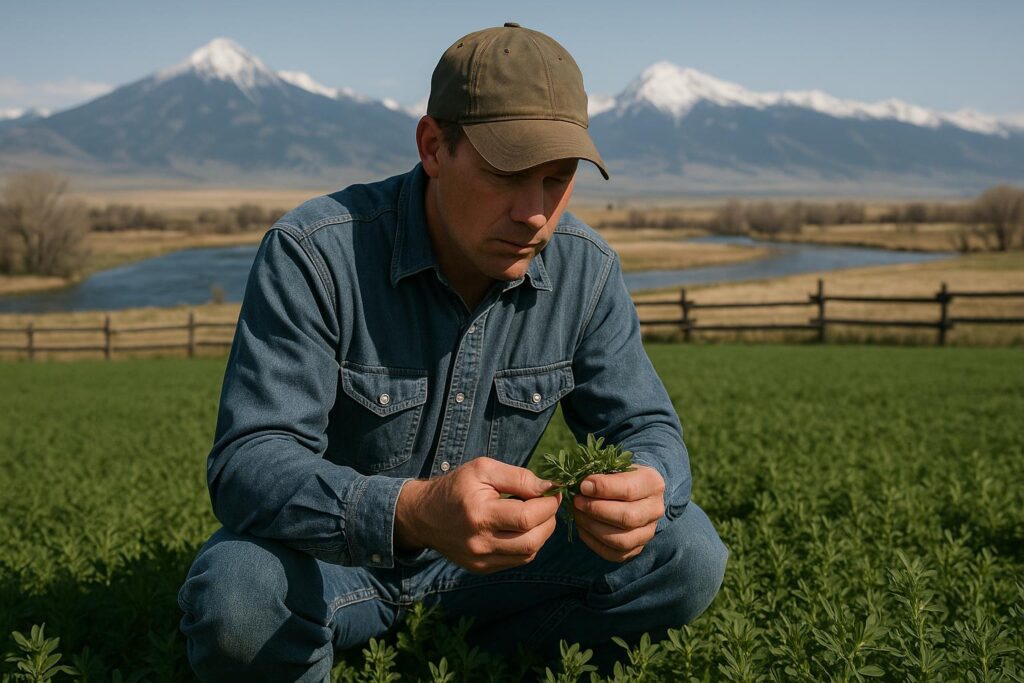
- Start scouting early in fields that typically get hit. Check at least weekly as temperatures rise.
- Use a sweep net and visual inspection. Look for small green larvae in terminals and leaf folds, and note any “frosting” on new growth.
- Check multiple spots in each field, including edges and warmer areas.
- Record what you see (larvae size, feeding intensity, plant height). Trends matter more than one snapshot.
If pressure is building, the main management crossroads is often early cutting versus insecticide. Early harvest can be an effective tool when the crop is close to a cut anyway, but it’s not a cure-all—regrowth can still be attacked, and cutting timing may not line up with weather, irrigation rotations, or labor/equipment availability.
For producers weighing spray decisions, it’s worth consulting Montana State University Extension guidance and local agronomy advisors for current thresholds and product considerations. A good starting point for general IPM concepts is MSU Extension, and local county offices can help interpret what’s being seen in nearby fields.
Market and Feed Implications: The “Quiet” Cost of Insect Damage
Alfalfa weevil rarely makes headlines like drought or wildfire smoke, but it can quietly change the economics of a hay season. If first cutting comes off lighter or more stemmy, ranchers may have to:
- Feed more pounds per head to meet the same nutrition targets
- Buy higher-quality hay to blend rations
- Shift cattle management (earlier pasture use, different supplementation plans)
In years when irrigation supplies are tight or spring moisture is variable, losing yield to insects can compound an already limited tonnage situation. That’s why early detection matters: it protects both the hay stack and the options a ranch has later in the year.
What This Means for Montana Ranchers and Farmers
For Montana operations—from the Bitterroot Valley horse-hay growers to Yellowstone Valley irrigators and Hi-Line mixed farms—the Midwest reports are best viewed as a seasonal reminder: insect development can jump ahead when spring warms early, and the first cutting is where the most money is often made or lost.
- Hay producers: Begin scouting now in historically affected fields. Plan for the possibility that cutting schedules or spray windows could tighten if larvae show early.
- Cow-calf and backgrounding operations: Keep an eye on local hay availability and quality. If weevil pressure trims first-cut supplies in your area, it can show up later in pricing and delivered availability.
- Diversified farms: Coordinate labor and equipment. If alfalfa needs attention during the same window as spring planting, having a scouting routine helps prevent last-minute surprises.
Bottom line: don’t assume “it’s too early.” Assume variability, and let field checks tell the story.
What to Watch Next in Montana Agriculture
- Temperature swings and degree-day accumulation: A warm stretch can accelerate weevil development, while a cold snap can slow it down. The pace of spring matters more than the date.
- First-cut timing and weather windows: If fields need to be cut early to manage insects, rain and wind forecasts become even more important for curing and baling.
- Irrigation start dates and water availability: Early irrigation can push growth (and sometimes insect activity). Watch local ditch company schedules and runoff projections.
- Regional reports: Pay attention to what neighbors are seeing in the Flathead Valley, Gallatin Valley, and Yellowstone Valley—local observations often beat statewide generalities.
- Secondary pests and beneficials: Where insecticides are used, keep an eye on beneficial insect activity and any follow-on pest flare-ups. Targeted, threshold-based decisions help reduce that risk.
Montana’s hay season is always a balancing act between moisture, heat, and timing. This year, add “early-season scouting discipline” to the list—because if weevils arrive early, the best advantage is simply knowing what’s in your field before the damage is already baked into the windrow.
Inspiration: brownfieldagnews.com