USDA’s latest national look at winter wheat suggests the crop is coming out of dormancy with more stress than growers saw this time last year. Reports indicate the share rated in the top categories is lower than a year ago, while a larger portion is sitting in poor shape. The headline driver nationally is dryness in key winter wheat areas, and that’s the part Montana producers should pay attention to—especially as spring fieldwork, grazing decisions, and hay inventories collide.
Montana isn’t the center of the U.S. winter wheat belt the way Kansas or Oklahoma is, but national wheat conditions still matter here. They influence futures prices, basis, feed costs, and the broader grain complex that touches everything from backgrounding rations to crop insurance decisions. And dryness is not a problem that respects state lines: if the Northern Plains stay short on moisture, it can show up quickly in stand vigor, weed pressure, and yield potential.
What Happened: USDA Sees Weaker Winter Wheat Condition as the Crop Wakes Up
USDA condition ratings are a snapshot—one that can change quickly—but they’re widely watched because they offer an early read on yield potential and production risk. Reports indicate the first national condition rating of the year came in below last year’s early rating, with a higher share of acres in poor-to-very-poor shape.
That pattern lines up with what many producers have been seeing on the ground across the Plains: winter wheat that made it through dormancy but is now facing limited subsoil moisture, spotty spring precipitation, and temperature swings that can stress stands.
- Why the rating matters: Condition ratings often influence market sentiment. They don’t guarantee a yield outcome, but they shape expectations.
- What’s behind it: Dry weather is a common thread in areas that drive national winter wheat production. When dryness persists into green-up, wheat can struggle to tiller and fill in.
- What can change fast: A good rain at the right time can stabilize a crop. Continued wind and low humidity can do the opposite.
For Montana readers, the key takeaway isn’t that a national rating is “good” or “bad.” It’s that the market is being reminded—early—that weather risk is real this season.
Why It Matters in Montana: Prices, Feed, and Spring Moisture All Intersect
Montana’s wheat footprint is large, but it’s diversified by class and region. Winter wheat is part of the mix, especially in parts of the state where rotations and moisture timing fit. Even for producers who don’t grow winter wheat, national wheat conditions can ripple into:
- Cash grain bids: If futures respond to weather risk, elevators may adjust bids. Basis still depends on local supply, rail, and demand, but futures set the tone.
- Feed costs: Wheat can substitute for corn in some rations. When wheat values move, it can shift feed decisions for backgrounding and finishing.
- Hay and pasture pressure: When spring stays dry, cattle producers often lean harder on hay or delay turnout. That can tighten local hay supplies, especially if last year’s carryover is thin.
Regionally, Montana producers are reading moisture differently:
- Hi-Line: Dry, windy springs can erase surface moisture quickly. Watch for stand uniformity issues and dusting-in concerns for spring crops.
- Yellowstone Valley: Irrigated acres can buffer crop risk, but water supply, timing, and allocation matter. Any signal of reduced runoff or tighter deliveries changes planning.
- Gallatin Valley: Mixed operations feel it on both sides—crop input decisions and livestock feed planning. Early-season moisture sets the tone for pasture growth.
- Bitterroot Valley and Flathead Valley: These valleys can be more insulated by localized precipitation patterns, but droughty years still show up through irrigation demand and hay yields.
Bottom line: national winter wheat stress is another reminder that moisture is the main variable to watch this spring, and Montana’s response will differ by whether you’re dryland, irrigated, livestock-heavy, or all of the above.
Market Angle: How a Weak Rating Can Influence Wheat and Cattle Decisions
When condition ratings slip early, the market often builds in a “weather premium.” That doesn’t always last. If rains arrive and ratings rebound, the premium can fade quickly. But while the story is developing, it can affect producer decisions in real time.
Here are a few practical ways it can show up in Montana:
- Forward contracting and hedging: If bids improve on weather concerns, some growers may look at pricing a portion of expected production—carefully, given yield uncertainty in dryland areas.
- Input choices: Topdress nitrogen, fungicide plans, and even replant decisions can hinge on whether moisture arrives. In a dry spring, spending decisions get more conservative.
- Grazing wheat or not: Where wheat grazing is part of the system, dryness can limit regrowth and raise the risk of yield drag. That can push producers toward alternative forage plans.
- Hay and supplement planning: If pasture green-up is slow, ranchers may extend feeding. That can tighten supplies and nudge local hay prices higher, especially for tested alfalfa.
For cattle producers, the wheat story matters less as “wheat” and more as a signal about the broader feedgrain environment. If wheat rallies, it can pull other grains along at times, and that can influence backgrounding budgets.
What This Means for Montana Ranchers and Farmers
Montana producers are used to managing through weather variability, but the early signals this year point to a few clear management themes.
- Protect flexibility in the plan. If you’re dryland on the Hi-Line or in other moisture-limited areas, keep options open on seeding rates, fertility timing, and marketing. A single storm system can change outlooks, but so can two weeks of wind.
- Know your feed inventory and your “trigger dates.” Ranchers should pencil out how long hay will last if turnout is delayed. Decide ahead of time when you’ll buy, when you’ll cull, and what class of cattle moves first if grass doesn’t come.
- Watch water, not just rain. In the Yellowstone Valley and other irrigated pockets, the question isn’t only precipitation—it’s runoff timing, reservoir storage, and delivery schedules. If you rely on irrigation, stay in touch with your local district and track updates.
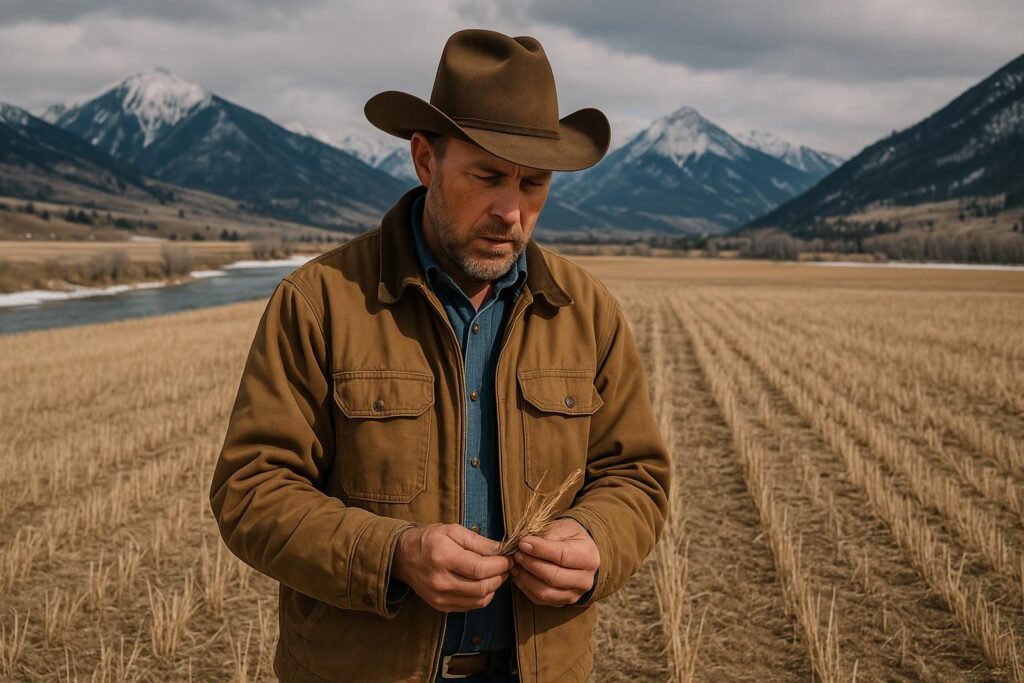
- Scout winter wheat stands early and often. Thin stands, winterkill pockets, and weed flushes can be more common after a stressful winter-to-spring transition. Early scouting helps avoid throwing money at acres that won’t pay it back.
- Be cautious with aggressive pricing. A weather-driven bump can be an opportunity, but don’t out-market your crop in a year where yield is still a question. Matching sales to realistic production is key.
If you’re a mixed operation—common in parts of the Gallatin Valley and across much of Montana—this is also a year to coordinate crop and livestock decisions. A dry spring can create competition for acres (grain vs. forage) and for water (hay vs. cash crops). The best move is often the one that keeps the whole operation resilient, not just one enterprise.
What to Watch Next in Montana Agriculture
The next few weeks will tell the story. Here’s what Montana farmers and ranchers should be tracking, in order:
- USDA weekly condition updates and drought maps. Ratings can improve or deteriorate fast. Pair condition reports with drought monitoring to see whether stress is expanding or easing. (See USDA’s National Agricultural Statistics Service for reporting and the U.S. Drought Monitor for drought status.)
- Spring precipitation and wind events. In Montana, a couple of well-timed storms can set up a crop. Long gaps between moisture events—especially with wind—can set back both crops and pasture.
- Irrigation water supply and allocation signals. Watch announcements from local irrigation districts and state/federal water managers. Any tightening changes planting and hay expectations.
- Local cash bids and basis movement. Futures may move on national wheat worries, but Montana basis reacts to rail, export demand, and local supplies. Track your nearest elevator and ask what’s driving changes.
- Hay market tone. If green-up is slow in the Bitterroot, Flathead, or across central and northern Montana, demand can show up early. Pay attention to tested quality, freight, and whether buyers are locking in supplies.
- Cattle market response. Feed cost expectations can influence placement weights and marketing timelines. If wheat and other grains strengthen, it can affect backgrounding margins.
For now, the national winter wheat rating is best read as an early warning light: moisture is going to decide a lot of outcomes in 2026’s crop and forage season. Montana producers don’t need to overreact—but they do need to stay ready to adjust.
Inspiration: brownfieldagnews.com