Grass gets all the attention this time of year, but the thing that quietly decides how a summer pasture grazes is water. A cow on June grass in eastern Montana will pull down 15 to 20 gallons a day once it turns hot, more if she’s milking hard and the wind is blowing. If the water quits, or it gets bad enough that cattle won’t drink it, the grass stops mattering. They’ll bunch at the tank, walk the fence, and start losing condition fast.
Mid-June is the time to get ahead of all of it, because the problems that show up in July and August are usually set in motion now.
Check the source before you turn out, then keep checking
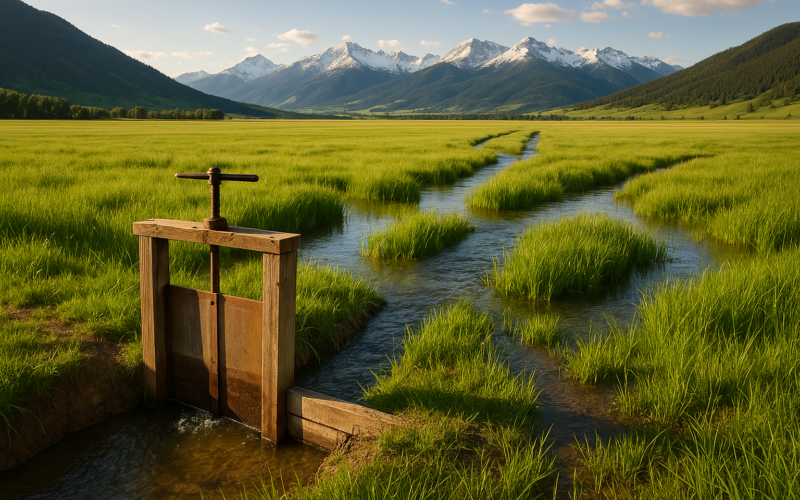
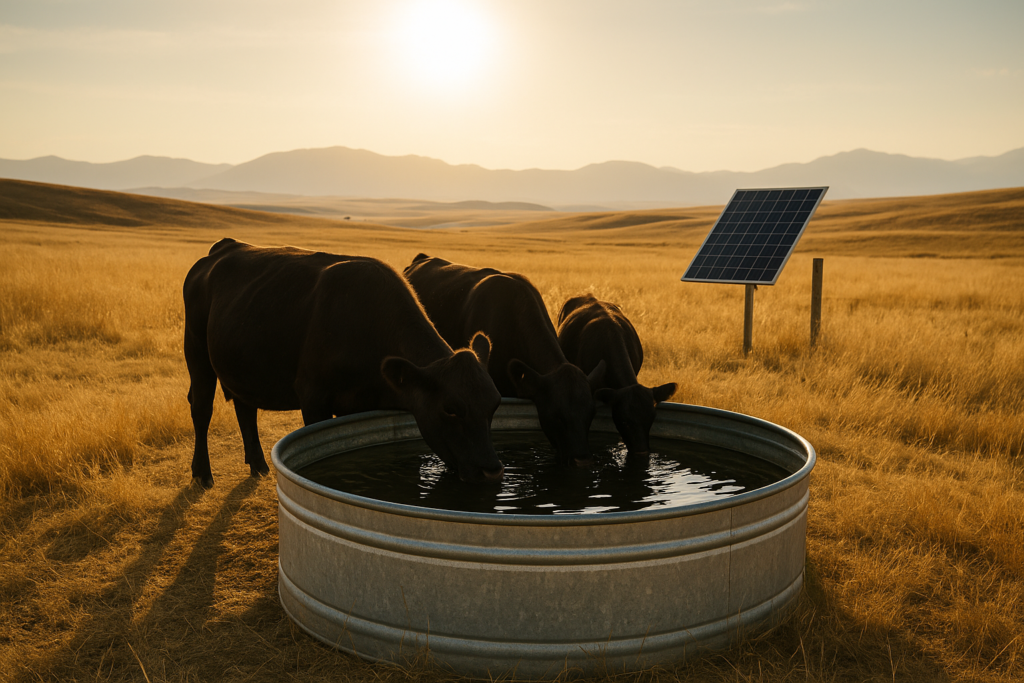
Whether you’re running off a well, a solar pump, a spring development, a stock dam, or hauling, the failure points are predictable. Float valves stick. Solar pumps fall behind on a string of hot, cloudy days when demand is highest. Spring boxes silt in. Pipelines get an air lock or a pinhole leak that doesn’t show until the tank runs dry on a Sunday afternoon.
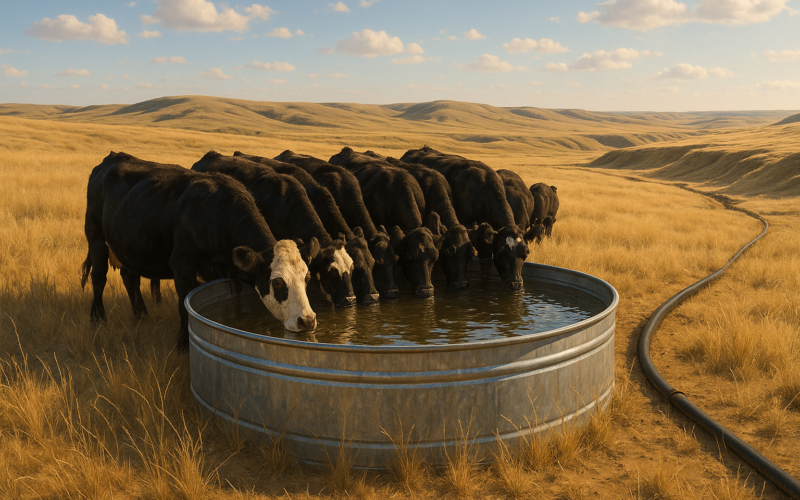
Walk every tank and every line before turnout, and don’t assume the setup that worked last year is fine. Pull the lid on the spring box. Clean the screen. Run the pump and time how long it takes to recover a full tank, then compare that to what the herd will actually drink. A 200-gallon tank looks like plenty until you put 60 pairs on it in 95-degree heat.
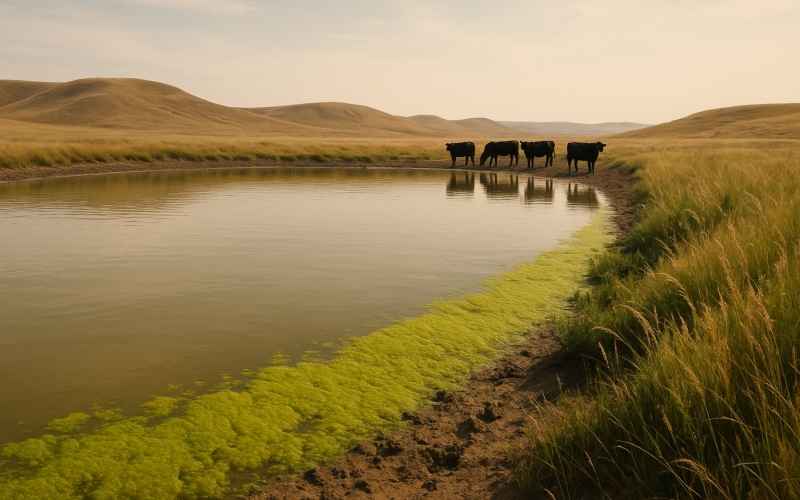
On dugouts and reservoirs, watch the water line. A dam that filled in spring can drop a foot a week once evaporation and cattle both go to work on it. The last few feet of a shrinking dugout are the worst water in the whole operation—warm, churned to mud, and concentrated with whatever was dissolved in it.
Blue-green algae is the one that kills overnight
The single most dangerous water problem in a Montana summer is a cyanobacteria bloom—what most people call blue-green algae. It shows up in warm, stagnant, nutrient-rich standing water: dugouts, stock dams, the slow end of a pothole. A bloom can build in a few hot, calm days and concentrate on the downwind shore where cattle drink.
It looks like spilled paint, pea soup, or a thick scum, usually green but sometimes blue, brown, or with a metallic sheen. Not every bloom is toxic, and you can’t tell by looking—but the toxic ones can kill cattle within hours of drinking. Producers often find dead animals near the water with no other warning.
If you see a heavy bloom, fence cattle off that water and give them another source. Wind direction matters; the same dugout can be drinkable on one shore and lethal on the other depending on where the scum has piled up. Hot, dry, windless stretches are the high-risk window, so that’s when to be in the habit of looking. If you’ve lost an animal near suspect water and need to know what you’re dealing with, your veterinarian or the state diagnostic lab can test it.
Bad water short of toxic still costs you pounds
Plenty of Montana stock water is safe but lousy, and lousy water quietly drags down performance. High dissolved solids—salts—are common in some shallow wells and in dugouts as they shrink and concentrate. Sulfates are the usual culprit in parts of the state; high-sulfate water tastes bad, cuts intake, and at high enough levels has been tied to polio-like nervous problems in cattle. When water gets bitter, cattle drink less, eat less, and gain less, even if nothing ever drops dead.
If you’ve got a well or a problem dugout you’ve wondered about, a water test is cheap insurance. Test for total dissolved solids, sulfates, and nitrates. The numbers tell you whether a source is fine for dry cows but risky for pairs, or whether you need to blend it, develop a better source, or haul.
A few habits that pay off through the hot months:
- Keep tanks clean. Scrub the green slime out before it becomes the only thing in there. A handful of small bottom-feeding fish in a big tank, or routine draining, keeps things drinkable.
- Spread the water out. One tank serving a big pasture concentrates grazing, manure, and bare ground around it. More water points mean better grass use and less loafing in the mud.
- Keep cattle out of the dugout itself. Fence the dam and gravity-feed or pump to a tank below it. They drink cleaner water and you keep the bank from getting pugged to soup.
- Watch intake as a thermometer for everything else. Cattle that suddenly won’t drink, or that crowd one source and ignore another, are telling you something about the water before you’ve figured it out yourself.
Water is the cheapest thing to fix in June and the most expensive thing to discover in August. Walk the tanks now.