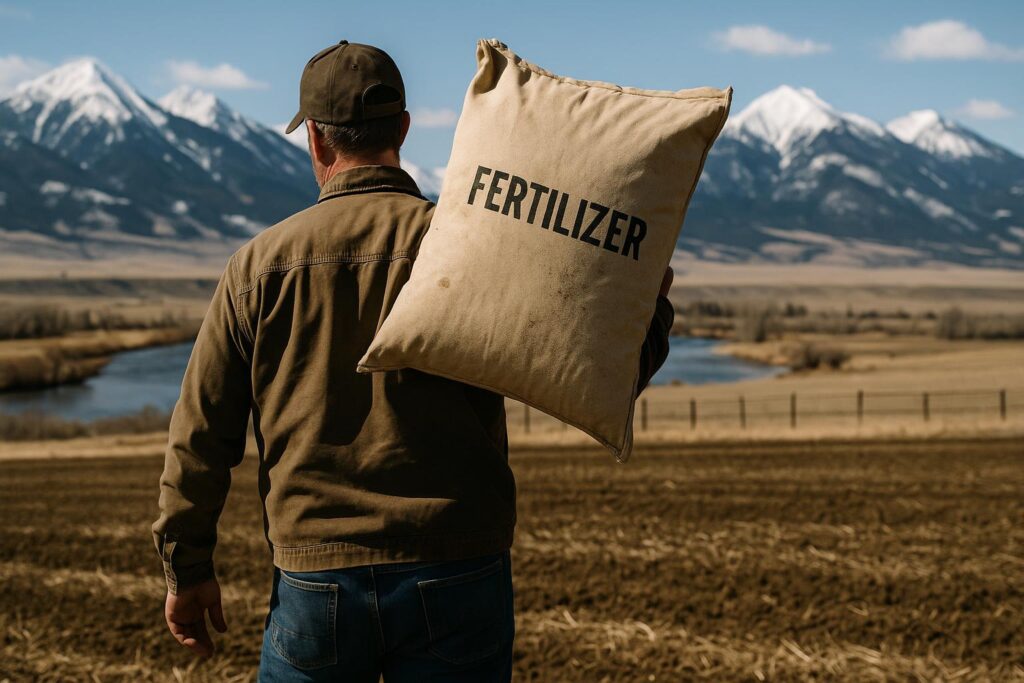
Montana producers are heading into another planning cycle with fertilizer still near the top of the worry list. Reports indicate the U.S. Department of Justice has been taking a harder look at fertilizer markets and pricing behavior, following complaints from farm groups about steep price swings and a highly concentrated industry. The investigation itself doesn’t lower costs overnight, but it signals that Washington is paying attention to a set of inputs that can make or break margins from the Hi-Line to the Yellowstone Valley.
For Montana, where wheat, barley, pulses, sugar beets, and hay all rely on nitrogen, phosphorus, and potassium at some level, fertilizer isn’t just a line item—it’s a yield decision. When prices climb fast, farmers often trim rates, delay applications, or shift acres. Those decisions ripple into grain quality, hay tonnage, and ultimately cattle feed bills.
What happened
Farm organizations and commodity groups around the country have been urging federal officials to scrutinize fertilizer pricing and market concentration. Reports indicate DOJ activity has included probing major fertilizer companies and market practices amid ongoing producer frustration about price spikes that didn’t always seem to track cleanly with natural gas costs, global supply disruptions, or retail availability.
It’s important to separate three things:
- Investigations: fact-finding and potential enforcement actions; outcomes can take months or longer.
- Market fundamentals: natural gas prices, global production, shipping, and geopolitics that influence fertilizer costs.
- Local realities: Montana freight, seasonal supply timing, and dealer inventories that can widen the gap between national averages and what a producer pays in Havre, Sidney, or Stevensville.
No major policy change has been guaranteed. But the attention matters because fertilizer pricing affects nearly every crop budget in the state, and the market is dominated by a relatively small number of global and North American suppliers.
Why it matters in Montana
Montana’s geography amplifies input risk. Freight is a bigger share of delivered cost than it is in many Midwest locations, and weather can compress application windows. If a spring turns wet in the Gallatin Valley or a late cold snap lingers on the Hi-Line, there’s less flexibility to shop around or wait for a better basis. When product is tight, the “last truck in” can be the most expensive.
High fertilizer prices show up differently by region and crop:
- Hi-Line small grains: nitrogen decisions can swing protein and test weight, influencing premiums and dockage.
- Yellowstone Valley irrigated acres: growers may have more yield potential, but they also face higher total nutrient demand—and irrigation power costs can stack on top.
- Flathead and Bitterroot valleys: mixed operations balancing hay ground, pasture, and specialty crops may shift fertility toward the acres with the most reliable return.
- Statewide hay production: when fertilizer is expensive, some producers cut back on hay ground inputs, risking lower tonnage and quality—especially if drought stress is already limiting regrowth.
On the ranch side, fertilizer costs hit indirectly through hay prices and feed availability. If hay yields drop or quality slips, replacement feed gets expensive fast, and that pressure can show up in calf weights, backgrounding costs, or wintering decisions.
What could actually move fertilizer prices
Even with federal scrutiny, fertilizer prices are still driven mostly by supply, demand, and energy. Montana producers should keep expectations realistic: an investigation can deter certain behavior and potentially lead to enforcement, but it doesn’t create new production capacity by itself.
Factors that tend to matter most:
- Natural gas prices: a major driver for nitrogen fertilizer production costs.
- Global trade and geopolitics: sanctions, export restrictions, and shipping disruptions can tighten supply.
- Domestic plant uptime: outages at major facilities can ripple across the West.
- Transportation: rail availability, trucking capacity, and seasonal bottlenecks into Montana.
- Dealer inventory cycles: prepay programs and early booking can influence what you pay versus spot purchases.
If federal action leads to more transparency or competition, the benefit for Montana may show up as fewer extreme price spikes and a tighter spread between wholesale moves and farmgate pricing. That’s a “maybe,” not a promise—and it would likely take time.
What This Means for Montana Ranchers and Farmers
For 2026 planning, the practical takeaway is to treat fertilizer as a risk-management item, not just a purchase. Here’s what Montana producers can do now, regardless of where a federal probe goes:
- Re-check soil tests and realistic yield goals: When margins are tight, “blanket rates” are expensive. Targeting nutrients where the response is strongest is often the best ROI.
- Run sensitivity budgets: Price out your crop plan at multiple fertilizer price points (for example, ±20%) to see where the break-evens land for wheat, barley, and hay.
- Ask dealers about timing and supply: Not just price—availability matters. In Montana, a cheaper quote doesn’t help if product can’t arrive before your window closes.
- Consider split applications where agronomically sound: In some systems, splitting nitrogen can reduce loss risk and let you adjust to moisture conditions, especially in variable springs.
- Evaluate alternative nutrient sources carefully: Manure, compost, or biosolids can pencil out near supply, but hauling costs and nutrient variability are real. Get analysis and factor in application costs.
- On the ranch: If hay fertilizer is being cut back in your area, expect hay markets to respond. Watch early hay reports and line up feed needs sooner rather than later.
For irrigated producers in the Yellowstone Valley, fertilizer decisions are tied closely to water outlook and power costs. If water supply is solid and yield potential is high, cutting fertility too hard can cost more in lost yield than it saves in input bills. In contrast, dryland acres on the Hi-Line may need a more conservative approach if subsoil moisture is limited.
It’s also worth remembering that Montana’s crop mix is tied to livestock. If fertilizer stays expensive and hay acres get pinched, cow-calf operators could face higher winter costs even if calf prices are strong.
What to Watch Next in Montana Agriculture
Federal scrutiny is one thread. The bigger story for Montana is how fertilizer, moisture, and commodity prices line up at the same time. Here are the key signals to track:
- Any DOJ announcements or filings: If the investigation becomes public through formal actions, it could affect market behavior. Follow updates from the U.S. Department of Justice.
- Spring prepay and early-book offers: Compare not just price per ton, but terms, delivery guarantees, and product forms (urea, UAN, AMS, MAP/DAP, potash).
- Rail and trucking conditions into Montana: Logistics can tighten quickly during peak season. If dealers start talking about delays, that’s a sign to firm up plans.
- Moisture and drought outlook: Fertilizer ROI depends on yield potential. Keep an eye on Montana conditions via the U.S. Drought Monitor and local NRCS reporting.
- Commodity price direction: Wheat and barley bids set how much fertility you can justify. A rally can change the math fast—so can a slide.
- Hay acreage and first-cut reports: In the Bitterroot and Flathead valleys, early hay tonnage and quality can shape the whole feeding season. If first-cut is light, expect more competition later.
One more Montana-specific point: if fertilizer prices remain volatile, expect more interest in variable-rate technology, on-farm storage, and agronomic tools that help fine-tune applications. Those investments don’t fit every operation, but in years when inputs swing wildly, precision can be a form of insurance.
For now, the most realistic stance is cautious: federal scrutiny may pressure the market toward fairer behavior, but Montana producers still need to plan for uncertainty. The operations that come out ahead will be the ones that lock in what they can, stay flexible where they can’t, and keep fertility decisions tied to moisture and marketing—not hope.
Inspiration: www.farmprogress.com