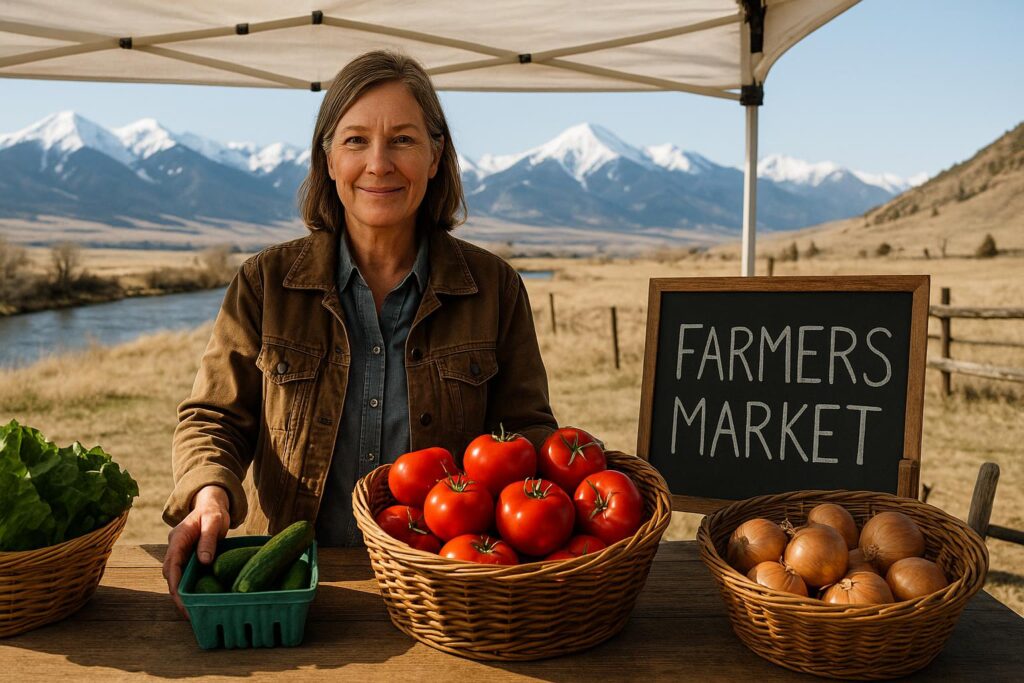
Across Montana, farmers markets are ramping up for the busy season—whether it’s early greens in the Gallatin Valley, greenhouse starts in the Flathead, or beef and eggs coming into town from the Hi-Line. For producers thinking about adding a market booth, the opportunity is real, but so are the logistics: licenses, food safety rules, pricing, and the weekly grind of harvesting, packing, and showing up.
Reports indicate more shoppers are looking for local food and direct relationships with producers, especially in communities that draw summer tourism. But the producers who do well tend to treat farmers markets like a business channel—not a hobby. Here’s a Montana-focused, nuts-and-bolts guide to getting started without getting upside down on time or costs.
Start With the Market Rules, Not the Tent
Every market has its own rulebook. Before you plant extra rows or schedule additional butcher dates, ask the market manager for:
- Vendor application and fees (daily vs. seasonal, and whether there’s a waitlist).
- Allowed products (some markets restrict resale, crafts, or certain prepared foods).
- Booth requirements (canopy weights, signage, table coverings, generator rules).
- Insurance expectations (many markets require liability coverage).
Then match that to Montana’s regulatory reality. If you’re selling packaged foods, meat, dairy, or ready-to-eat items, you may need state or local approvals. Start with the Montana Department of Public Health and Human Services Food and Consumer Safety section for licensing basics: https://dphhs.mt.gov/publichealth/fcs. For weights and measures questions (scales, labeling, net weight), the Montana Department of Labor & Industry has guidance: https://erd.dli.mt.gov/labor-standards/weights-and-measures.
Why it matters: A lot of first-year vendor headaches come from finding out mid-season that a label needs changes, a cooler setup isn’t adequate, or a product can’t be sampled the way you planned. Sorting it out early protects your reputation and keeps you from losing prime market weekends.
Build a Montana-Smart Product Mix
Montana markets don’t all shop the same. The Yellowstone Valley can move volume during peak produce season. The Bitterroot Valley often supports strong local loyalty but may be more price-sensitive depending on the week. Tourist-heavy weekends in the Flathead can reward shelf-stable items and “grab-and-go” foods. The Hi-Line may have fewer markets, but direct sales can still work if you match offerings to the community and avoid overharvesting.
Consider a product mix that balances:
- Anchor items that bring people to your booth (popular cuts, eggs, salad mix, early carrots).
- Margin items that pay for your time (value-added goods, bouquet bunches, specialty varieties).
- Shoulder-season options (plants, storage crops, frozen beef, jams—if properly approved).
For ranch families selling beef, lamb, or pork, the practical question is inventory flow. Farmers markets can be a great outlet for freezer beef and individual cuts, but only if you have consistent product and a clear system for cold chain and labeling. If you run out every week, customers stop counting on you. If you bring too much, you’re hauling frozen inventory back and forth and risking temperature problems.
Tip: Keep your first season simple. A tight lineup that you can deliver consistently usually beats a big menu that stresses your crew and creates waste.
Price Like a Business, Not Like a Neighbor
Montana producers often hesitate to price for profit because they know their customers. But your booth price has to cover more than seed or feed. It needs to pay for:
- Harvest and packing labor
- Fuel and vehicle wear
- Market fees and insurance
- Coolers, ice, packaging, and labels
- Unsold product and shrink
A workable approach is to set a target hourly return for market day and back into pricing. Track your time for a few weekends: harvest, wash/pack, drive, set up, sell, tear down. Many first-timers discover the “market day” is really a two-day commitment.
Also decide your policy on discounts. Some vendors do end-of-day deals to reduce waste; others hold price to protect brand value. Either can work, but be consistent so regular customers understand what to expect.
Show Up Prepared: Cold Chain, Cash Flow, and Signage
Montana weather is a factor even in mid-summer. Wind in the Gallatin Valley can flip a canopy. Smoke can slow foot traffic. A 90-degree day in the Yellowstone Valley tests your coolers. Plan like conditions will be rough.
- Canopy weights: Don’t rely on stakes alone. Many markets require weight per leg.
- Cold chain: Use reliable coolers, plenty of ice, and a thermometer. If you sell meat or dairy, temperature control is non-negotiable.
- Payments: Cash still matters, but card readers are common. If you take cards, test your cell coverage at the market site.
- Signs: Clear pricing reduces awkward questions and speeds up the line. Include farm/ranch name and location—Montana shoppers care where it’s from.
If you’re selling by weight, make sure your scale is appropriate for the product and that you understand any applicable requirements. When in doubt, ask the market manager and check state guidance well before opening day.
Marketing That Works in Small Montana Communities
You don’t need fancy branding to succeed, but you do need to be findable and trustworthy. In Montana, relationships drive repeat sales. A few practical tactics:
- Tell people where you’ll be: Post market days and hours on a simple Facebook or Instagram page.
- Use a weekly “availability list”: One post the night before market helps customers plan.
- Collect contacts: A clipboard for emails or a QR code can build a customer list for fall beef sales or CSA signups.
- Be ready to answer the common questions: “Where are you located?” “How was it raised?” “Is it sprayed?” “Is this Montana-grown?”
Keep claims accurate. If you use terms like “no spray,” “organic,” or “grass-finished,” be sure you can explain what you mean and that your labeling matches the rules for your product category.
What This Means for Montana Ranchers and Farmers
Farmers markets can be a meaningful add-on income stream, but they’re not free money. For Montana operations facing tight cattle margins, higher input costs, or drought-driven feed bills, direct-to-consumer sales may help capture more value per unit—especially for beef, eggs, honey, and specialty crops.
At the same time, markets demand labor at the exact time many farms and ranches are already stretched. In the Bitterroot and Flathead, summer is haying, irrigation, and tourist season all at once. In the Yellowstone Valley, peak harvest can collide with branding, fencing, and water management. The question isn’t just “Can I sell it?” It’s “Can I sell it consistently without hurting the rest of the operation?”
- Small acreage growers can use markets to test crops and varieties before scaling up.
- Ranchers can use a market booth to build a customer list for quarters/halves, but need a plan for processing dates and freezer inventory.
- Hay and grain producers may find markets less direct, but value-added partnerships (flour, baked goods, local-fed meats) can create new local demand.
What to Watch Next in Montana Agriculture
- Drought and irrigation allocations: Water outlook will shape market supply—especially for produce-heavy vendors in the Gallatin and Yellowstone valleys. Watch local conservation district updates and NRCS drought resources.
- Processing capacity: If more ranchers push into direct beef, scheduling at inspected plants and local lockers will stay tight in many regions. Book dates early and confirm cut sheets and labeling requirements.
- Market saturation: Some towns can support multiple vendors for the same product; others can’t. Pay attention to how many booths are selling eggs, beef, or salad mix and whether customers are still buying at full price.
- Food safety enforcement and labeling: As markets grow, managers often tighten rules. Expect more attention to sampling practices, temperature control, and clear labeling.
- Consumer budgets: If inflation pressures continue, shoppers may trade down. Vendors with flexible pack sizes (smaller bundles, smaller cuts) often hold customers better.
For Montana producers who plan ahead, farmers markets can do more than move product—they can build a local brand that carries into fall freezer beef sales, winter CSA shares, or farmstand traffic. The ones who succeed usually do the unglamorous work first: rules, pricing, logistics, and consistency.
Inspiration: www.farmprogress.com