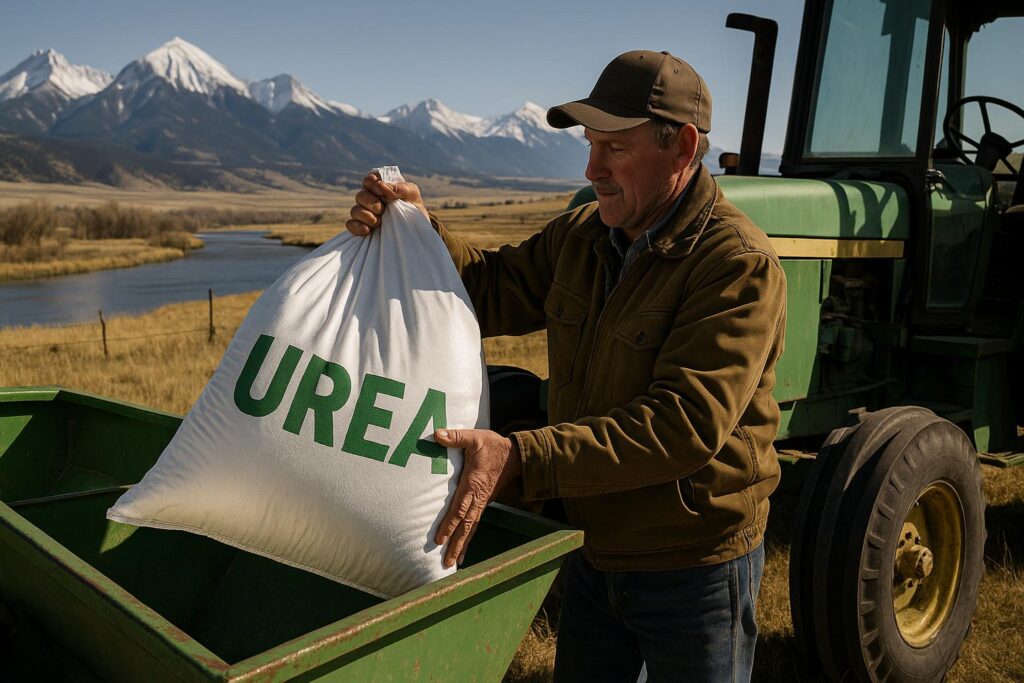
Reports from other grain states suggest a familiar lesson is resurfacing this year: the producers who bought fertilizer early are sleeping better than the ones still shopping. It’s not that fertilizer is “cheap” — it’s that price moves can be fast, and the spread between input costs and crop prices can tighten in a hurry.
In Montana, where spring work can hinge on a short weather window and freight can add real dollars per ton, timing matters. Whether you’re a small-grains operator on the Hi-Line, raising malt barley in the Gallatin Valley, or running irrigated ground in the Yellowstone Valley, fertilizer decisions are as much about logistics and risk management as they are about agronomy.
This isn’t a call to overbuy or gamble on the market. It’s a reminder that “when” you buy can be as important as “what” you buy — especially when supply chains, energy markets, and global trade keep making input costs unpredictable.
Why Fertilizer Timing Is Back in the Conversation
Fertilizer pricing is influenced by several moving parts that don’t always track with local grain bids:
- Natural gas and energy costs (a big driver for nitrogen production).
- Global supply and trade, including disruptions in major exporting regions.
- Freight and availability, which can be more acute in the Northern Plains.
- Seasonal demand, when retail inventories tighten ahead of spring application.
Montana’s geography adds another layer. Getting product to remote areas of the Hi-Line or northeastern Montana can mean fewer delivery options and less flexibility if a supplier runs short. In wet years, anhydrous and UAN logistics can get messy; in dry years, producers may hesitate to spend heavily without moisture confidence, then face higher prices when they decide they do need product after all.
How Montana Operations Are Thinking About It
Across the state, fertilizer strategy often looks different depending on cropping system and water outlook:
- Dryland wheat and barley: Many growers try to match nitrogen to realistic yield based on stored soil moisture and long-range outlooks. A price spike can push decisions toward lower rates, split applications, or more reliance on soil test data.
- Irrigated acres: Producers in the Yellowstone Valley and parts of the Gallatin and Bitterroot valleys often have more yield certainty, which can make early purchasing easier to justify — assuming water supply and allotments look solid.
- Mixed crop-livestock farms: Some operations can offset commercial fertilizer needs with manure, hay rotations, or legume stands, but they still face pricing risk on phosphorus, sulfur, and micronutrients.
One common thread: more producers are treating fertilizer like any other major input that can be managed with planning — similar to locking in fuel, lining up seed early, or pre-booking custom work.
Practical Ways Producers Are Managing Fertilizer Risk
Montana producers and agronomists often point to a handful of tactics that reduce exposure without forcing an all-or-nothing bet:
- Soil test first. Spending money where it pays and cutting where it doesn’t is still the best “price protection” available.
- Stage purchases. Buying a portion early and leaving a portion open can reduce regret in either direction.
- Know your storage and handling limits. On-farm storage can create flexibility, but it also creates safety, environmental, and capital considerations.
- Watch basis and freight. In Montana, delivered price can change as much from trucking and timing as from the wholesale market.
- Match fertility to moisture reality. In drought-prone zones, fertility plans that can be adjusted in-season may pencil better than a single big commitment.
For producers who do buy early, the “win” is often less about beating the market and more about removing uncertainty: knowing product is secured, delivered, and paid for before the spring rush.
What This Means for Montana Ranchers and Farmers
Even if you’re primarily a cattle operator, fertilizer markets can hit your bottom line through hay and pasture management, and through the grain side of your feed costs.
- Hay production costs can swing. Alfalfa and grass hay acres that get fertilized — especially under irrigation — can see big cost differences year to year. That matters in the Bitterroot Valley and Flathead Valley where hay ground competes with other land uses and margins can be tight.
- Feed grain prices don’t always cover input inflation. When fertilizer spikes without a matching rally in wheat or barley, margins tighten. That can ripple into local feed availability and pricing.
- Cash flow planning becomes a bigger deal. Prepaying fertilizer can reduce spring sticker shock, but it ties up capital. Operations should weigh early-buy discounts against interest costs and operating loan terms.
- Fertility decisions can affect forage quality. Cutting nitrogen too hard on grass hay can reduce protein and tonnage. For ranches counting on high-quality winter feed, that’s not just a crop issue — it’s a herd performance issue.
Bottom line: fertilizer timing is another lever for managing risk in a state where weather already supplies plenty of it. In years when drought lingers or irrigation allocations are uncertain, the “right” decision may be flexibility over maximum yield. In better moisture years, securing inputs early can protect margins and keep spring operations on schedule.
What to Watch Next in Montana Agriculture
If you’re making 2026 plans — or still fine-tuning 2025 fertility — here are the signals worth tracking over the next few months:
- Retail availability and delivery timelines. Ask suppliers what their spring inventory looks like and how delivery is prioritized during peak demand.
- Nitrogen market direction. Nitrogen tends to react to energy headlines. Keep an eye on natural gas trends and production issues. For broader market context, USDA posts updates through USDA ERS and related reports.
- Moisture and drought outlook. Fertilizer ROI depends on yield, and yield depends on water. Track conditions via the U.S. Drought Monitor (Montana).
- Irrigation supply and allocation updates. For irrigators, pay attention to snowpack, runoff forecasts, and any local district guidance. NRCS snowpack data is available through NRCS Montana.
- Wheat and barley price opportunities. If fertilizer costs rise, marketing plans matter more. Watch local basis and contract terms, especially for malt barley where quality specs can make or break returns.
Montana producers don’t need to chase every market move, but they do need a plan. In a volatile input environment, the operations that stay disciplined — soil testing, staging purchases, and matching fertility to moisture — are often the ones that protect margins when the market turns.
Inspiration: brownfieldagnews.com