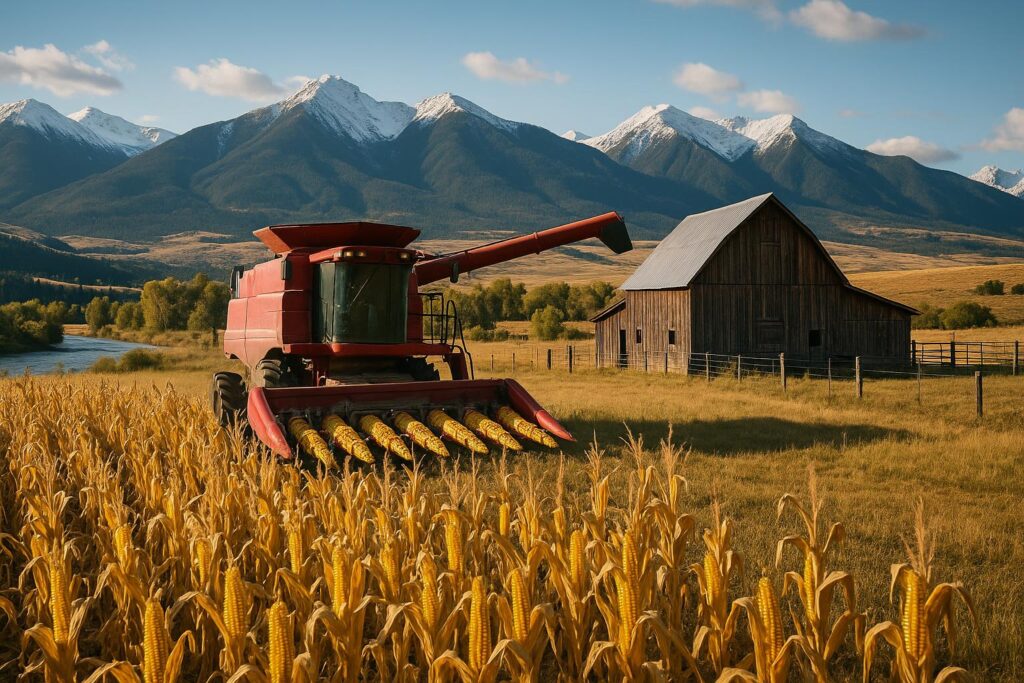
Corn and soybean futures were reported higher in overnight trade as markets positioned ahead of scheduled USDA reports. That kind of pre-report move doesn’t guarantee where prices end up after the numbers hit, but it does signal that traders are paying attention to acreage intentions, supply-and-demand updates, and any changes in export or domestic use.
For Montana, the headline isn’t just “corn up, beans up.” It’s what those price signals mean for spring planting decisions in irrigated pockets, for feed costs in cow-calf and backgrounding country, and for the broader competition between grain, hay, and pasture as producers pencil out 2026 budgets.
What happened in the markets
Reports indicate corn and soybeans strengthened overnight ahead of upcoming USDA data releases. Pre-report trading often reflects positioning: some participants reduce risk, others place bets on acreage, yields, or demand changes. The result can be a firmer tone going into the report window, followed by sharp swings once the numbers are public.
In plain terms, the market is trying to answer a few questions:
- How many acres will U.S. producers actually plant? Corn tends to pull acres when returns look competitive versus other crops.
- Are ending stocks tightening or rebuilding? Small changes in carryout can move futures quickly.
- What’s the demand picture? Ethanol margins, feed demand, and exports all matter.
For producers who want to follow the official releases, USDA’s calendars and reports are posted at USDA WASDE and USDA NASS. Those reports are national in scope, but their ripple effects land right here in Montana—often through basis, freight, and local feed pricing.
Why it matters in Montana
Montana isn’t the Corn Belt, but corn prices still set the tone for a big share of livestock feed costs and influence what gets planted in irrigated and higher-moisture areas. When corn futures firm up, it can:
- Raise or support feed costs for backgrounders and feedlots that buy grain or grain-based rations.
- Improve the outlook for irrigated corn in places where it competes with small grains, silage, or specialty crops.
- Pressure hay markets indirectly if feeders shift between hay and grain depending on relative prices.
Regional context matters. In the Yellowstone Valley, where irrigation and crop diversity are stronger, corn—especially silage—can be part of the rotation, and grain market strength can change local bids and planting conversations. In the Gallatin Valley, where land values and competing uses shape cropping decisions, any change in input costs and expected returns can push acres toward or away from feed crops.
Up on the Hi-Line, the connection is often more indirect: corn futures influence feed alternatives and the broader grain complex, which can spill over into barley and wheat price relationships. In the Flathead Valley and the Bitterroot Valley, where many operations balance livestock with hay and forage production, stronger grain can affect wintering costs and what buyers are willing to pay for quality hay.
What This Means for Montana Ranchers and Farmers
1) Feed budgets may stay volatile into spring. If corn and soybeans are bid up ahead of USDA reports, it’s a reminder that ration costs can move quickly—sometimes in a single morning. Ranchers who buy cake, pellets, or commodity mixes should keep an eye on how local suppliers adjust pricing after major USDA releases.
2) Hay and grain will keep competing in the ration. Montana’s winter and shoulder seasons make forage quality a big deal. When corn gets more expensive, some operations lean harder on hay—if they can source it. When corn backs off, grain can replace some forage in certain rations. Neither is “right” universally; it depends on cattle class, forage tests, and total cost per pound of gain.
3) Irrigation decisions get more complicated. If corn prices look attractive, irrigated producers may be tempted to hold or expand corn acres. But Montana’s reality is water. In drought-prone years, the cost and availability of irrigation water, pumping, and timing can outweigh the futures board. Producers in the Yellowstone Valley and other irrigated corridors should run scenarios that include:
- Water supply outlook and any district-level constraints
- Power and pumping costs
- Seed, fertilizer, and chemical price risk
- Expected basis at delivery points
4) Basis and freight matter more here than the headline futures price. Montana producers often feel the market through basis—what local buyers pay relative to the board—plus freight. A higher futures market doesn’t automatically mean a higher cash bid in every location. Watch local elevator postings and feed dealer quotes, not just national headlines.
5) Risk management windows may open—briefly. Pre-report strength can create chances to price a portion of expected production or lock in feed needs. That can be done through cash contracts, hedges, or options, depending on the operation. The key is discipline: set target levels and volumes ahead of time so decisions aren’t made in the middle of a fast market.
Local angles: where Montana producers could feel it first
Yellowstone Valley: Watch irrigated crop budgets and any shift toward silage or grain corn where rotations allow. If corn holds strength, it can support local interest, but input costs are still the gatekeeper.
Hi-Line: Keep an eye on how corn/soy moves influence barley and wheat spreads. Feed buyers sometimes pivot among grains, and that can affect demand for local alternatives.
Gallatin Valley: For diversified farms and smaller livestock operations, feed price swings can hit quickly. Monitor retail feed and delivered commodity pricing, not just elevator bids.
Flathead and Bitterroot valleys: Forage markets are the heartbeat. If grain stays expensive, quality hay may stay well supported. If grain eases, some buyers may get picky on hay price—especially on lower test lots.
What to Watch Next in Montana Agriculture
- USDA report results and the market reaction. The first move isn’t always the final move. Watch how corn and soy settle after the release, and whether follow-through buying or selling shows up in the next sessions.
- Acreage talk versus on-the-ground reality. Nationally, “producers still want to plant corn” may be a theme in market chatter, but Montana’s acres hinge on moisture, irrigation reliability, and input availability. Track what neighbors are actually booking for seed and fertilizer.
- Basis changes at Montana elevators and feed yards. If futures rise but basis weakens, cash bids may not improve much. If basis tightens, that’s when local prices can move in a hurry.
- Hay movement and quality spreads. Watch whether higher grain prices widen the premium for tested, higher-energy hay. In many Montana yards, the best hay doesn’t compete with average hay—it competes with grain.
- Drought and irrigation outlook. Soil moisture and mountain snowpack set the table. Keep tabs on NRCS updates at NRCS Montana and local water district communications for any early-season constraints.
- Cattle market signals. Feed costs and feeder prices are tied together. If feed stays high, it can change what buyers are willing to pay for calves and yearlings, especially in backgrounding country.
Bottom line: a firmer corn and soybean market ahead of USDA reports is a reminder that spring price discovery is underway. For Montana ranchers and farmers, the practical work is the same—tighten up budgets, watch local basis and delivered feed quotes, and be ready to act if post-report volatility offers a pricing opportunity or a warning sign.
Inspiration: www.farmprogress.com