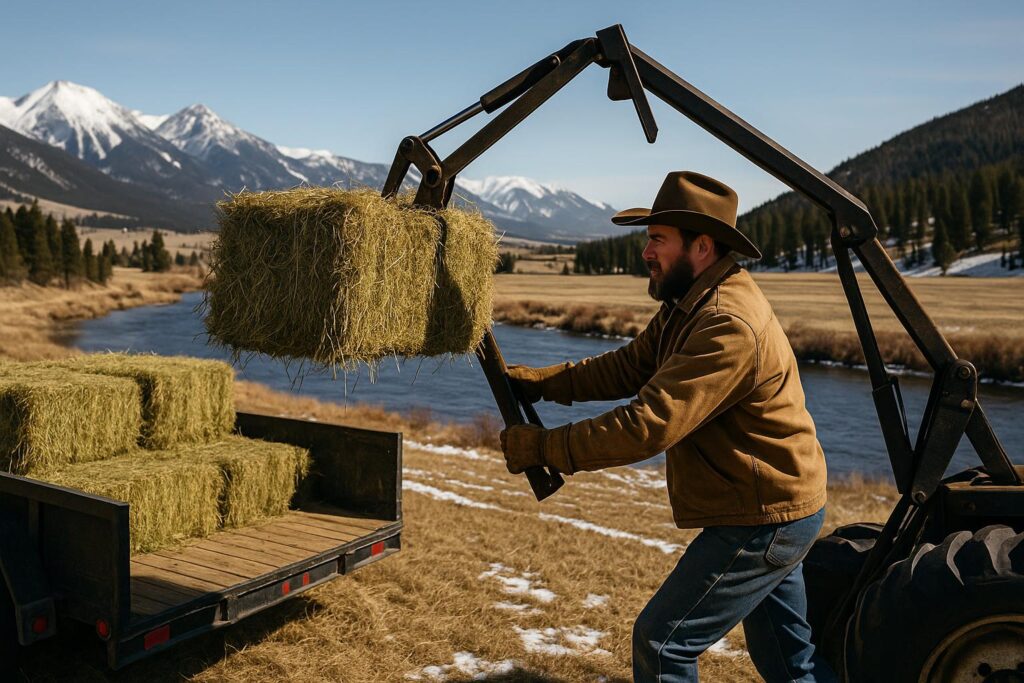
Across Montana, hay moves the same way it always has in a tight year: by pickup, by semi, and by neighbor-to-neighbor phone calls. When drought, wildfire, or a hard winter hits, ranchers in the Bitterroot Valley, the Hi-Line, the Yellowstone Valley, the Gallatin Valley, and the Flathead Valley often step up with donated feed. The question that follows—especially for folks trying to keep books straight—is whether donated hay brings any tax relief.
Reports from farm tax advisers indicate the answer is usually “not much” for raised hay, at least compared to what many producers assume. But there are still ways to make a donation count—financially and on paper—if you document it correctly and understand the difference between a charitable gift and a business expense.
What Happened: The Donated Hay Tax Question Keeps Coming Up
In years when feed is tight, Montana producers often donate hay to help livestock operations that are short on grass, water, or winter forage. The tax question tends to surface in three common situations:
- Drought-driven shortages, when hay prices rise and some ranchers can’t source enough feed locally.
- Wildfire and smoke impacts, when pastures are lost or access is restricted.
- Community relief efforts coordinated through local groups, churches, fairgrounds, or ag organizations.
The confusion is understandable. Many folks assume that if hay has a market value, donating it should generate a charitable deduction equal to that value. Tax professionals frequently caution that the rules don’t work that way for most “raised” crops and livestock feed.
How the Tax Rules Typically Treat Donated Hay
For many Montana operations, hay is produced on-farm—seeded, irrigated (where available), cut, baled, and stacked. Even though it has real value, the IRS generally doesn’t allow a charitable deduction for the full fair market value of raised inventory that was never counted as income. In plain terms: you usually can’t deduct income you never reported.
That doesn’t mean there’s no tax impact at all. Depending on your operation and how the donation is structured, you may be able to deduct certain out-of-pocket costs tied to the donation or treat parts of it as a business expense—but the details matter and the wrong assumption can create trouble in an audit.
Common examples that tax advisers say may be deductible in some cases (facts and documentation matter):
- Transportation costs to deliver hay (fuel, hired trucking, or mileage), if properly documented and allowable under your tax situation.
- Cash donations to a qualified charitable organization that is coordinating hay purchases or relief efforts.
- Purchased hay donated after being bought (treatment can differ from raised hay; consult a tax pro on basis and deductibility).
Key caution: whether something is deductible can depend on whether the recipient is a qualified charitable organization, whether the donation is treated as charitable versus business-related, and whether you have the receipts and written acknowledgments required for the kind of deduction you’re claiming.
Why It Matters in Montana: Hay Is Both Feed and a Major Expense Line
In Montana, hay isn’t a side note—it’s the backbone of wintering programs, especially in cow-calf country and in valleys where irrigated production supports local feed supplies. When hay is short, the economics hit fast:
- Cash flow pressure increases as producers buy feed at higher prices or haul it farther.
- Herd decisions (culling, early weaning, shifting to custom grazing) can hinge on feed availability.
- Local markets tighten, especially if drought reduces second and third cuttings in irrigated areas or limits dryland yields on the Hi-Line.
That’s why the tax angle matters. Donating hay is the right thing to do in many communities, but ranchers also need to protect their own operations. If a producer assumes a big tax deduction is coming and it doesn’t materialize, that can leave a hole in the year-end plan—right when operating notes, equipment payments, and replacement heifer costs are all in play.
Practical Steps: How to Make a Hay Donation “Count” on the Record
Montana ranchers who donate hay can reduce headaches later by treating documentation as part of the donation.
- Write down what moved: number of bales, approximate weight, type (grass/alfalfa mix, alfalfa, straw), and delivery date.
- Track delivery costs: fuel receipts, hired trucking invoices, and a simple log of miles and purpose.
- Know who received it: an individual ranch, a nonprofit, or a relief fund. The paperwork requirements differ.
- Get a written acknowledgment when required, especially if a qualified organization is involved. Ask what they can and can’t state about value.
- Talk early with your tax preparer (CPA, enrolled agent, or farm tax specialist) before you decide how to classify the donation.
If you’re looking for baseline IRS guidance on charitable contributions, start with the IRS page on charitable contributions. For Montana-specific help, producers can also check resources through MSU Extension, which often points to ag finance and recordkeeping tools.
What This Means for Montana Ranchers and Farmers
For Montana agriculture, the takeaway is simple: donating hay can be a strong community move, but it’s not automatically a big tax write-off when the hay was raised on your own place.
Here’s how that plays out on the ground in different regions:
- Bitterroot and Flathead valleys: irrigated hay can be high-value, and delivery to fire-impacted areas is common in bad smoke years. Transportation documentation becomes important.
- Yellowstone Valley: when irrigation supplies are tight or allocations change, hay yields can swing. If you donate in a short year, don’t bank on market-value deductions to offset the loss.
- Gallatin Valley: a mix of livestock and small-acreage hay producers means donations may run through community groups; confirm whether the organizer is a qualified charity and what paperwork they provide.
- Hi-Line: dryland variability can be extreme. If you’re donating purchased feed or paying to truck hay long distances, those out-of-pocket costs may be the more realistic tax angle than the hay’s sale value.
Bottom line for producers: treat donated hay first as a neighbor-helping decision, then as an accounting decision. If you want the accounting to be clean, build the paper trail while the bales are still moving.
What to Watch Next in Montana Agriculture
- Hay supply and price signals: watch local classifieds, auction barns, and regional hay reports as second and third cutting results come in. Tight supplies can change donation requests quickly.
- Drought and irrigation outlook: monitor NRCS and state drought updates, plus local irrigation district announcements. Water availability drives hay tonnage in the Yellowstone and Gallatin valleys and influences how much “extra” feed exists to donate.
- Wildfire season impacts: fire closures and smoke can force early shipping or relocation. That can increase demand for donated feed and trucking capacity.
- Tax planning conversations: if you’re considering large donations, schedule tax planning before year-end. The right classification (charitable vs. business-related) and documentation can matter more than the donation itself.
- Relief efforts and eligibility: if donations are routed through nonprofits or organized funds, confirm how they handle receipts and acknowledgments so your records match what the organization can legally provide.
Donating hay will always be part of Montana’s ag culture. Just go into it with clear eyes: the benefit to the neighbor is immediate, while the tax benefit—if any—depends on how the hay was produced, who received it, and whether the costs are documented in a way your tax professional can defend.
Inspiration: www.farmprogress.com