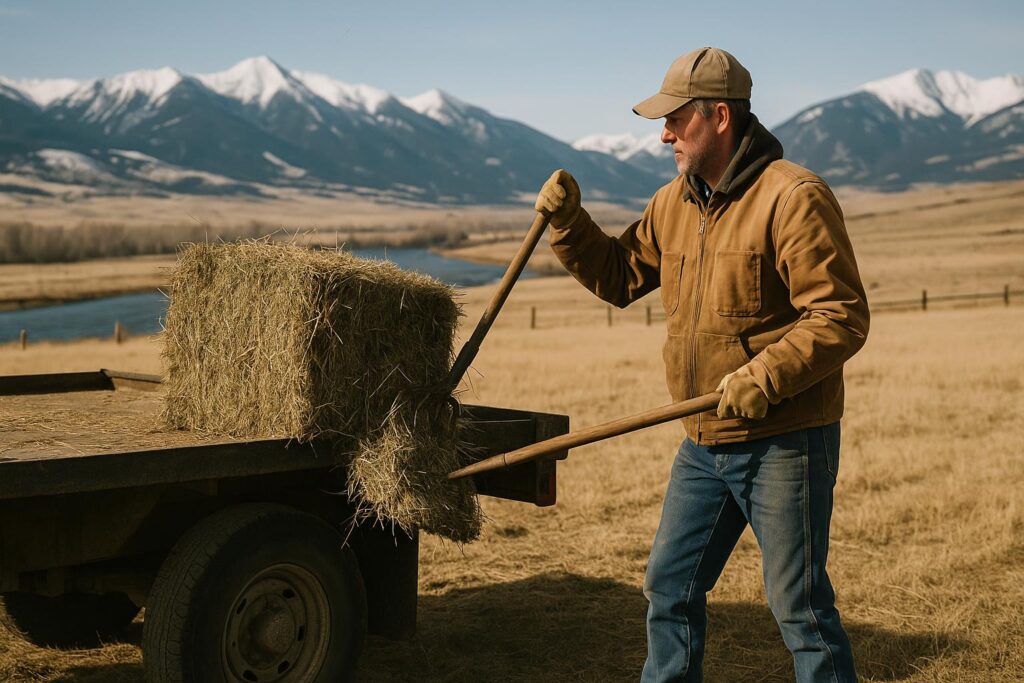
When drought or wildfire squeezes feed supplies, Montana producers often step up with hay. From the Bitterroot Valley to the Hi-Line, it’s common to see neighbors hauling bales to a ranch that’s short on grass, or a fairgrounds lot filling up with donated feed after a tough summer. The goodwill is real. The tax side, however, can be less straightforward than many producers expect.
Reports indicate that the biggest point of confusion is whether donated hay qualifies as a charitable contribution deduction on a federal return. The short version: donating “raised” agricultural products doesn’t always produce the deduction people assume—especially if you’re giving hay directly to another producer rather than to a qualified charity. That doesn’t mean the donation is a bad idea. It means it’s worth understanding what counts, what doesn’t, and what paperwork matters.
What Happened
Tax advisors and farm tax publications have been reminding producers that the IRS rules for agricultural products can differ from what folks are used to with cash donations. Hay is a good example. If you put up hay yourself—seed, fertilizer, irrigation, swathing, baling—the value of those bales feels like it should be deductible if you give them away. But federal tax rules generally treat self-produced inventory and raised crops differently than purchased items.
Two issues typically drive the confusion:
- Who receives the hay: A neighbor rancher is usually not a “qualified charitable organization.” A 501(c)(3) nonprofit, a church, or another qualifying entity may be.
- What you’re donating: Cash is simple. Property can be deductible, but self-produced farm products may not generate a deduction equal to fair market value in the way people expect.
Montana producers also run into practical questions: If you donate hay to a local relief drive, can you deduct the trucking? What if you bought the hay and then donated it? What if you donate grazing instead of bales? The answers depend on details, and the safest approach is to document the donation and talk with a tax professional who works with ag clients.
Why It Matters in Montana Right Now
Hay is not just a line item here—it’s the difference between keeping cows through winter or cutting numbers. In the Yellowstone Valley and Gallatin Valley, irrigated hay can be a lifeline when dryland production falls off. On the Hi-Line, where drought can linger and freight costs add up fast, donated hay can keep a small operation afloat for a season.
But Montana hay is expensive to produce and expensive to move. If a producer believes a donation will create a major tax benefit—and it doesn’t—that’s a real financial hit. In a year where margins are already tight, misunderstandings can sour otherwise good relief efforts.
It also matters because Montana agriculture is increasingly tied to formal disaster response and nonprofit networks. County-level hay drives, wildfire relief efforts, and livestock assistance programs often rely on donations. Knowing what qualifies as a charitable contribution (and what is simply a neighbor-to-neighbor gift) helps producers choose the best way to help without getting surprised at tax time.
How Hay Donations Typically Work Under Federal Tax Rules
Every operation is different, and tax outcomes depend on entity structure, accounting method, and the recipient. Still, producers across the Flathead Valley, Bitterroot Valley, and beyond tend to run into the same general guardrails:
- Donating to a neighbor is usually not a charitable deduction. It may be a gift, and it may be the right thing to do, but it generally isn’t treated like a charitable contribution on your federal return.
- Donating to a qualified charity can be deductible, but valuation is not automatic. For self-produced hay, many producers learn they can’t simply deduct the retail value of the bales as though they wrote a check for that amount.
- Purchased hay may be treated differently than raised hay. If you bought hay and donate it to a qualified charity, the tax treatment may be closer to donating other purchased property—again, depending on facts and limits.
- Out-of-pocket costs may matter. In some cases, certain unreimbursed expenses connected to a charitable donation (like mileage or trucking) may be deductible if they are directly tied to donating to a qualified organization and properly documented. Producers should be cautious here and keep records.
If you’re trying to confirm whether an organization is qualified, the IRS provides a public search tool. See IRS Tax Exempt Organization Search. That won’t answer every question, but it helps verify whether the receiving group is recognized.
Recordkeeping: What Montana Producers Should Document
Even when a donation doesn’t create the deduction you hoped for, good documentation protects you and supports community efforts. If you are donating hay through an organized relief effort, ask the organizer what they can provide for receipts and reporting.
- Who received it: Legal name of the organization, address, and EIN if available.
- Date and description: Type of hay (alfalfa/grass mix), number of bales, bale weight if known, and condition.
- How it moved: Your trucking logs, fuel receipts, hired hauling invoices, and mileage documentation.
- Any acknowledgement letter: For charitable contributions, written acknowledgment may be required depending on value and circumstances.
For producers who want to help a neighbor but also want clarity on the financial side, one practical option is to route assistance through a qualifying nonprofit when appropriate. That’s not always possible or desirable, and it can add complexity. But in some cases it aligns the good deed with clearer tax treatment.
What This Means for Montana Ranchers and Farmers
Hay donations will keep happening in Montana because that’s how rural communities work. The takeaway isn’t “don’t donate.” It’s “donate with your eyes open.”
- Don’t budget a tax windfall you haven’t confirmed. If you’re in the Bitterroot Valley or Flathead Valley and you’re giving away significant tonnage, assume the tax benefit may be limited until your preparer confirms otherwise.
- Match the method to the goal. If your goal is immediate help to a neighbor, a direct donation may be simplest. If your goal includes a potential charitable deduction, donating through a verified 501(c)(3) may be more appropriate—if the program is legitimate and set up to handle it.
- Think about cash-flow and replacement cost. In the Yellowstone Valley, where irrigated hay can be a major input cost, donating from your stack may mean you’re buying replacement feed later at a higher price. That’s a real economic decision separate from taxes.
- Coordinate hauling. Freight can make or break the value of donated feed, especially to the Hi-Line or across long distances. If an organization can consolidate loads, that may stretch donations further.
Also consider that tax rules can change, and disaster-related provisions sometimes appear in Congress after major events. Producers should stay current, but avoid assuming special rules exist unless confirmed by reliable sources.
What to Watch Next in Montana Agriculture
- Drought signals and second-cutting outcomes: Watch NRCS and local extension updates for hay yield projections and pasture conditions. If second cutting is light in the Gallatin Valley or Yellowstone Valley, expect tighter supplies and more donation requests.
- Hay price and freight trends: Regional hay reports and auction results will matter, but so will diesel prices and trucking availability. High freight costs can turn “donated” hay into an expensive delivery.
- Wildfire season impacts: If smoke and fire closures limit access to allotments or disrupt haying windows, demand for emergency feed can spike quickly.
- Relief program structure: Pay attention to how local nonprofit drives are organized—whether they can provide proper receipts, how they verify recipients, and whether they coordinate logistics.
- Tax guidance updates: If IRS guidance or farm tax advisories highlight changes around charitable contributions or disaster relief, that could affect how Montana producers plan end-of-year donations.
Bottom line: donating hay is one of the most practical ways Montana agriculture takes care of its own. Just don’t let assumptions about deductions drive the decision. If you’re considering a large donation, it’s worth a quick call to a farm-savvy CPA or enrolled agent before the truck is loaded.
Inspiration: www.farmprogress.com