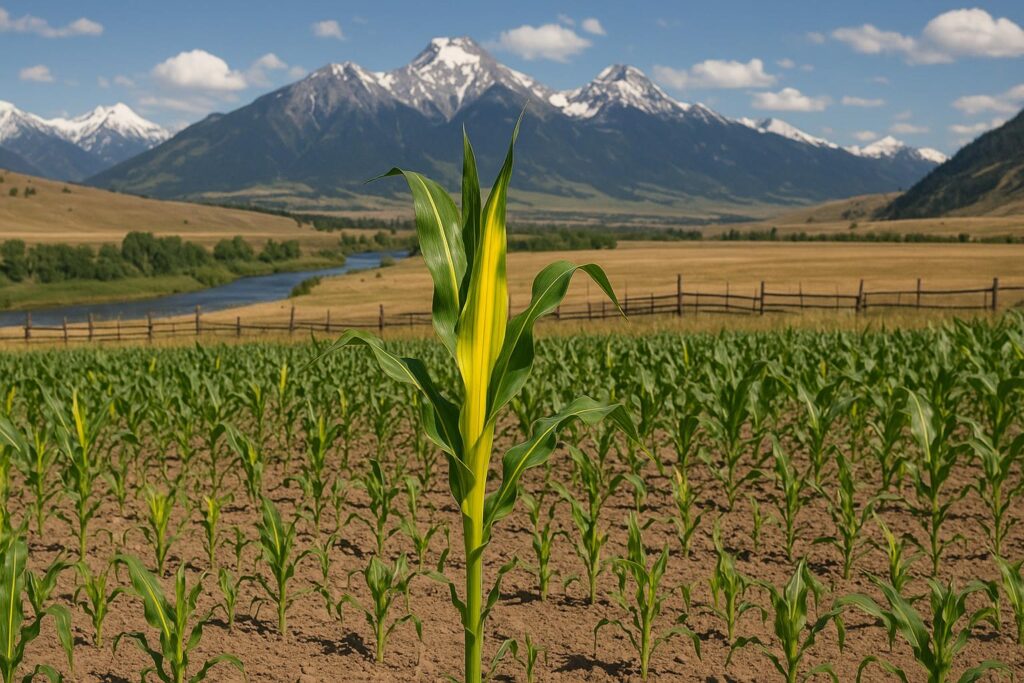
When corn starts showing pale, yellow striping across the newest leaves, it can turn a calm drive-by into a stop-and-scout moment. Across the northern plains, reports indicate more growers are noticing striping early in the season, and sulfur (S) is often one of the first nutrients agronomists consider—especially when conditions slow root growth or limit nutrient movement into the plant.
That doesn’t mean every striped field is “a sulfur field.” Herbicide injury, compaction, cold soils, early-season drought, and other nutrient imbalances can look similar from the pickup window. The key is to narrow it down with good scouting, a little field history, and—when it matters—soil and tissue tests.
What yellow striping can tell you (and what it can’t)
Striping is a symptom, not a diagnosis. In corn, sulfur deficiency often shows up as overall paleness or yellowing on the newest leaves first, sometimes with striping between veins. That “new growth first” clue matters because sulfur is less mobile in the plant than nitrogen (N). Nitrogen deficiency tends to show up on older leaves first, with yellowing that starts at the tip and runs down the midrib.
Still, field patterns can mislead. A wet low spot, a sandier ridge, or a compacted headland can all create striping that has nothing to do with sulfur. Before you spend money on a rescue treatment, it’s worth sorting out what you’re actually seeing.
Why sulfur is showing up in more conversations
Old-timers will tell you sulfur used to “come for free” from the sky. Over the last few decades, cleaner air regulations have reduced atmospheric sulfur deposition in many regions. That’s good news for air quality, but it also means some soils and cropping systems don’t get the incidental sulfur they once did.
In Montana, sulfur risk can be higher when several factors stack up:
- Coarse-textured or low organic matter soils that don’t hold sulfate well
- Cool, wet springs that slow mineralization and root activity
- High-yield goals that increase overall nutrient demand
- Fields with limited manure history or low sulfur in fertilizer programs
- Leaching or shallow rooting after heavy precipitation events
Sulfur in the plant is commonly taken up as sulfate, which can move with water in the soil profile. In a year where moisture patterns swing hard—too wet early, then drying out—availability can change quickly, and symptoms can come and go.
Scouting checklist: what to look for in the field
If you’re seeing striping, take 15 minutes and walk it. A few notes and photos now can save you from guessing later.
- Which leaves are affected? Newest leaves (possible S) vs. oldest leaves (possible N).
- How uniform is the pattern? Whole-field symptoms suggest a fertility or environmental issue; patchy symptoms may point to compaction, drainage, or application overlaps.
- Where is it worst? Sandy knolls, eroded slopes, and areas with thin topsoil can be classic places for sulfur to show up.
- Any recent stress? Cold nights, waterlogged roots, hail, windblown sand, or herbicide applications can all leave plants looking off-color.
- Root check: Dig a few plants. Restricted roots, sidewall compaction, or smeared seed furrows can limit nutrient uptake even when nutrients are present.
Also consider timing. Early-season striping sometimes fades as soils warm and roots expand. That doesn’t mean the crop is “fine,” but it does mean you should confirm the cause before reacting.
Confirming sulfur deficiency: soil tests, tissue tests, and context
Because multiple issues can mimic sulfur deficiency, confirmation matters. Two common tools are soil testing and tissue testing, and they’re strongest when used together.
- Soil tests: A standard soil test may include sulfate-S, but results can vary with sampling depth, recent rainfall, and soil type. Sampling deeper than the typical 0–6 inches can help in some situations because sulfate can move down the profile.
- Tissue tests: Plant tissue can show what the crop is actually taking up. Tissue testing is especially helpful when symptoms are present but soil tests look “okay.”
Work with your local agronomist or Extension office on sampling protocols and interpretation. Montana State University Extension is a good starting point for region-specific guidance: https://www.msuextension.org/.
Common look-alikes: don’t overlook these
Before you hang everything on sulfur, consider a few frequent imposters:
- Herbicide injury: Some products and tank mixes can cause temporary chlorosis or striping, particularly under cool conditions. Check label guidance and application history.
- Zinc or magnesium issues: Certain micronutrient deficiencies can create interveinal chlorosis or banding that resembles sulfur symptoms.
- Compaction and sidewall smearing: Roots that can’t explore the soil won’t access nutrients, even if fertility is adequate.
- Cold soils: Early planting into cold ground can slow uptake and create pale plants that recover later.
If the pattern matches sprayer passes, field edges, or specific soil transitions, that’s a clue to dig deeper than a single nutrient explanation.
If it is sulfur: practical options that fit Montana realities
When sulfur deficiency is confirmed—or strongly suspected based on tests and field history—there are several ways to address it. The “right” choice depends on timing, equipment, and how quickly you need a response.
- Sulfate forms (faster availability): Products like ammonium sulfate can provide relatively quick sulfur because the sulfate form is plant-available. They also supply nitrogen, which can be useful—but be mindful of total N plans.
- Elemental sulfur (slower): Elemental S needs to oxidize before plants can use it, so it’s typically better for long-term management than in-season rescue.
- Blended fertilizers: Some operations build sulfur into their preplant or side-dress blends so they’re not chasing symptoms later.
Foliar sulfur can help in certain scenarios, but it’s usually a short-term bridge rather than a full-season solution, and responses can be inconsistent depending on rate, formulation, and weather. If you’re considering an in-season application, discuss realistic expectations with your crop advisor and confirm what the label allows.
What this means for Montana
Montana corn acres aren’t uniform—irrigated versus dryland, river bottoms versus lighter terraces, high organic matter ground versus thin topsoil. That variability is exactly why sulfur questions can pop up “out of nowhere” on one farm and never show on the neighbor’s.
For Montana growers, the takeaway is less about panic and more about preparedness:
- Know your risk fields. If you’ve got sandy knobs, low OM soils, or a history of pale early corn, flag those fields for early scouting.
- Don’t assume it’s nitrogen. Many striped fields get an automatic N reaction. Sometimes that helps, sometimes it doesn’t, and sometimes it masks the real issue.
- Build a testing habit. A tissue test when symptoms first show can pay for itself by preventing the wrong input.
- Consider sulfur in the base program. If tests and history point that direction, it’s often cheaper to plan sulfur in advance than to rescue it later.
And keep in mind: early-season symptoms don’t always translate to yield loss, especially if the crop grows out of it as soils warm and roots expand. But when sulfur truly is limiting, addressing it can protect yield potential—particularly in higher-yield environments where nutrient demand ramps up fast.
When to call in help
If striping is widespread, worsening, or paired with stunting, it’s worth bringing in a second set of eyes. Your local agronomist, retailer, or Extension educator can help you sort out whether you’re looking at a nutrient issue, a soil physical problem, or an environmental stress response.
For additional background on nutrient management and crop troubleshooting, the USDA Natural Resources Conservation Service also has Montana resources that can help frame soil-related constraints: https://www.nrcs.usda.gov/conservation-basics/conservation-by-state/montana.
Inspiration: www.agdaily.com