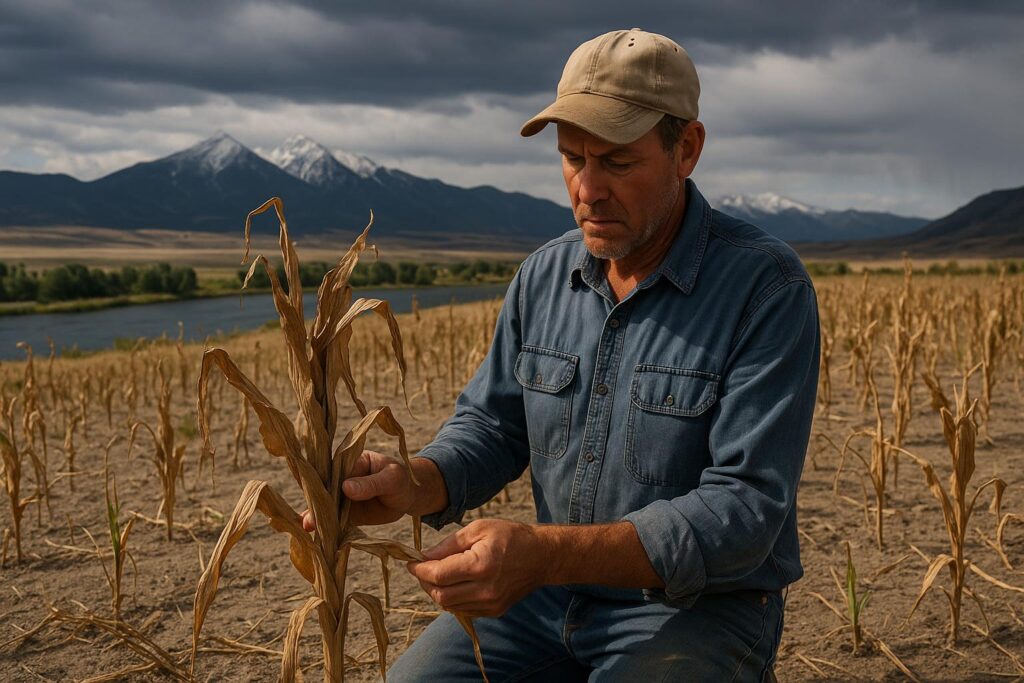
Across Montana, it doesn’t take much of a weather swing to turn a decent-looking crop into a question mark. Dryland acres can go from “hanging on” to “rolling leaves and stalled growth” in a week of heat and wind. Then a fast-moving thunderstorm can add hail strips on top of drought stress, leaving producers staring at fields and asking the same thing: what now?
There isn’t a single playbook that fits every operation, crop, or county. But there are practical steps that can help producers make timely, defensible decisions—whether that’s protecting yield potential, documenting damage for insurance, salvaging feed, or planning for next year’s moisture reality.
Start with a calm, methodical field assessment
When drought and hail hit in the same season, it’s easy to overestimate or underestimate what’s happened. A quick windshield pass rarely tells the whole story. The goal is to separate cosmetic injury from yield-limiting damage and to document what you’re seeing.
- Wait a beat after hail: Many crops show additional leaf shredding and discoloration over the next several days. If you can, scout 3–7 days after the storm to better gauge survival and regrowth potential.
- Check growing points: In small grains, split stems and look for a firm, healthy growing point (or developing head, depending on stage). In pulse crops and oilseeds, look for intact nodes and new growth.
- Measure stand and uniformity: Count plants in multiple representative areas, including the worst strips and “average” areas. Patchy fields often yield worse than the same average stand evenly distributed.
- Look for disease entry: Hail wounds can open the door for fungal issues, especially if a wet period follows. Monitor for lesions and unusual discoloration as the crop tries to recover.
- Document everything: Photos with timestamps, field notes, and maps of damaged areas help with insurance conversations and management decisions.
For Montana-specific crop and forage guidance, many producers lean on Montana State University Extension resources and local agents. The MSU Extension website is a good starting point for contacts and publications: https://www.msuextension.org/.
Drought stress changes how hail damage plays out
A key reality: a crop already short on moisture has less ability to regrow after tissue loss. Hail that might be “recoverable” in a wet year can become yield-limiting when roots are shallow and the plant is conserving water.
Reports from Extension programs in the Northern Plains often emphasize that the crop’s growth stage matters as much as the percent of leaf area lost. Early-season defoliation can be survivable if moisture returns; late-season head or pod injury is harder to overcome. In Montana, the same principle applies—timing, moisture outlook, and crop stage should drive decisions more than a single rule of thumb.
Know your insurance and reporting timelines
If you carry crop insurance, time is not your friend. Most policies require prompt notice of damage and may require an adjuster visit before you destroy a stand, hay it, graze it, or replant. Even if you’re unsure whether you’ll file a claim, it’s usually wise to notify your agent soon after a hail event or when drought damage becomes apparent.
Producers can review general program information through the USDA Risk Management Agency (RMA): https://www.rma.usda.gov/. Your local agent and adjuster will be the definitive source for your policy specifics.
- Don’t cut or graze first: Get guidance before harvesting or turning livestock onto insured acres.
- Ask about appraisal options: In some cases, appraisals can allow salvage as hay or silage while keeping the claim process intact.
- Keep input records: Seed, fertilizer, chemical, and application records can matter when evaluating options and documenting losses.
Consider salvage pathways: hay, silage, grazing, or leaving it
When yield potential drops, the question becomes whether the crop still has value as feed—or whether it’s better left to protect soil and capture what moisture remains.
Options vary by crop type, herbicide program, and livestock needs:
- Hay or greenchop: If the stand is adequate and herbicide restrictions allow, cutting for hay can capture value. Test for nitrate risk, especially where drought followed nitrogen applications. Nitrates can be elevated in stressed small grains and some broadleaf crops.
- Silage: Where equipment and storage exist, silage can be a practical salvage option. Moisture content at harvest is critical for fermentation and feed quality.
- Grazing: Turning cattle onto failed or failing acres can stretch pasture and reduce purchased feed, but fencing, water, and soil conditions matter. Also, herbicide labels and insurance rules must be checked first.
- Leave as cover: In some situations, leaving residue protects soil from wind erosion, improves snow catch, and preserves what little moisture is present. This can be especially important on lighter soils and exposed benches.
Before feeding or grazing stressed crops, it’s worth sampling. MSU Extension and local labs can help with forage testing and interpreting results. If toxicity concerns exist (nitrates are the common one in drought years), don’t guess—test.
Adjust inputs and expectations—without overcorrecting
It’s tempting to “rescue” a stressed crop with extra nitrogen or a late fungicide pass. Sometimes that’s warranted; often it’s not. With drought, the limiting factor is typically water, not nutrients. Additional fertilizer can be a poor return and may increase nitrate risk in the forage if the crop doesn’t finish normally.
Likewise, hail injury can increase disease susceptibility, but disease pressure still depends on weather conditions. If a dry pattern persists, fungicide ROI may be limited. If a wetter pattern sets in after hail, scouting becomes more important.
A practical approach is to:
- Scout and identify the true limiting factor (moisture, stand loss, head/pod injury, disease).
- Run the numbers on additional passes (product + application cost vs. realistic yield gain).
- Prioritize fields with the best remaining yield potential and the best moisture profile.
Don’t overlook the soil: residue, compaction, and erosion risk
Hail can strip canopy and leave soil exposed. Drought reduces residue production and can increase wind erosion risk, especially in areas that already run light on ground cover. If you’re considering tillage after a failure, weigh the short-term benefits against the long-term cost of losing moisture and soil structure.
In many Montana dryland systems, protecting residue is a form of risk management. Even if a crop doesn’t pay this year, maintaining cover can pay next year by improving infiltration and reducing evaporation.
What this means for Montana
Montana agriculture spans everything from irrigated valleys to dryland grain on the prairie to mixed crop-livestock operations in between. That diversity is a strength, but it also means weather damage doesn’t hit uniformly. Reports indicate that when drought and hail overlap, the most successful operations tend to be the ones that make early, well-documented decisions rather than waiting for a “miracle rain” that may not arrive.
For Montana producers, a few themes stand out:
- Timely communication is money: Call your crop insurance agent early, and loop in your agronomist or Extension contact while options are still open.
- Feed planning matters now: If hay yields are down or pasture is short, salvaging feed from stressed acres may be part of the solution—provided herbicide and insurance rules allow it.
- Testing protects the herd: Drought-stressed forages can carry nitrate risk. A forage test is cheap compared to a wreck.
- Residue is a resource: In a dry year, leaving cover can be a strategic choice, not a defeat.
Finally, keep an eye on local conditions and official drought reporting as you plan marketing, feed purchases, and fall seeding decisions. The U.S. Drought Monitor provides a regularly updated snapshot used widely across agriculture: https://droughtmonitor.unl.edu/. It won’t replace what you see on your own place, but it can help frame regional trends.
Quick checklist: questions to answer this week
- What growth stage is the crop in, and is the growing point/head/pods intact?
- What is the stand count and how patchy is the damage?
- Have you notified your insurance agent, and do you need an adjuster before salvage?
- Do herbicide labels allow haying or grazing, and what are the waiting intervals?
- Is nitrate testing needed before feeding?
- Is leaving residue the best soil-protection choice if the crop won’t pay?
Montana producers have always had to manage weather risk, and years with both drought and hail test that skill set. The best next step is usually the simplest: scout carefully, document thoroughly, and make the decision that protects both this year’s balance sheet and next year’s soil moisture.
Inspiration: www.agdaily.com