Montana doesn’t plant corn on the same scale as the Midwest, but corn acres in the Yellowstone Valley, parts of the Hi-Line, and pockets of the Gallatin and Flathead valleys can be important feed sources for livestock operations and local grain buyers. That makes insect pressure more than an academic issue—especially in years when hay is short and every ton of feed matters.
Reports from other corn states suggest some “legacy” pests are still capable of causing economic damage, particularly where growers plant non-Bt corn, specialty types, or where trait packages don’t match the pest complex. Montana growers and custom operators should treat that as a reminder: don’t assume a pest is gone just because you haven’t seen it lately.
Why This Matters Now
Insect problems in corn tend to show up fast and punish delays. A field can look fine from the road and still have whorl feeding, stalk tunneling, or ear damage that reduces yield and test weight—or creates lodging that slows harvest and increases loss. For livestock producers who rely on silage, insect injury can also affect tonnage and feed quality.
Three things are driving the renewed focus on scouting:
- Trait assumptions: Not every corn acre is planted with Bt traits, and not every Bt package targets the same pests.
- Weather swings: Montana’s hot spells, wind events, and uneven moisture can stress plants, and stressed corn can be less tolerant of feeding injury.
- Movement and mixing: Grain, silage, equipment, and seed move around the state. That doesn’t guarantee new pests arrive, but it’s one reason to keep an eye out for “something different.”
Key Corn Pests Montana Growers Should Keep on the Radar
Montana’s risk varies by region, planting date, and whether corn is irrigated or dryland. Your local MSU Extension office is the best source for current, county-level guidance. (Start here: Montana State University Extension.)
European corn borer (ECB)
ECB is a classic “out of sight, out of mind” pest in many areas because Bt corn can suppress it. But where non-Bt corn is planted—whether for certain markets, seed decisions, or specialty uses—ECB can still show up and cause tunneling in stalks and ear shanks. That damage can lead to lodged corn and harvest headaches.
What to look for:
- Shot-hole feeding in leaves (early), then boring into stalks later
- Frass (sawdust-like material) near entry holes
- Broken stalks or dropped ears closer to harvest
Cutworms and armyworms
These tend to be “surprise” pests: damage can appear quickly, especially in weedy fields, reduced-till systems, or after storms that move moths. Stand loss in young corn can be the big cost.
What to look for: clipped seedlings, ragged leaf feeding, and larvae hiding in residue or soil cracks during the day.
Grasshoppers on field edges
In many Montana summers, grasshoppers are the insect ranchers and farmers notice first—especially along ditches, fence lines, and dry corners. They can chew leaves and clip silks in edge rows, and pressure can build fast when surrounding vegetation dries down.
What to look for: heavy feeding on borders, movement from rangeland or roadsides into irrigated corn.
Rootworm and other “trait-mismatch” issues
Some pests are more common in continuous corn systems. Montana’s rotation patterns often reduce risk, but irrigated areas with consistent corn acres can create pockets where root-feeding pests deserve attention. Also, not all seed traits cover the same targets, so “Bt” doesn’t automatically mean “protected from everything.”
What to look for: goosenecking, lodging after wind, and uneven stands that don’t match soil patterns.
Ear-feeding insects and secondary problems
Ear damage matters beyond yield: it can open the door to molds. Montana’s climate is generally less favorable for some ear mold issues than humid regions, but irrigated fields and late-season weather can still create risk. If you see ear feeding, it’s worth watching grain quality closely at harvest.
Scouting: A Practical Montana Checklist
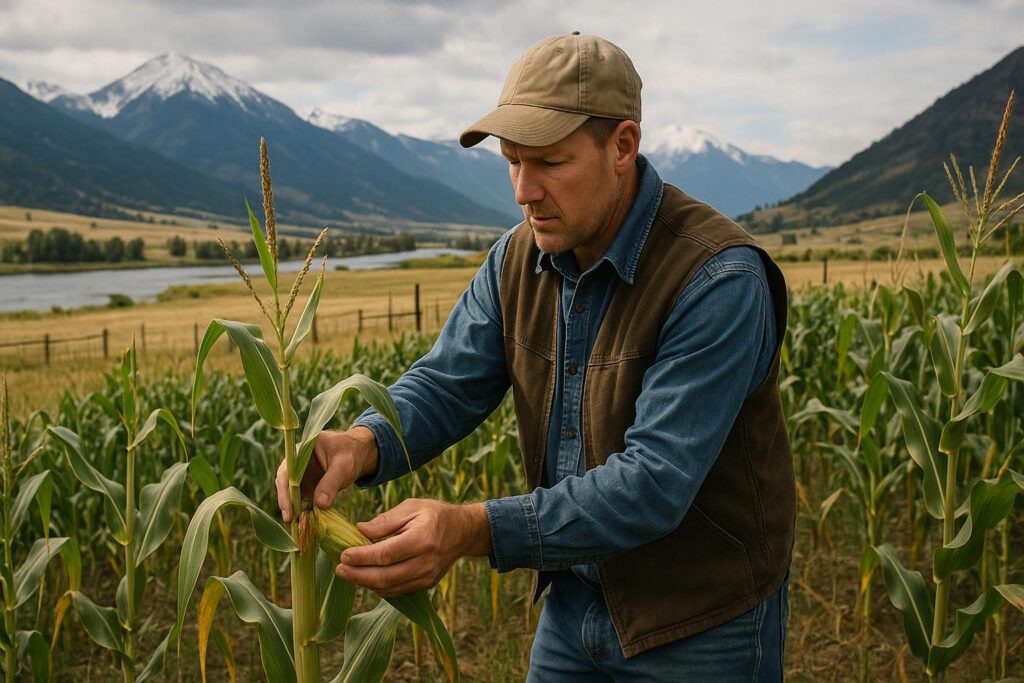
Scouting doesn’t have to be complicated, but it does have to be consistent. If you’re short on time, focus on fields that are non-Bt, late-planted, stressed, or adjacent to weedy borders and rangeland.
- Start at field edges and then move at least 100 feet in—edge-only scouting can miss what’s happening in the interior.
- Check multiple spots (at least 5) and record what you see so you can compare week to week.
- Split stalks if needed later in the season to confirm tunneling.
- Note hybrids and traits planted in each field; keep seed tags or digital records handy.
- Watch irrigation corners and stress zones—insects often show up first where plants are struggling.
If you’re unsure what you’re seeing, collect a sample and contact your local Extension agent. For pesticide decisions, follow the label and consider using a licensed crop adviser or applicator. Also check the Montana Department of Agriculture’s pesticide information resources: Montana Department of Agriculture.
What This Means for Montana Ranchers and Farmers
Even for operations that aren’t “corn farms,” insect pressure in local corn acres can ripple across feed and cattle decisions.
- Silage and feed availability: In the Yellowstone Valley and other irrigated areas, corn silage can be a key part of rations. Pest damage that reduces tonnage or causes lodging can tighten local feed supplies, especially if hay production is already stressed.
- Harvest timing and custom costs: Lodged corn slows chopping and combining. That can increase custom rates or force harvest scheduling changes—important in short Montana fall windows.
- Non-Bt and specialty acres carry more risk: If you’re growing non-GMO corn for a premium, or planting specific hybrids for silage, you may be giving up some built-in protection. That doesn’t mean “don’t do it”—it means budget time for scouting and be ready to respond if thresholds are met.
- Edges matter on mixed operations: Ranches with adjacent pasture, CRP, or dryland grass can see grasshopper and worm pressure move into irrigated corners. Managing field borders and weeds can reduce risk.
Regionally, growers in the Yellowstone Valley should pay close attention to irrigated fields with high yield potential—those are the acres where insect injury can translate into real dollars. On the Hi-Line, where weather can turn quickly and rotations vary, watch for edge pressure and stand issues after storms. In the Gallatin and Flathead valleys, shorter seasons and cooler nights make timing crucial; late scouting can miss the window where control is effective.
What to Watch Next in Montana Agriculture
- Trait decisions for 2027 seed: If non-Bt acres take hits this year, expect more conversations about trait packages, refuge requirements, and whether premiums pencil out after added scouting and risk.
- Weather-driven pest swings: Hot, dry stretches can push grasshoppers and some worms, while irrigated canopies and late-season storms can increase ear-damage concerns. Track local forecasts and field stress.
- Local reports from Extension and crop advisers: If a pest shows up in one pocket of the Bitterroot Valley or Yellowstone Valley, it often becomes a “check your own fields” moment for neighboring growers.
- Harvestability issues: If you start seeing stalk tunneling or lodging, plan equipment and labor early. A field that goes down can turn into a slow, expensive harvest.
The bottom line: Montana corn acres may be scattered compared to the Corn Belt, but insects don’t care about state lines or acreage totals. The best defense is knowing what’s planted, scouting with intent, and making timely decisions based on verified field conditions.
Inspiration: www.farmprogress.com