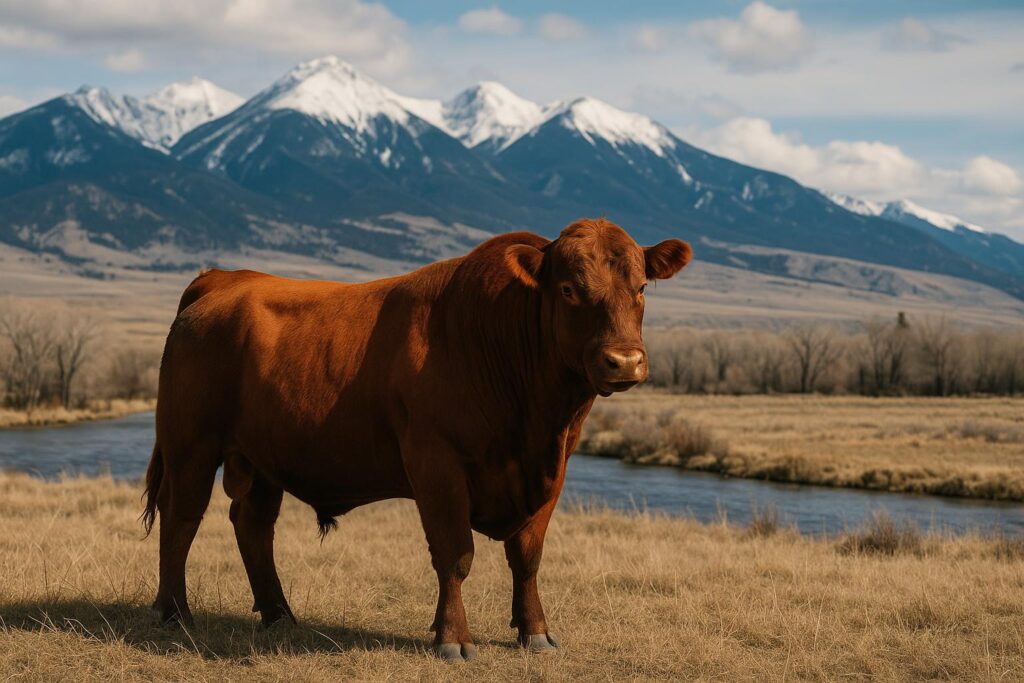
As bull-sale season rolls into spring across Montana, online listings from around the region—including a recent set of Red Angus bulls advertised out of southwest Missouri—are a useful prompt to slow down and check the details that matter most. Listings can be a good way to find genetics, fill a short-notice need, or compare pricing, but they also require more homework than buying across the ring at a local sale barn.
Montana outfits looking for Red Angus genetics typically have clear goals: calving ease on heifers, growth and pounds at weaning, replacement daughters that hold up in tough country, and bulls that will stay sound through long breeding seasons. Whether you’re shopping within the state or considering an out-of-state purchase, the same fundamentals apply: documentation, health, soundness, and a plan for transport and biosecurity.
What the Missouri listing suggests—without assuming the details
Online advertisements for groups of bulls often provide a snapshot: breed, head count, location, and sometimes age, weights, or registration status. Reports indicate the referenced listing involves multiple Red Angus bulls offered from southwest Missouri. Without independent verification of that specific offering, it’s best to treat any listing as a starting point for questions rather than a complete description of what you’re buying.
For Montana buyers, the value in seeing listings like this is less about that one set of bulls and more about the checklist it should trigger before money changes hands.
Key questions Montana buyers should ask before committing
If you’re looking at bulls advertised online—especially out of state—get the basics in writing and ask for supporting paperwork. Here are the questions that prevent most headaches:
- Age and breeding readiness: Is the bull a yearling, 18-month, or mature bull? Has he been through a breeding season?
- Registration and IDs: If registered, request registration numbers and matching tattoos/ear tags. For Red Angus, many buyers cross-check through the Red Angus Association of America.
- EPDs and how they were generated: Ask for the full EPD profile and whether it’s backed by DNA, contemporary groups, and current reporting.
- Breeding soundness exam (BSE): Request a recent BSE performed by a veterinarian, including semen evaluation and scrotal measurements.
- Vaccination and parasite program: Which vaccines were given (and when), and what’s the deworming protocol? Ask for the product names and dates.
- Trich and other testing: In many herds, trich testing is non-negotiable for mature bulls. Confirm test results and lab dates.
- Foot and leg soundness: Ask for current photos and video on a hard surface. In Montana terrain, feet and structure are make-or-break.
- Disposition: A calm bull is safer and often easier on fences and handlers. Ask how the bulls are handled and whether they’ve been through a chute routinely.
- Guarantees and terms: Is there a breeding guarantee? What happens if the bull fails a BSE after arrival?
Montana realities: feet, feed, and weather
Montana conditions can expose weaknesses fast. A bull that looks fine on softer ground or in a different climate may struggle when asked to cover big pastures, travel coulees, or breed in heat swings.
Before buying out of state, consider:
- Acclimation: Bulls coming from a different region may need time to adjust to forage type, elevation, and temperature shifts.
- Body condition: Over-conditioned bulls can melt down quickly when turned out on range. Ask what ration they’re on and how they’ve been developed.
- Mineral program: Differences in selenium, copper, and other minerals matter. Work with your vet or nutritionist to transition minerals gradually.
Biosecurity and transport: don’t skip the boring parts
Buying a bull is also buying whatever he’s been exposed to. If you’re hauling across state lines, plan for paperwork and risk management.
- Health papers: Interstate movement typically requires a Certificate of Veterinary Inspection (CVI). Requirements can change, so confirm with your veterinarian and the receiving state’s animal health office.
- Quarantine on arrival: If you can, isolate new bulls before turning them out with the main herd. Even a short quarantine window helps you observe for respiratory issues, foot problems, or scours.
- Hauling logistics: Clarify who arranges transport, the timeline, and whether the bulls are commingled during shipping.
For Montana-specific animal health information and contacts, producers often start with the Montana Department of Agriculture and their veterinarian.
How to compare value beyond the sticker price
It’s tempting to compare bulls strictly by price per head, but the best “deal” is the bull that fits your cows and holds up for multiple seasons. When evaluating any Red Angus offering—local or out of state—consider the total cost and the likely return:
- Expected calf crop value: Calving ease, vigor, and uniformity can pay back quickly, especially in heifer programs.
- Replacement females: If you keep daughters, maternal traits and udder quality in the pedigree matter as much as growth.
- Longevity and soundness: A cheaper bull that lasts one season is expensive. Feet, legs, and libido are worth paying for.
- Risk management: A bull with documentation—BSE, vaccines, test results—reduces uncertainty.
Questions to ask the seller (and what to request)
If you’re messaging a seller from an online listing, a short, direct request can save time. Ask for:
- Current photos from both sides, front, and rear, plus video of the bull walking
- Birth date, weaning weight (if available), and current weight with the date taken
- EPD sheet and pedigree
- BSE paperwork and vaccination record
- Details on feed ration and development program
- Any known issues (feet trimming, eye problems, injuries)
If the seller is unwilling to provide basic documentation, that’s useful information too.
What this means for Montana
Montana ranchers are no strangers to shopping across county and state lines, especially when specific genetics are hard to find locally. A multi-bull Red Angus listing from outside the state is a reminder that the market is broader than the traditional sale calendar—and that opportunities can show up anytime.
But it also underlines a Montana truth: our country tests cattle. Bulls need to travel, stay sound, breed in variable weather, and hold condition on the forage we have. For buyers, the safest path is to treat online listings as leads, then verify with paperwork, a veterinarian’s exam, and clear terms on transport and guarantees. Done right, an out-of-state purchase can add real value. Done fast, it can add risk.
Practical next steps if you’re bull shopping now
- Write down your priorities (heifers vs. cows, calving window, replacement plan)
- Set minimum standards for BSE, vaccines, and testing
- Budget for freight and a short quarantine setup
- Coordinate with your vet before purchase, not after arrival
- When possible, see the bull in person or have a trusted contact evaluate him on-site
Inspiration: www.cattlerange.com