Midweek trading brought more red ink to the grain board, with reports indicating corn and other major grains moved lower during the session. For Montana producers, the day-to-day swings in Chicago don’t always translate directly into local cash prices, but they do shape feed costs, hay demand, and the tone of the cattle market—especially when buyers and sellers are already watching moisture, pasture conditions, and freight.
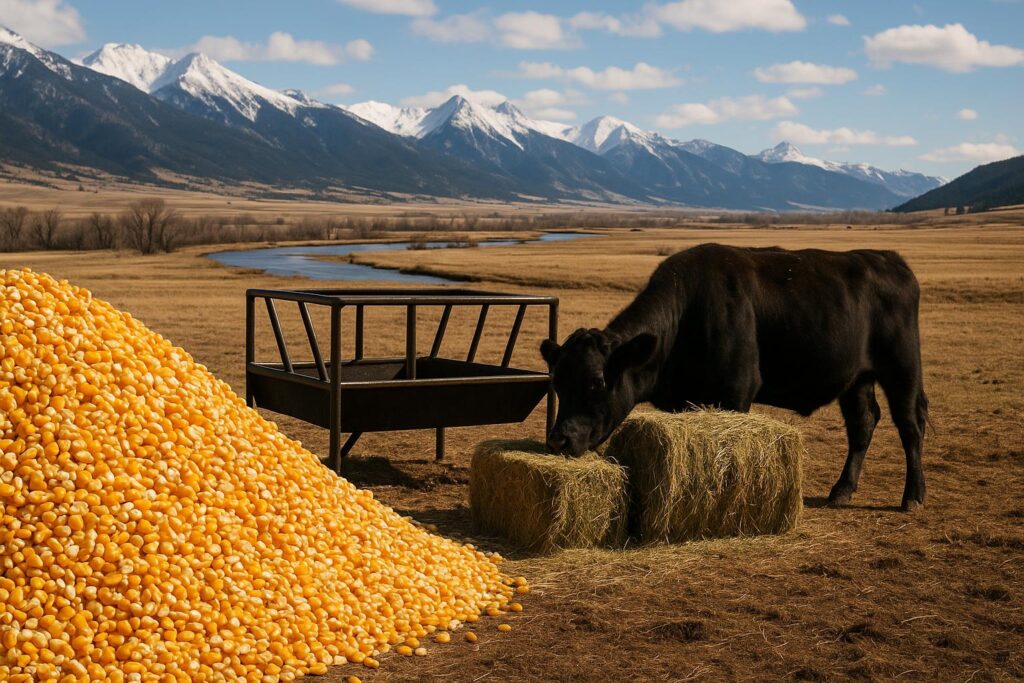
Montana isn’t a Corn Belt state, but corn prices still matter here. They influence what it costs to background calves, finish cattle, and supplement cows when grass or hay quality isn’t enough. They also affect how competitive Montana hay is when it’s moving to dairies, feedlots, or out-of-state buyers.
What Happened in the Grain Market
In midweek trade, grain futures were reported lower across the complex, with corn under pressure during the session. Market recaps like this typically reflect a mix of factors—export demand expectations, weather forecasts in major production areas, fund positioning, and the tug-of-war between old-crop tightness and new-crop optimism.
It’s worth keeping perspective: a single down day doesn’t define a season. But when the market slides, it can change the conversation quickly for anyone buying feed or trying to lock in input costs.
- For feed buyers: Lower futures can be a near-term positive, especially if local basis doesn’t widen against you.
- For grain sellers: A down move can stall cash bids and make it harder to price bushels if you were waiting for a rally.
- For hay producers: Corn is a competing energy source. If corn gets cheaper, some buyers become less aggressive on hay—particularly lower-quality hay used as a filler ration.
For a quick snapshot of broader market context, producers often track USDA market information and reports at USDA AMS Market News and policy/market updates at USDA.
Why It Matters in Montana Right Now
Montana’s ag economy is a web: grain, cattle, hay, water, and freight all pull on each other. When corn prices soften, it can change ration math for feeders and cow-calf operators from the Yellowstone Valley to the Hi-Line.
Feedlot and backgrounding economics: If corn trends lower and stays there, it can improve cost of gain. That can support demand for feeder cattle—at least on the feed side of the equation—though cattle prices also depend on beef demand, weights, and placement numbers. For Montana operations that buy supplements or bring in corn-based products, even a modest price break can matter.
Hay markets and substitution: In the Gallatin Valley, Flathead Valley, and Bitterroot Valley, hay buyers range from cow-calf outfits to horse owners. In a pure cattle-feeding context, corn and hay can substitute to a point. Cheaper corn can reduce what some feeders are willing to pay for marginal hay. On the other hand, high-quality alfalfa and dairy-type hay often trades on its own fundamentals—protein, RFV/RFQ, and consistent supply—more than on corn alone.
Freight and basis are still king: Montana producers know the board price isn’t the whole story. Basis levels, rail availability, and trucking rates can widen or tighten quickly. A lower futures market doesn’t always mean cheaper delivered feed in places far from major terminals, particularly in winter or during heavy demand periods.
Moisture and irrigation decisions: Grain prices also feed into planting and input decisions. In irrigated pockets of the Yellowstone Valley and parts of the Hi-Line where small grains and feed crops are part of the rotation, price signals influence what pencils out against water availability, power costs, and labor. If grain markets stay soft, it can put more focus on cost control and yield risk management.
What This Means for Montana Ranchers and Farmers
Here’s how a softer corn market could show up on Montana balance sheets—depending on your operation.
- Cow-calf ranches: If you buy cake, pellets, or corn-based supplements, watch local delivered bids. A futures dip can be an opportunity to price a portion of summer/fall supplement needs—if your supplier is willing to reflect it.
- Backgrounders: Cheaper energy can improve rations, but don’t ignore health and performance. If the market is volatile, consider whether partial coverage (locking in some feed needs) fits your risk tolerance.
- Hay growers: If corn stays under pressure, be ready for more price sensitivity on average grass hay. The top end of the hay market—tested, consistent lots—usually holds value better. Having current tests and clear tonnage estimates can help you defend your price.
- Small grain and feed-crop producers: A down grain day is a reminder to keep an eye on marketing windows. If you’re holding old crop, evaluate storage costs and cash flow needs. If you’re looking at new-crop pricing, consider incremental sales rather than trying to hit the high tick.
Across regions, the “right” move depends on moisture and forage outlook. In the Bitterroot Valley and Flathead Valley, where local demand can be driven by mixed livestock and horse markets, hay pricing may not track corn tightly. On the Hi-Line and in the Yellowstone Valley, where cattle numbers and freight lanes can steer demand, feed substitution can show up faster.
Market Reality Check: Don’t Overread One Session
Midweek weakness is a data point, not a verdict. Grain markets can turn quickly on weather forecasts, export sales, and macroeconomic headlines. Reports indicating a down session don’t guarantee a sustained trend.
For Montana producers, the practical approach is to treat this as a prompt to review your numbers:
- What does your ration cost today versus two weeks ago?
- What’s your break-even on backgrounding or finishing?
- If you sell hay, what’s your floor price after trucking, stacking, and shrink?
- If you grow grain, what’s your storage cost per month and your target basis?
If you use crop insurance or price risk tools, it’s also a good time to revisit your coverage and marketing plan through reputable sources like the USDA Risk Management Agency.
What to Watch Next in Montana Agriculture
Montana ag doesn’t move on grain futures alone. Here are the next signposts that will matter for ranchers and farmers statewide.
- Local cash bids and basis movement: If futures soften but local bids don’t, basis may be widening. Track what your elevator, feed dealer, or hay buyer is doing week to week—not just the board.
- Hay demand signals: Watch dairy and feedlot demand, as well as out-of-state inquiries. If corn stays cheap, some buyers may try to negotiate hay down—especially on untested lots.
- Pasture and drought conditions: If moisture tightens, forage becomes the driver again and can overwhelm grain-market influence. Keep an eye on regional conditions through the U.S. Drought Monitor.
- Irrigation water and power costs: In irrigated areas like the Yellowstone Valley, water timing and pumping costs can matter as much as commodity prices. Any shift in input costs changes the break-even for feed crops and hay.
- Cattle placement and feeder demand: If feed gets cheaper, it can support placements—but only if cattle prices and performance make sense. Watch regional sale barn trends and buyer appetite for certain weight classes.
Bottom line: a weaker corn market can be a modest tailwind for feed costs, but it can also cool hay bargaining power on the lower end. Montana producers should use the dip as a chance to sharpen budgets, talk to suppliers and buyers, and make incremental decisions instead of betting the ranch on one market day.
Inspiration: www.farmprogress.com