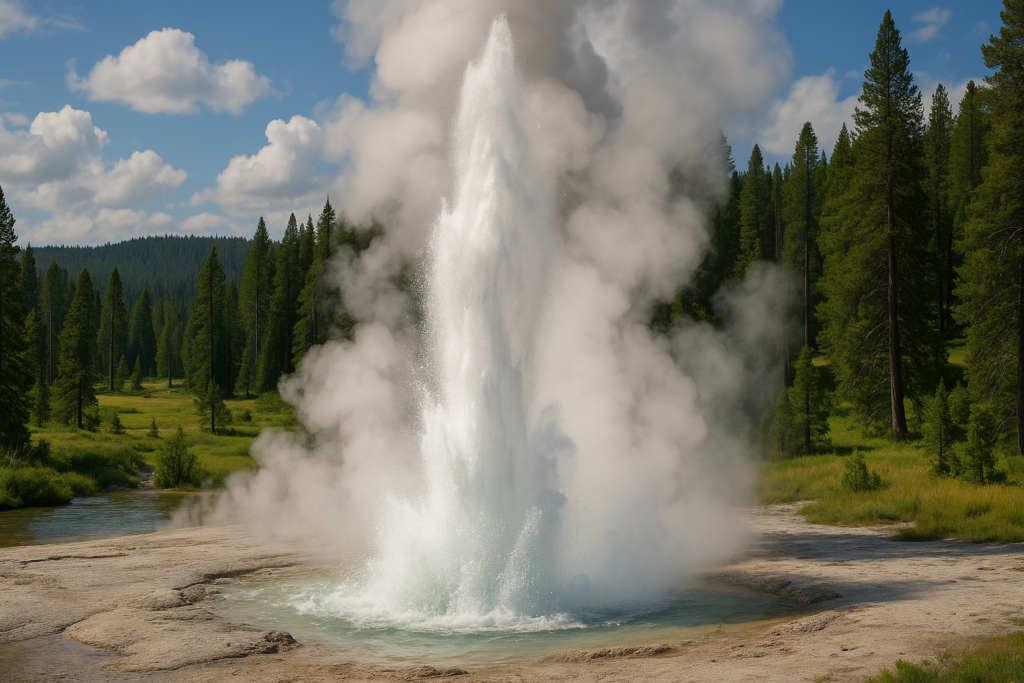
The world’s largest acidic geyser has roared back to life in Yellowstone National Park, sparking excitement and curiosity among geologists and tourists alike. This unexpected reactivation of the dormant geyser presents both opportunities for scientific study and challenges for park management.
What’s Happening
Yellowstone National Park, renowned for its geothermal wonders, has witnessed the reawakening of the largest acidic geyser on the planet. This geyser, which had been silent for years, recently erupted, sending plumes of steam and acidic water high into the sky. The sudden activity has captivated the scientific community, as acidic geysers are rare compared to their alkaline counterparts.
Acidic geysers, unlike the more common alkaline geysers, have water that is significantly more corrosive. This is due to the presence of sulfuric acid, which forms when sulfur gases emitted by the geysers react with water. The reactivation of this geyser offers a unique opportunity for geologists to study the processes that drive such phenomena.
Why It Matters
The reawakening of this geyser is significant for several reasons. First, it provides scientists with a rare chance to observe and study the dynamics of acidic geysers in real-time. Understanding the mechanisms behind these eruptions could shed light on the geothermal activity that characterizes Yellowstone and similar geological hotspots around the world.
Moreover, this event has implications for park management and safety. The acidity of the water can pose risks to the surrounding environment and infrastructure, necessitating careful monitoring and possibly new safety measures to protect visitors and preserve the park’s delicate ecosystem.
The Bigger Picture
Yellowstone National Park is a geothermal wonderland, home to over 10,000 geothermal features, including geysers, hot springs, mud pots, and fumaroles. It sits atop a supervolcano, which fuels these features. The park’s geysers are a major draw for tourists, contributing significantly to the local economy.
Historically, geyser activity in Yellowstone has fluctuated due to natural geological processes. The park’s most famous geyser, Old Faithful, is renowned for its predictability, but many others, like the recently awakened acidic geyser, are far less predictable, adding an element of mystery and excitement to the park’s features.
What to Watch For
The recent eruption of this geyser could signal a period of increased geothermal activity in the area. Scientists will be closely monitoring the geyser’s behavior, water chemistry, and seismic activity around the park to better understand the patterns and potential risks associated with these eruptions.
For visitors, the reactivation of this geyser could enhance the park experience, offering a rare glimpse at a less common type of geothermal activity. However, park officials may need to implement additional safety measures to ensure that tourists remain safe while enjoying these natural wonders.
As researchers delve into the mysteries of this geyser, the findings could provide new insights into the geothermal dynamics of Yellowstone, with implications for volcanic activity monitoring and geothermal energy exploration worldwide.
Original reporting by Explore Big Sky.
Frequently Asked Questions
What is the largest acidic geyser in the world?
The largest acidic geyser in the world is located in Yellowstone National Park, known for its significant eruptions of sulfuric acid-laden water.
Why are acidic geysers rare?
Acidic geysers are rare because they require specific geological conditions, including the presence of sulfur gases and water, which combine to form sulfuric acid.
How do acidic geysers differ from alkaline geysers?
Acidic geysers emit water mixed with sulfuric acid, making it corrosive, unlike alkaline geysers, which have neutral or basic water compositions.
Is it safe to visit Yellowstone during geyser eruptions?
Yes, it is generally safe to visit Yellowstone, but visitors should follow park guidelines and stay informed about active geothermal features for safety.
What causes geysers to erupt?
Geysers erupt when underground water is heated by geothermal activity, causing pressure to build and release steam and water explosively.
Source: Explore Big Sky