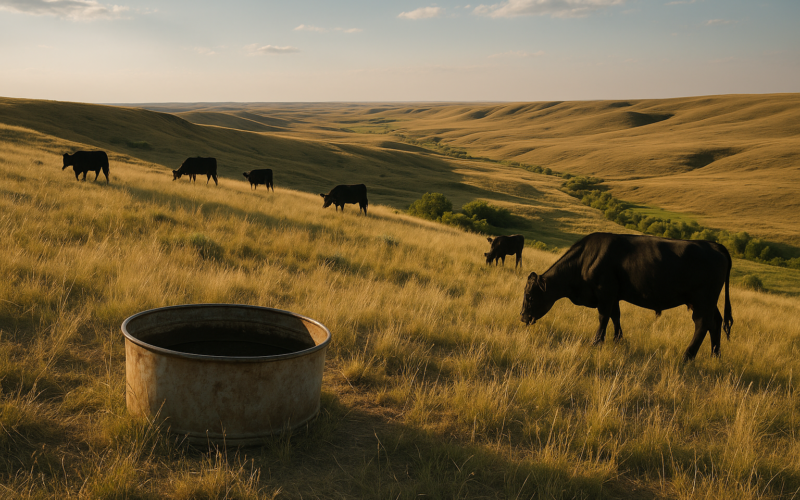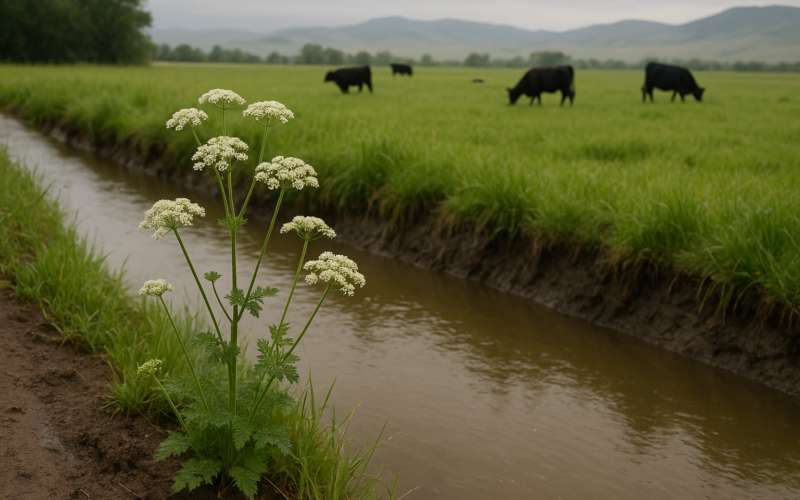
Most ranchers don’t think about where the cattle drink until they’re already standing in the creek, hammering the banks and ignoring two-thirds of the pasture. The grass in the far corners cures out untouched while the bottoms get grazed into the dirt. The fix isn’t more fence or more riding. It’s water in the right place.
June is the time to deal with it. Springs are still flowing strong from snowmelt, the ground is workable, and you’ve got a window before haying and the real summer heat take over your days. A water development you put in this month can be filling tanks by the time the creeks drop and the upland grass is the only thing left worth grazing.
Find out what you’ve actually got
Before you buy a foot of pipe, walk the pasture and find your water. A seep that’s wet in June might be bone-dry by August, so the honest test is what a source does in a normal dry year, not what it does at runoff. Old-timers and old maps are worth more than you’d think here. A lot of Montana ranches have spring boxes that quit working decades ago, buried and forgotten under a clump of willows. Cleaning out an existing development is cheaper than starting from scratch.
If you’re looking at a well instead of a spring, get a sense of depth and recovery before you size a pump. A shallow stock well that recovers fast is a different animal than a deep one that gives you a few gallons a minute. Either can work, but they call for different equipment.
Check your water rights situation too. Developing a spring or putting in a new stock well usually involves the state, and it’s a lot easier to handle the paperwork before you’ve trenched across the place than to sort it out after.
Spring development that lasts
A spring development is simple in concept: catch the water where it comes out of the ground, keep cattle and dirt out of the source, and run it downhill to a tank where the herd can use it. The mistakes are almost always in the details.
Dig back to where the water is actually coming out, not where it’s pooling. You want to collect it at the source, in clean gravel, and pipe it from there. Fence the collection area off so cattle can’t trample it back into a mudhole. A buried collection pipe or a proper spring box, backfilled with rock, keeps fines out of your line and keeps the development running clean for years instead of plugging up by the second summer.
From there, gravity does the work if you’ve got the fall. Run the line below frost depth where you can, and put an overflow on the tank that returns to the drainage so the spring keeps moving and doesn’t go stagnant. A float valve saves water and keeps the tank from running over and making a bog around it.
Solar where the gravity isn’t
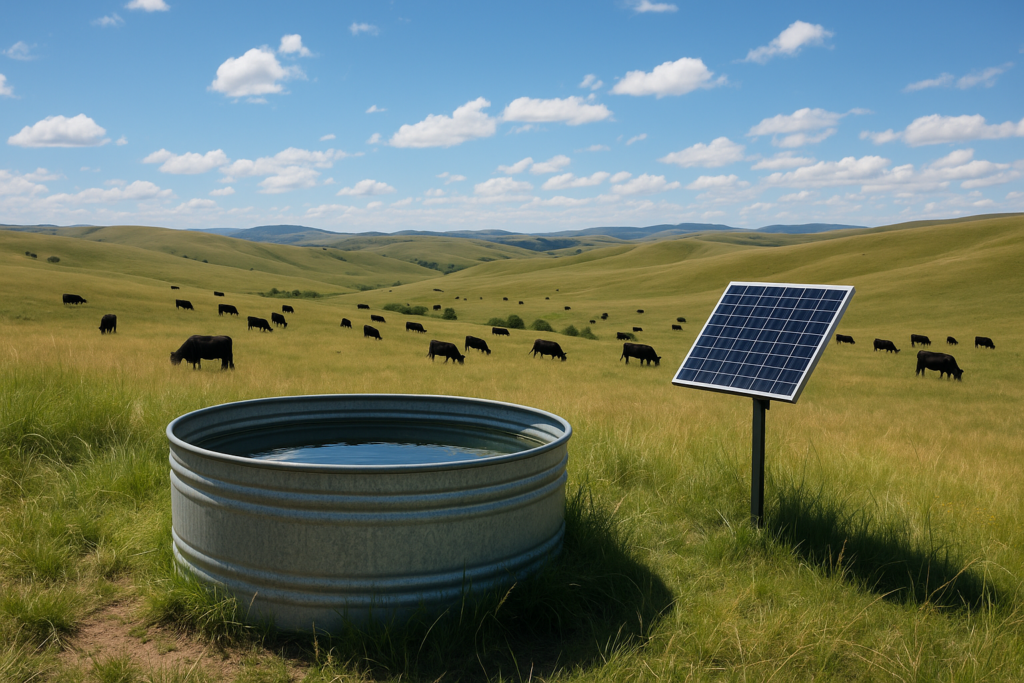
Plenty of good summer range sits up on a bench with no spring above it to gravity-feed. That’s where a solar pump earns its place. A panel, a submersible pump, and a storage tank can lift well water or pond water up to a trough with no fuel hauled and no engine to babysit.
The honest limitation is that solar pumps move water when the sun’s out, which is also when cattle drink the most. You cover that gap with storage. Size your tank to hold a day or two of demand so a cloudy stretch doesn’t leave you hauling water. Figure your herd’s daily need on the high side for hot weather, then add a buffer. Underbuilding the storage is the most common regret.
Whatever you build, the real payoff is grazing distribution. Put a tank where there’s never been water and cattle will spread out and use grass that’s gone to waste for years. That takes pressure off the creek bottoms, evens out your utilization, and stretches the whole pasture. A few thousand dollars in pipe and a tank can do more for your summer carrying capacity than another quarter section of lease ground.
Get it in now while the springs are showing themselves and the ground’s still soft. By the time you need that water, it’ll already be there.