By the time the grass is up and the cattle are scattered across a big summer pasture, you’re asking your horse for real days again. Six, eight, ten hours of walking, trotting through rocks, standing tied while you doctor a calf. The problem is most ranch horses come off winter soft. They wintered on hay in a corral or a hill pasture, packed a little extra weight, and haven’t done anything harder than walk to the feed ground since March. Then the first big gather hits and you wonder why the horse is stumbling by noon and stove up the next morning.
None of this is complicated. It’s mostly a matter of doing a few things in the two or three weeks before you really lean on him.
Leg him up before you need him
Conditioning isn’t glamorous but it’s the whole game. A horse’s wind, muscle, and especially his tendons and hooves take weeks to toughen, not days. If you know branding and the first moves are coming, start ponying or riding light in late May. Walk hills. Add trotting a little at a time. You’re not training, you’re building the same thing you’d build in yourself before a long day on foot.
Watch the gut, too. A pen-fed horse that suddenly goes to full days of work needs his feed adjusted. A horse doing hard circles burns more than a flake of grass hay will cover, and one that’s been on rich alfalfa and standing around is a colic and tie-up risk when you crank up the work. Ease into it both directions.
Feet win or lose the summer
Wet springs are hard on hooves. Standing in mud and manure sets up thrush, that black, stinky rot in the frog, and soft feet chip and bruise the minute you hit dry, rocky ground. Pick the feet out and look at them before the season, not after he comes up lame.
Decide early whether he needs shoes. A barefoot horse might do fine on soft pasture but come up tender crossing shale or a gravel road, and a stone bruise or an abscess can put your best horse out for a week at the worst time. If you shoe, get it done before the first big day, not the morning of. And if you’re pulling a horse out of a wet corral onto hard ground, give the feet a little time to firm up rather than asking for a hard trot on soft soles.
The saddle sores and cinch galls nobody plans for
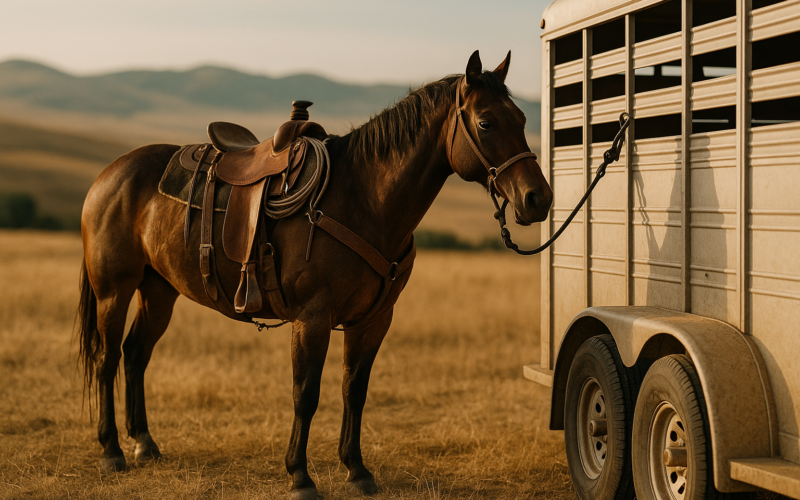
A horse that’s soft-backed and out of shape sores up faster than a fit one. Check your pads and blankets for caked sweat and dried mud before you ever throw them on. A stiff, dirty pad or a wrinkle under the cinch will rub a raw spot in one long day, and once you’ve got a saddle sore or a cinch gall you’re either riding a different horse or laying him off until it heals.
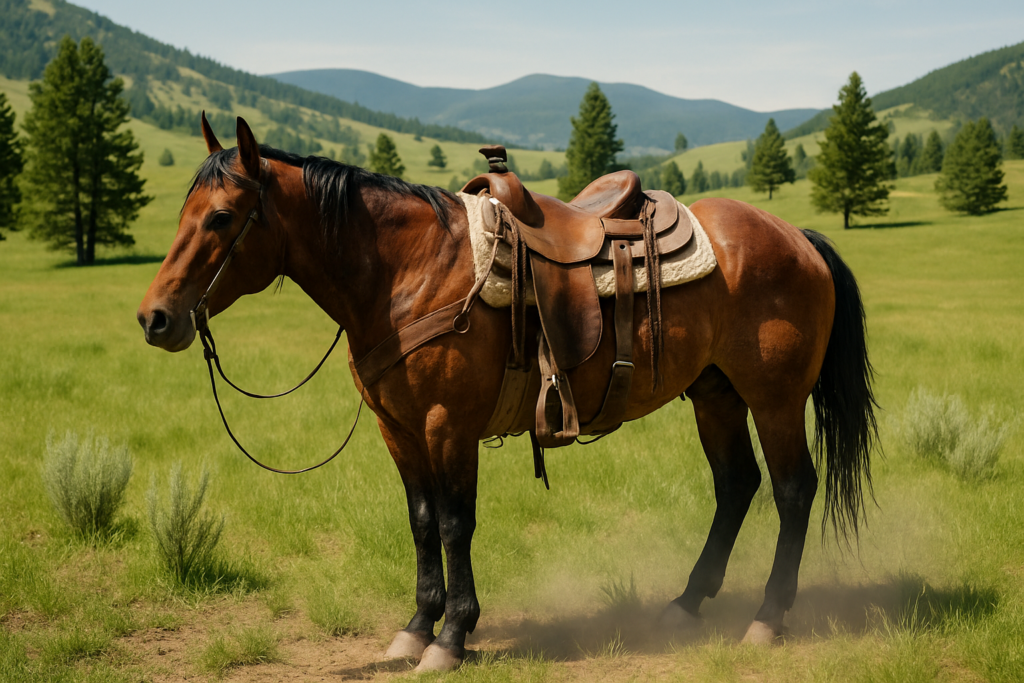
Set the saddle so it clears the withers and sits level. Cinch up in stages rather than jerking it tight all at once. When you pull the saddle at the end of the day, look at the back. A dry spot in the middle of a sweaty back means pressure sitting there, and that’s a sore coming if you don’t fix the fit.
Water, salt, and knowing when he’s had enough
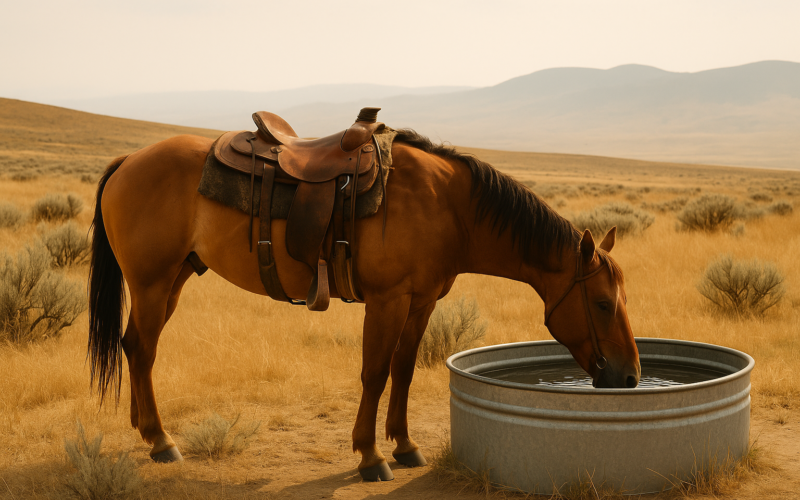
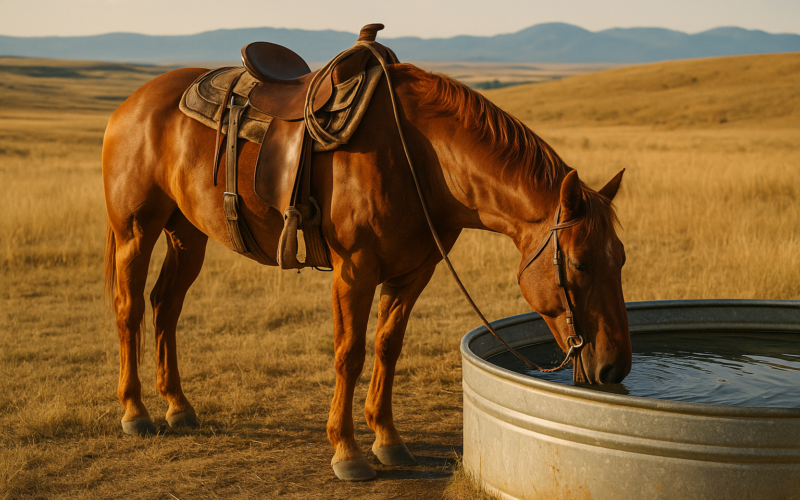
A working horse on a hot June day loses a lot of fluid and salt through sweat. Let him drink when you cross water instead of pushing past it, and make sure he’s got salt available at home. A horse that’s dehydrated and salt-depleted is the one that ties up, that muscle-cramping problem where he goes stiff and reluctant to move, sometimes badly. If a horse suddenly won’t travel and his hindquarters feel hard and cramped, get off, quit working him, and get water and shade. Don’t try to ride through it.
Heat is real for horses the same as cattle. On the hottest afternoons, do the hard work early and let him blow in the shade at midday if you can. A horse breathing hard and slick with sweat that’s quit sweating is in trouble.
The habit worth building is a quick once-over at the end of every day. Run your hand down each leg for heat and swelling. Look at the back and the girth. Pick the feet. Sixty seconds tells you what’s wearing on him before it turns into a layup, and a sound horse in August is worth a lot more than the one you burned out in June.