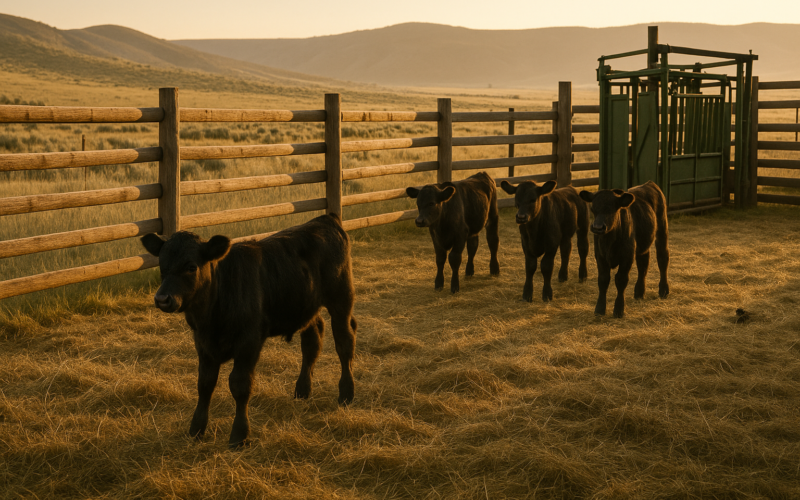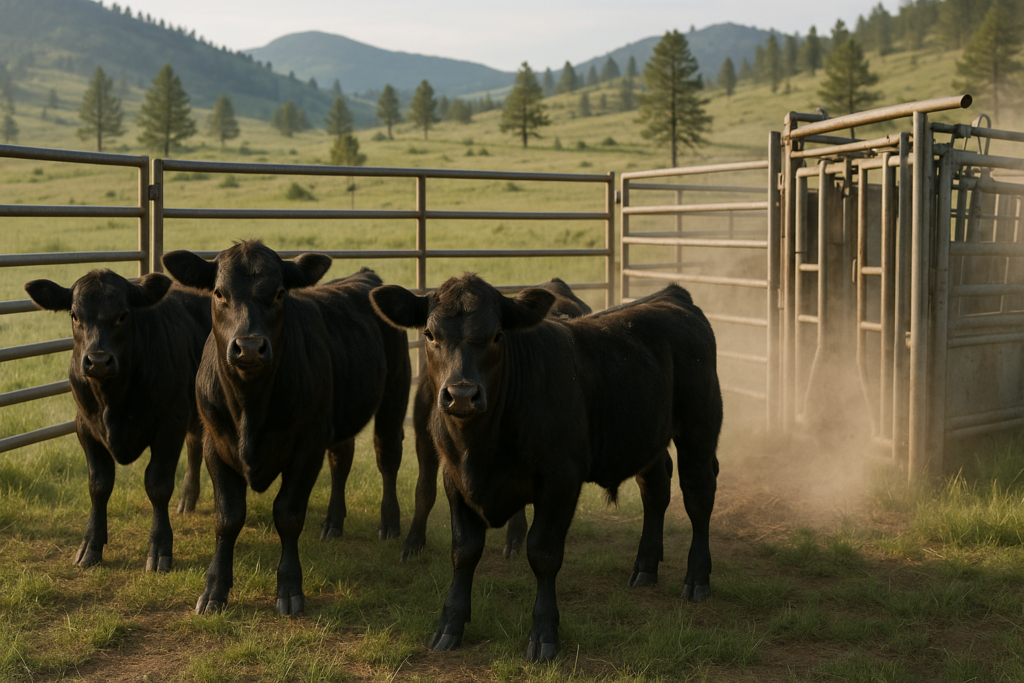
You already spent the money on the vaccine, the pour-on, and the fuel to gather. The calves are in the chute anyway. If those steer calves are headed for the feedyard someday, a growth implant is about the cheapest weight you’ll ever buy — a dollar or two per head that usually pays back many times over by weaning. And yet a fair number of outfits still turn out without them, either out of habit or because nobody ever showed them how to do it right.
Mid-June is a reasonable window. Branding is wrapped up across most of the state, and if you didn’t implant the steers then, they’re settled on grass and easy enough to bring through a portable setup or the home corral. The gain builds over the whole grazing season, so the sooner they carry the implant, the more of the summer it works for you.
What an implant actually does
A growth implant is a small pellet placed under the skin on the back of the ear. It releases a low dose of a growth-promoting compound over several months, nudging the calf to convert feed into muscle a little more efficiently. On nursing calves on grass, that generally shows up as extra pounds at weaning — not a fortune, but real weight on every head, every year, for very little cost.
These products have been used and studied for decades. They’re not new, and they’re not exotic. The extra gain is modest per calf but it stacks up fast across a whole calf crop, and it comes almost entirely off grass and milk you were already growing.
Where the calf matters
The big rule: think hard before you implant replacement heifers. Standard suckling-calf implants are labeled for that use, but many producers leave their keeper heifers alone to avoid any risk to future breeding performance. If you’re saving heifers and you can’t easily sort them out at working time, it’s cleaner to skip the whole heifer group and implant only the steers. Losing a little gain on heifers you’re keeping anyway beats second-guessing a reproductive problem two years down the road.
Steers and market heifers are the target. If a calf is leaving your place as a feeder, it should carry an implant unless a buyer specifically asks otherwise. That last point matters more than it used to: some natural, organic, or branded programs prohibit implants entirely, and the premium on those calves can outrun the extra weight an implant would add. Know where your calves are going before you decide. If you’re selling into a program that pays for “never implanted,” leave the gun in the box.
Placement is the whole job
An implant put in wrong is money wasted, and it can knock the ear value or cause an abscess. Take the time to do it clean:
- Place it in the middle third of the back of the ear, under the loose skin, not near the base or the head. Never in the cartilage ridges.
- Keep the needle clean. Wipe it between calves, and don’t drive it through mud, manure, or a scabby ear. A dirty needle buys you abscessed ears and blown implants.
- Tent the skin, push the needle in shallow and flat, and deposit the pellet in one line. Feel the ear afterward — you should feel the pellet lying flat under the skin, not crushed and not bunched.
- Don’t double up. One implant per calf per the product’s window. Reimplanting nursing calves usually isn’t worth the extra handling on a range operation.
Crushing the pellets is the most common mistake. If your implant gun mangles them, you get partial or no release. Check the first few you place, and check the gun’s spacing.
Do the math before you commit
The economics are simple most years. The product cost per head is small, the labor is already spent because the calf is in the chute, and the added weaning weight sells at whatever the fall market gives you. In a strong calf market that extra weight is worth even more. The one thing that flips the answer is a marketing program that pays a premium for non-implanted cattle — then you’re comparing the implant’s pounds against a per-hundredweight bonus on the whole calf, and the bonus often wins.
Whichever way you go, decide on purpose. Don’t skip implants just because that’s how it’s always been done, and don’t run them through out of habit if your buyer is paying you to leave them out. Match the tool to where the calf is headed, place it clean, and leave the keeper heifers be.