You can do everything else right — sort clean, run cattle in the cool of the morning, keep the crew moving — and still turn out a calf crop that isn’t protected. The weak link is usually the bottle sitting on the tailgate in the sun while you catch up on the last pen. Vaccine is one of the cheaper things you buy all year, but it only works if it’s alive and full-strength when the needle goes in. In June heat, that’s easier to blow than most people think.
Modified-live is fragile, and heat kills it
Most of the respiratory and clostridial programs run through a Montana branding or turnout include a modified-live component. Modified-live means live virus that’s been knocked down so it can’t make the animal sick but can still wake up an immune response. Live is the operative word. Heat kills it. Sunlight kills it faster — ultraviolet light will drop the potency of a reconstituted bottle in a matter of minutes if it’s sitting out in the open.
That’s the part people miss. It isn’t just that hot vaccine “works a little less.” A dead bottle protects nothing. The calf still gets stuck, still gets sore, still costs you the labor, and comes down with summer pneumonia or blackleg anyway because there was nothing in the syringe by the time you got to him.
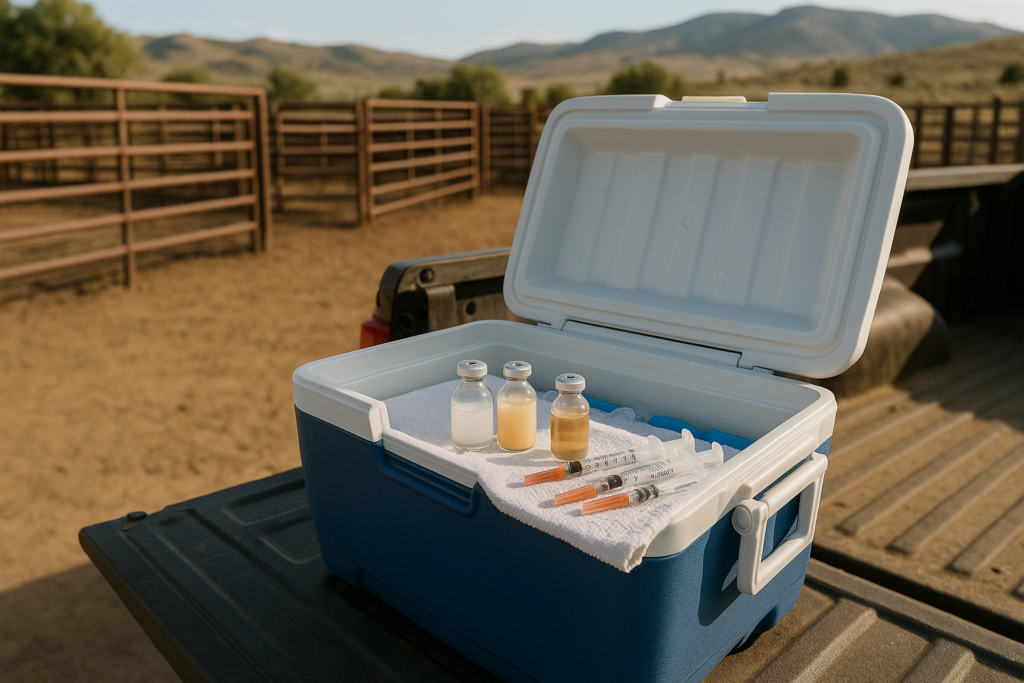
Keep the whole supply in a cooler with ice or frozen packs, not just the box it came in. But don’t let the bottles ride directly on the ice, either — freezing a killed vaccine or an adjuvant can ruin it just as surely as cooking it. A towel between the packs and the bottles handles that. The working range you’re after is refrigerator-cold, roughly what your milk lives at, held steady from the time you leave the store until the last calf goes through.
Mix only what you’ll shoot, and shoot it soon
Modified-live vaccine comes as a dry cake and a bottle of diluent that you combine chute-side. Once you mix it, the clock starts. Reconstituted product goes downhill within an hour or two even when it’s handled well, and a lot faster than that in the sun. Mixing a whole day’s worth first thing so you don’t have to stop is a good way to throw half of it away.
Better to mix in batches you can use up in the next hour. If you’ve got a big crew and cattle coming steady, one person’s whole job can be keeping the coolers stocked, mixing fresh bottles, and running full syringes out to the chute. On a hot afternoon that’s not busywork — it’s the difference between a program that took and one that didn’t.
A few things that quietly wreck a batch:
- Disinfectant left in the syringe. Soap and chemical residue kill modified-live virus. Rinse working syringes with hot water only, and let them dry.
- Reusing needles until they’re dull and dirty. A burred needle tears tissue, seeds infection, and makes for a knotty injection site. Change needles often — every so many head, and any time one bends.
- Guessing at dose because the gun’s out of adjustment. Check the syringe against a measured amount before you start and again after it’s been dropped in the dirt a few times.
Give it a chance to work
Even a perfectly handled dose needs time and, on most products, a booster. A single round of modified-live at branding sets the calf up, but the protection isn’t full until the second shot lands and the immune system has had a few weeks to build. Time your program so calves aren’t hauled straight into a high-stress situation the same week they’re vaccinated — weaning and shipping stress right on top of a fresh shot doesn’t give the response room to catch up.
Read the label on subcutaneous versus intramuscular and stick to it. Under the skin, in the neck, is the standard now for a reason — it keeps the injection out of the high-value cuts and lowers the odds of an abscess deep in the muscle. Tent the hide and slide the needle in flat.
Keep the used bottles until the day’s done rather than pitching them. If you come up short or long on your count, or something looks off later, the lot numbers and the amount left tell you what actually went into those cattle. It’s a two-minute habit that answers questions you can’t answer any other way.
None of this is complicated. It’s mostly a cooler, a towel, a clean syringe, and the discipline not to mix more than you can use before it dies in your hand. Get that part right and the money you spent on vaccine actually buys you something.