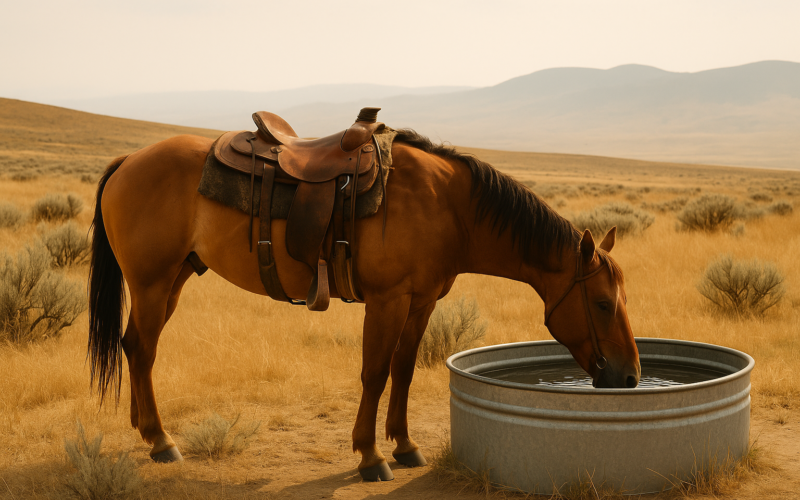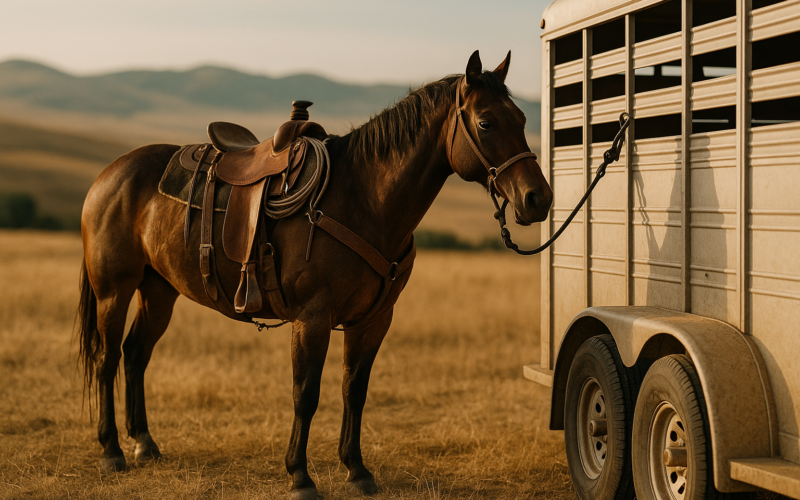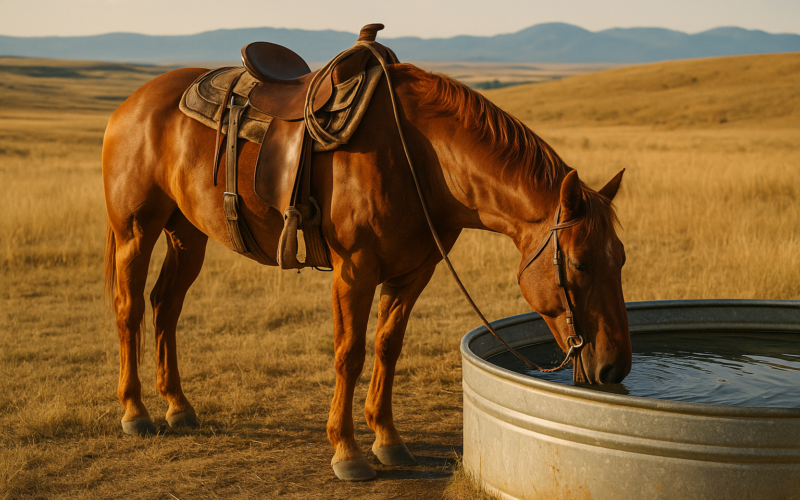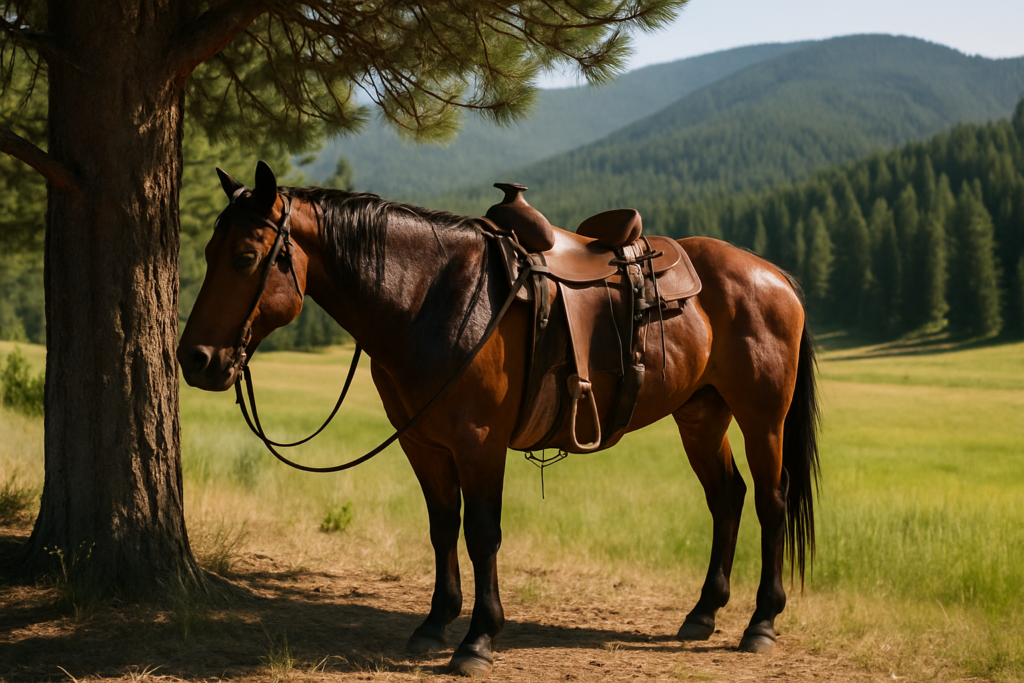
You gather the north country on a Saturday, ride hard for the first time all year, and somewhere on the ride home the good gelding shortens up behind. He won’t step out. His hindquarters feel like a rock through the saddle blanket, he’s sweating more than the work calls for, and if you get off and try to lead him, he acts like his back end is nailed to the ground. That’s tying-up, and June is prime time for it because it lands on the horse that hasn’t done much since branding and then gets asked for eight hours in the heat.
The vets call it exertional rhabdomyolysis. Old hands called it Monday morning disease, back when workhorses stood in the barn Sunday on a full feed of grain and then broke down Monday when they went back to work. The mechanism hasn’t changed. Muscle that’s carrying a full fuel load and hasn’t been conditioned for the effort cramps up, and in a bad case the muscle actually breaks down and dumps into the bloodstream. That’s what turns the urine dark, coffee-colored, and that’s the part that can wreck a kidney if you keep pushing.
What it looks like on the mountain
The early signs are easy to write off as a horse being cinchy or lazy. He gets stiff and reluctant. He’ll paw, look sour, maybe try to stop and won’t want to walk out of it. The muscles over the loin and croup get hard and painful, and he may tremble or break a heavy sweat that doesn’t match the weather or the work. In a real bind he’ll refuse to move at all.
Here’s the thing that trips people up: the instinct is to make him walk it off, same as you would a horse that’s just tired. Don’t. Once the muscle is cramping, forcing him to move makes more damage, not less. Get the saddle off, get him in the shade, offer water, and let him stand. If you’ve got a way to get a trailer to him, haul him out rather than lead him miles. And call your vet, because a horse that’s tied up hard needs fluids and something for the pain and inflammation before that dark urine turns into a kidney problem. A mild case may loosen up in an hour of standing. A bad one won’t.
It starts before you ever leave the corral
Most of these wrecks are set up days ahead, in the feed room and in how the horse was legged up. The classic setup is grain. A horse getting a good scoop of grain to keep condition on him, then sitting idle for two or three days, then going out for a hard ride, is the textbook Monday-morning candidate. If a horse is going to have days off, cut the grain back on those days and let him get his fuel from hay and grass. He doesn’t need a race ration to trot around the corral.
The other half is conditioning. A horse that’s been standing in the pasture all spring is soft, no matter how good he looked doing it. If you know a big gather is coming, put some easy miles on him in the two or three weeks ahead so his muscles and his wind are ready for the day. Twenty minutes of trotting a few times a week beats going from zero to a full day. Warm him up slow at the start of the ride, too, instead of loping off the trailer.
Water and salt matter more than people give them credit for. A horse sweating through a June day loses a lot of electrolytes, and a dehydrated horse cramps easier. Make sure he drinks before you load out and let him drink on the ride when there’s clean water. A plain salt block in the corral, or a dose of electrolyte paste before a hard day, helps a horse that’s a repeat offender.
The horse that does it more than once
Some horses tie up one time from a plain overload and never do it again once you fix the feed and the fitness. Others do it over and over, and those are usually mares and the nervous, high-strung types. If you’ve got one that keeps tying up even when you’re doing everything right, that’s a conversation with your vet, because there are underlying muscle conditions that need a specific diet, more forage and fat and a lot less starch and sugar, plus steady daily turnout and work.
A horse that ties up hard can be sore and off for a week or more. Rest him, keep him moving lightly once he’s loosened up rather than locking him in a stall, and don’t put him back into a full day until he’s clearly right. The gelding that carried you all morning is worth more than getting the last bunch of pairs gathered in one trip. Split the country up, ride two easier days instead of one killer, and you’ll keep him sound the rest of the summer.