By the time the pairs are strung out across a big summer pasture, mineral is the easiest thing on the place to forget about. The grass is green, the calves look good, everybody’s paired up and content. But this is the stretch where a loose mineral program either quietly pays for itself or quietly turns into a $60 tub the cows walked past for three weeks.
The trouble is you can’t see what’s missing. A cow short on phosphorus or copper doesn’t fall over. She just breeds back a little slower, milks a little lighter, and the calf gains a little less. You don’t get the bill until fall preg-check or the sale barn, and by then it’s a guess as to why.
Loose beats blocks for most Montana country
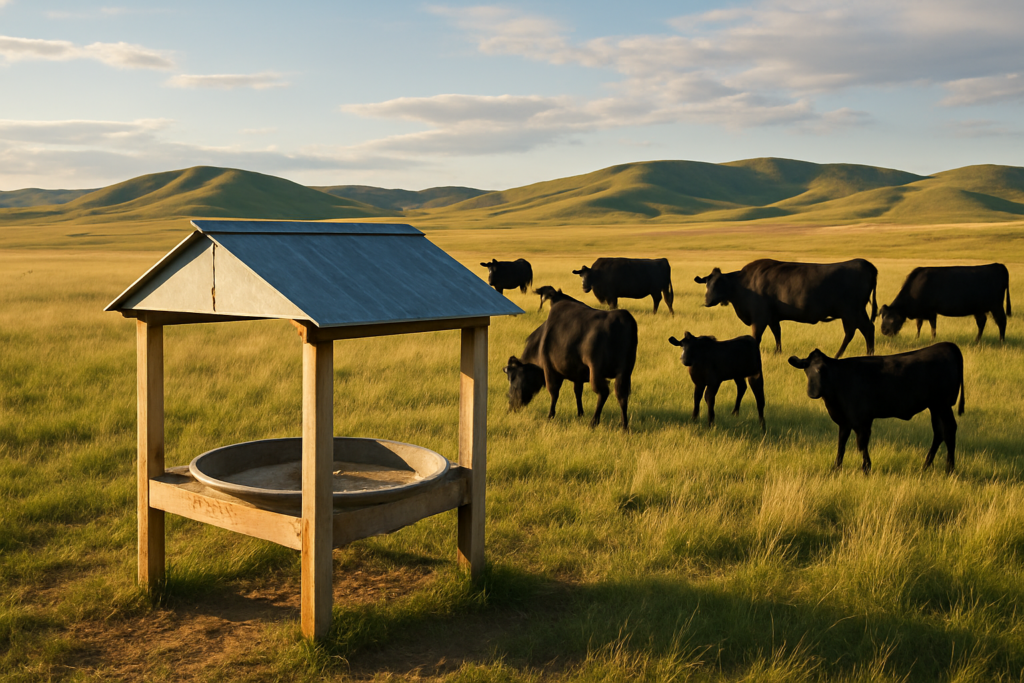
A pressed block a cow has to lick will keep her from getting a toxic dose of anything, but it’s a poor way to deliver what she actually needs in June and July. A big dry cow can’t work a hard block fast enough to hit her intake target when the demand is highest. Loose mineral in a covered feeder lets her walk up and get a mouthful, which is the whole point.
Watch your target intake on the tag. Most summer loose minerals are built for something in the range of a few ounces a head a day. If the cows are cleaning the feeder in two days, they’re eating too much and you’re burning money. If a full box sits untouched for a week, they’re not getting enough of anything to matter. Either way you’ve got a problem to fix, and you won’t know unless you’re checking.
Salt is the lever. If intake is too high, a mineral with more added salt slows them down. If they won’t touch it, cutting the salt or switching to a more palatable product pulls them in. Some outfits set a separate white-salt feeder next to the mineral so cows that just want salt don’t overeat the expensive stuff. Don’t force the issue by yanking loose salt entirely unless the mineral tag says it’s a complete package.
Placement is half the battle
Cows will not hike uphill and cross a creek to find mineral if the grass and water are all on the near side. Put the feeder where they already spend time. Near water is the obvious spot, but if you’re trying to pull grazing pressure off a beat-up flat and onto ground they’re ignoring, moving the mineral is one of the few cheap tools you’ve got to do it. A tub set on a ridge or a far corner will draw cattle up and spread them out better than anything short of fence.
Set it up off the mud. A feeder sunk in a wallow by the tank gets fouled, and cows quit eating fouled mineral fast. Rain-ruined mineral cakes up into a brick nobody can eat. A cheap cover or a barrel-style feeder pays for itself the first wet week. Check that the feeders haven’t been tipped over by cattle rubbing on them or by a bull deciding to fight one.
Match the mineral to the season and the water
Early summer on lush growth is a different situation than August on cured-off grass. Spring flushes of fast grass can run cows short on magnesium, though grass tetany is far more a problem on cool-season pastures early than on midsummer range. As the season dries and forage matures, phosphorus becomes the one worth paying attention to, because Montana range tends to run short on it and the cows are milking hard.
If you’re running a fly-control mineral with an IGR to knock back horn flies in the manure, remember it only works if they’re eating it at the right rate every day, and you need it out well before the flies build up, not after. Same discipline as the rest of the program.
Your water changes the math too. High-sulfate stock water ties up copper, so cattle on it may need more in the mineral than the tag assumes. If you’ve had trace-mineral trouble before or you’re drinking off questionable ponds, that’s worth a conversation with someone who can read your water test alongside your mineral tag.
None of this is complicated. Keep good mineral in front of them, put it where they’ll use it, watch what they actually eat, and adjust. The cows will tell you if you’re paying attention.