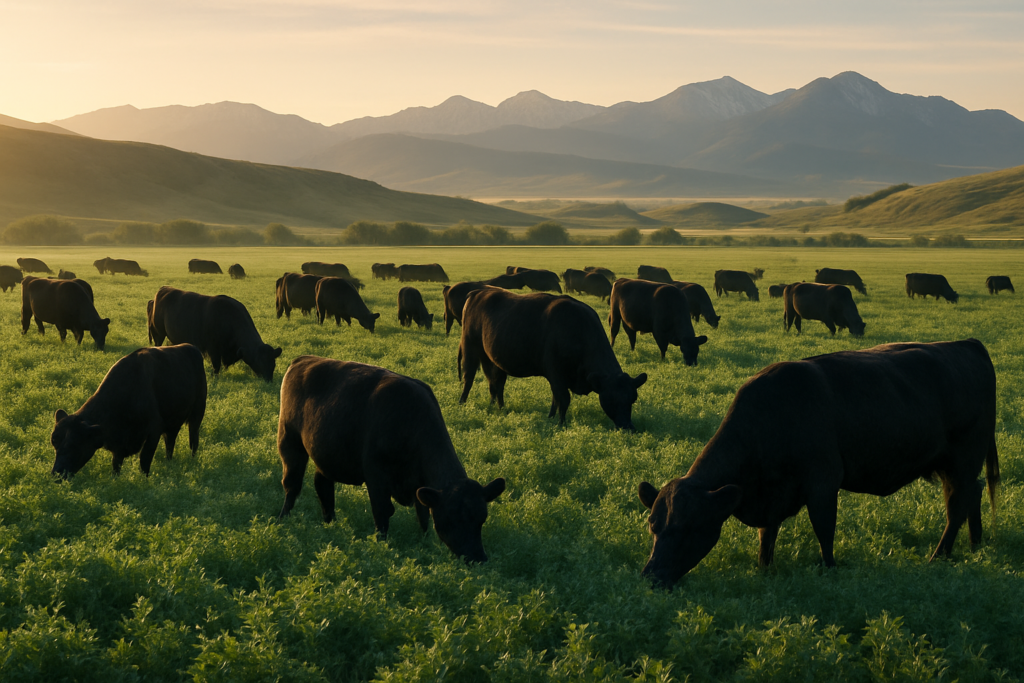
You find her on her side, legs stiff, the left flank swelled up like a barrel. If you’d walked the pasture an hour earlier she’d have been fine. Frothy bloat on legume pasture works that fast, and June is when it catches people, because that’s when the alfalfa and clover come on thick and wet and the cattle hit it hungry.
Most Montana range grass won’t bloat cattle. The trouble is the legumes — alfalfa, red and white clover, and to a lesser degree some of the irrigated mixes people run pairs on when the dryland gets short. Those plants break down fast in the rumen and throw off a stable foam. The foam traps the gas the cow would normally belch up. Pressure builds, the rumen presses on the lungs and the big vessels, and she suffocates. It isn’t a poison. It’s a mechanical problem, and it moves quick.
What makes June the dangerous stretch
The risk is highest when the plants are young and growing hard, which in most of the state means late May through June on irrigated ground and lush meadows. A heavy dew or a rain overnight makes it worse — wet forage goes down faster. Vegetative alfalfa before bloom is riskier than alfalfa that’s headed out and starting to bloom, so the pretty, dark-green stand you’re proud of is the one that’ll get you.
The other half of it is the cattle. A hungry cow gorges. Turn a bunch out onto a fresh legume paddock first thing in the morning after they’ve stood in a dry lot or grazed short, and they’ll load up before they ever slow down. That first big feed is when you’ll lose one.
Watch for the animal standing off by herself, quit grazing, stamping and kicking at her belly, drooling, breathing open-mouthed. The left flank is the tell — it distends first and highest. A cow that’s down and bloated is already in trouble and you’ve got minutes, not hours.
Keep them from loading up in the first place
The whole game is managing that first exposure and never letting the rumen empty out completely before they’re on the legumes.
- Fill them up on grass hay or a grass pasture before you turn them onto alfalfa or clover. A full cow eats slower and takes in less.
- Don’t turn out hungry, and don’t turn out onto wet forage. Wait until the dew burns off and the plants dry.
- Make the switch gradually. Give them an hour or two the first day and pull them back to grass, then stretch it out. Sudden, full-day access is the classic setup for a wreck.
- Once they’re on it, leave them on it. Cattle pulled off and put back on legumes repeatedly get hit harder than cattle that stay out and adjust.
- Graze the stand when it’s more mature — at or past early bloom — rather than short and vegetative.
A bloat block or a poloxalene supplement fed ahead of and during legume grazing is the standard tool for herds that have to run on alfalfa. It works by breaking up the foam, but only if the cattle actually eat enough of it every day, so you have to make sure they’re hitting the block and not ignoring it. It’s a management aid, not a fence.
When you’ve got one down
If you catch a bloated cow standing, get her up and moving. Walking helps her belch. For a mild case, some people drench with a foam-breaking product or even a bit of mineral oil or a household anti-foam, but you have to get it into the rumen, and a wild cow fighting a drench is its own problem.
A cow that’s down and going blue is an emergency. A trocar and cannula through the left flank — high on the paunch, the spot that’s swelled up — will let gas off and can save her, but frothy bloat is foam, not free gas, and a small trocar can plug with froth. This is where a stomach tube or a bigger opening beats a little cannula. If you’ve never done it, and you’ve got the time, this is a call-your-vet moment. If you don’t have the time, a clean, sharp cut in the right spot beats watching her die. Know where that spot is before you need it.
Most bloat losses trace back to a management decision — turning out hungry, turning out onto a wet stand, or making a sudden switch. Fix the turnout and you’ll rarely see the trocar. Run pairs on alfalfa without a plan and June will remind you why the old-timers grazed the grass first.