When Montana locks up, a lot of folks hang the rods in the garage and wait for spring runoff. But hardwater season isn’t just an endurance test—it can be one of the most consistent times of year to find fish, learn new water, and bring home a meal. Reports from anglers across the state indicate that once lakes settle into stable ice and fish adjust to winter patterns, the bite can be surprisingly steady.
That said, winter fishing rewards preparation. Cold air, shorter days, and variable ice conditions can turn a fun outing into a risky one if you cut corners. Here’s a practical, Montana-focused guide to ice fishing with confidence—from safety to simple tactics that put fish on the ice.
Start with safety: Montana ice isn’t all the same
Ice conditions change fast, especially on big reservoirs, rivers, and any water influenced by current, springs, wind, or fluctuating flows. Early and late season are the sketchiest, but even midwinter can bring surprises around inlets, outlets, narrows, pressure ridges, or areas with submerged vegetation.
- Check local intel before you go. Bait shops, local angling groups, and recent trip reports can help, but treat secondhand info as a starting point—not a guarantee.
- Carry ice picks (worn on a lanyard) and keep them accessible, not buried in a pack.
- Use a spud bar to test as you walk, especially on new ice, near shorelines, or after warm spells.
- Wear a PFD or float suit when conditions are uncertain. It’s not fashionable, but it’s smart.
- Go with a buddy and keep a throw rope in the sled.
For statewide safety reminders and seasonal updates, it’s worth reviewing guidance from Montana Fish, Wildlife & Parks. Regulations and access rules can vary by waterbody, and winter travel can bring additional restrictions.
Dress like you mean it: comfort equals time on the ice
Montana cold can get real in a hurry. If you’re shivering, you won’t fish well—and you’ll likely leave early. Layering is the difference between “surviving” and actually enjoying the day.
- Base layer: moisture-wicking (avoid cotton). If you sweat drilling holes or pulling a sled, cotton will chill you fast.
- Mid layer: insulating fleece or wool.
- Outer layer: windproof, waterproof bibs and jacket. Wind is often the main problem on open ice.
- Hands and feet: bring spare gloves and socks. Chemical hand warmers can save a slow day.
If you’re fishing with kids or older family members, prioritize warmth over everything. A short, comfortable trip builds future fishing partners.
Find fish under the hard water: think structure and oxygen
Winter fish don’t disappear—they shift. In many Montana lakes and reservoirs, fish key on structure that offers food and comfortable conditions. Oxygen levels, light penetration, and forage location all matter.
On many waters, anglers report consistent winter success by focusing on:
- Weed edges where vegetation still holds oxygen and baitfish.
- Drop-offs and humps that concentrate fish moving between shallow and deep water.
- Basins for suspended fish, especially where plankton draws bait.
- Inlets/outlets (with caution) that can attract fish but also create thinner ice.
A small sonar unit can shorten the learning curve dramatically. Even an entry-level flasher or graph helps you see depth, bottom hardness, and whether fish are present. If you don’t have electronics, old-school hole hopping still works—just commit to drilling enough holes to locate active fish.
Simple setups that catch Montana fish
You don’t need a mountain of gear to get started. The key is matching your tackle to the species and keeping presentations small and precise.
- Panfish (perch, bluegill): light rod, 2–4 lb line, small tungsten jig. Tip with a waxworm or spikes where legal and available.
- Trout: medium-light rod, 4–6 lb line, small spoons, jigs, or soft plastics; consider a deadstick with bait when allowed by regs.
- Walleye: medium rod, 6–10 lb line, spoons or jigging raps; low light periods can be key.
- Pike: heavier leader, larger baits, and a plan for safe handling on the ice.
Montana regulations can differ on bait, hook counts, and specific waterbody rules. Before you set up, confirm the current regs for your destination through FWP regulations (and the fishing regs section for seasons and limits).
Presentation: small moves, steady rhythm
Under ice, fish often want a tighter, cleaner presentation than they do in open water. A few adjustments can turn lookers into biters:
- Start aggressive, then finesse. Use a spoon or rattling lure to call fish in, then switch to a smaller jig if they won’t commit.
- Watch your cadence. Two or three sharp pops, then a long pause can be more effective than constant motion.
- Mind the “dead zone.” Many bites happen within a foot of bottom, but suspended fish can be higher. If you see marks above you, bring the lure to them.
- Use a deadstick. A second rod with a subtle bait can pick up fish that won’t chase a jigging lure (where legal).
Keep your hooks sharp. Cold water bites can be soft, and a dull hook is a common reason fish don’t make it topside.
Hole hopping vs. hunkering down
Montana ice anglers tend to fall into two camps: the mobile crowd and the shelter crowd. Both can be effective, and the best approach often depends on weather and fish behavior.
- Go mobile when you’re searching new water, chasing roaming schools (like perch), or fishing during a short bite window.
- Set up a shelter when wind is brutal, you’re fishing with family, or you’ve already marked fish in a productive area.
If you’re using a shelter, crack a vent and pay attention to heater safety. Carbon monoxide is odorless and dangerous. Use heaters designed for indoor/shelter use and follow manufacturer guidance.
Keep it ethical: handle fish well in the cold
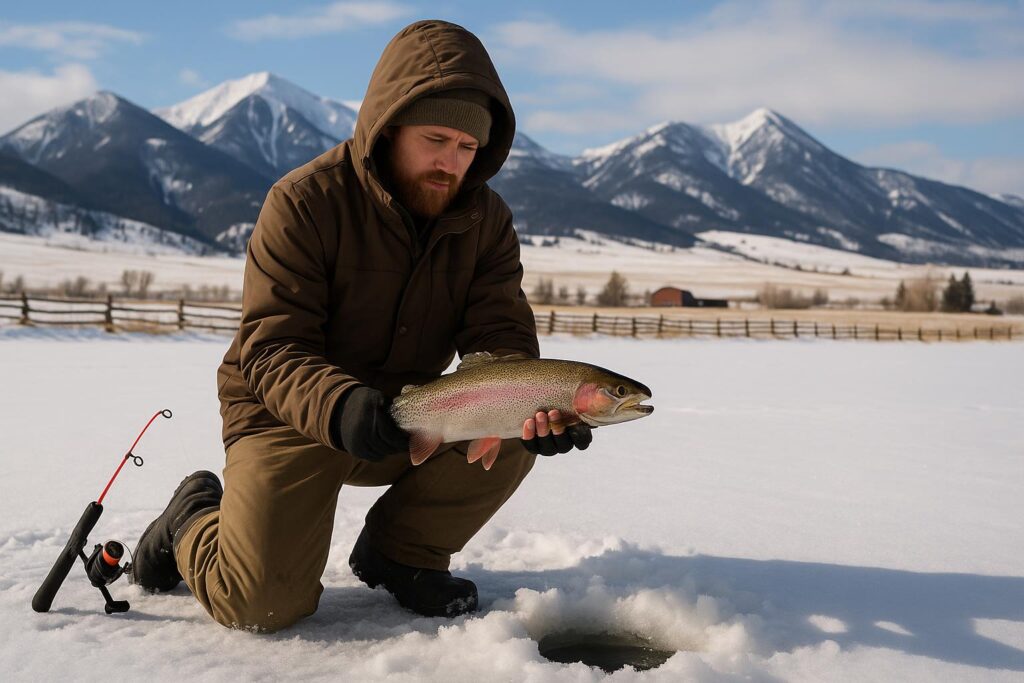
Subzero air can damage gills and eyes quickly. If you’re releasing fish, plan to do it fast and carefully.
- Have tools ready (forceps, pliers) before you lift the fish out.
- Keep fish low to the ice and avoid unnecessary photos when it’s bitter cold.
- Revive fish at the hole if needed, and let them swim off strong.
If you’re keeping fish for the table, bleed and cool them properly. Clean, cold fish taste better—one of the underrated perks of winter angling.
What this means for Montana
Hardwater season is more than a hobby here—it’s part of how many communities stay connected through winter. When anglers buy fuel, tackle, snacks, and lodging in small towns, that money circulates locally. Winter fishing also spreads pressure across the calendar, which can help reduce the “all at once” crush on popular waters during summer weekends.
At the same time, Montana’s variable winters mean ice conditions can be inconsistent from valley to valley and week to week. That puts a premium on caution, local knowledge, and respecting closures or access rules. The anglers who thrive are the ones who adapt—watching weather, checking ice, and adjusting tactics rather than forcing a plan.
If you’ve been on the fence about trying ice fishing, start simple: pick a well-known lake, go with someone experienced, and focus on safety first. The payoff can be a full day outside when most folks are stuck indoors—and, with a little luck and good prep, a few fillets for the frying pan.
Inspiration: www.montanaoutdoor.com