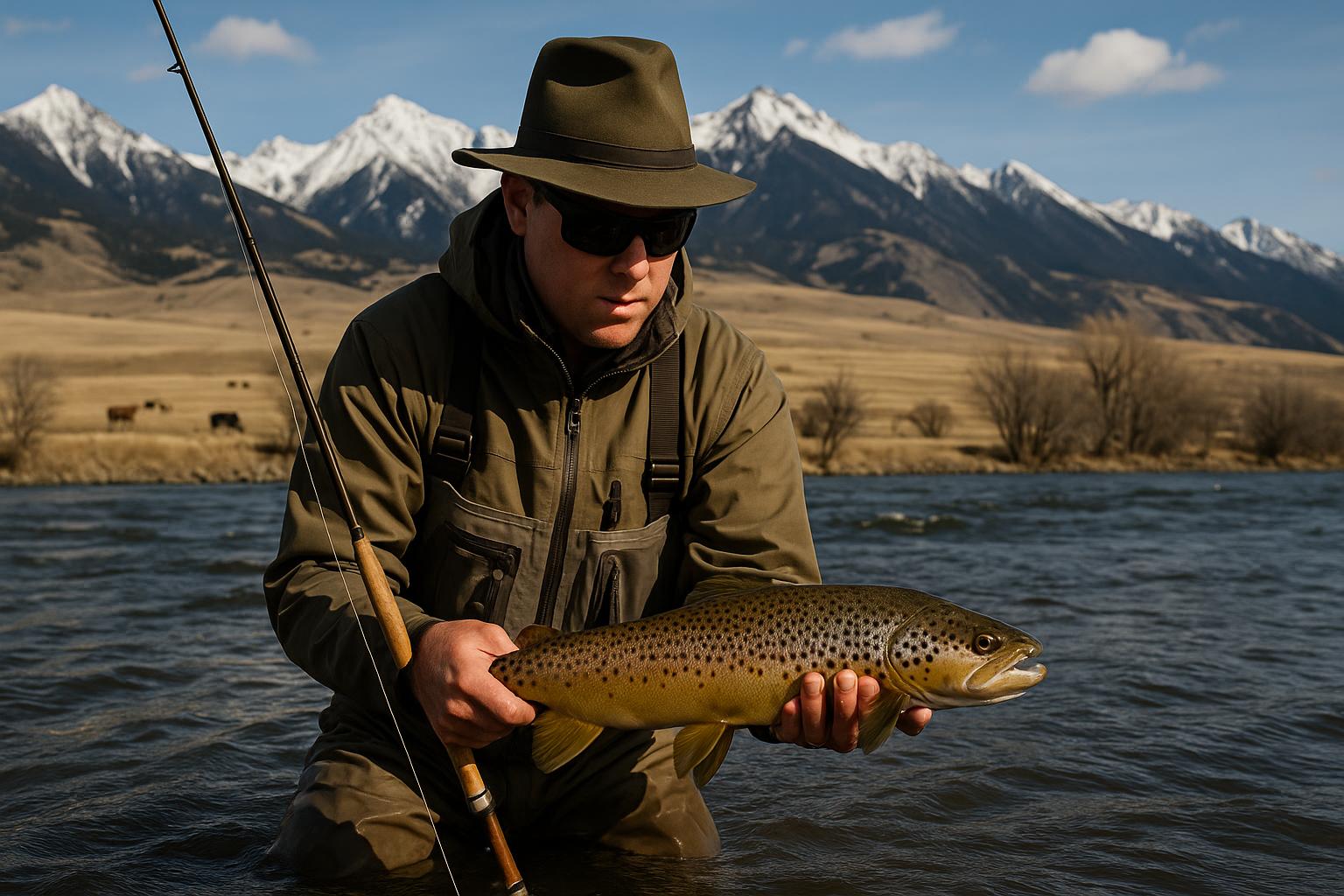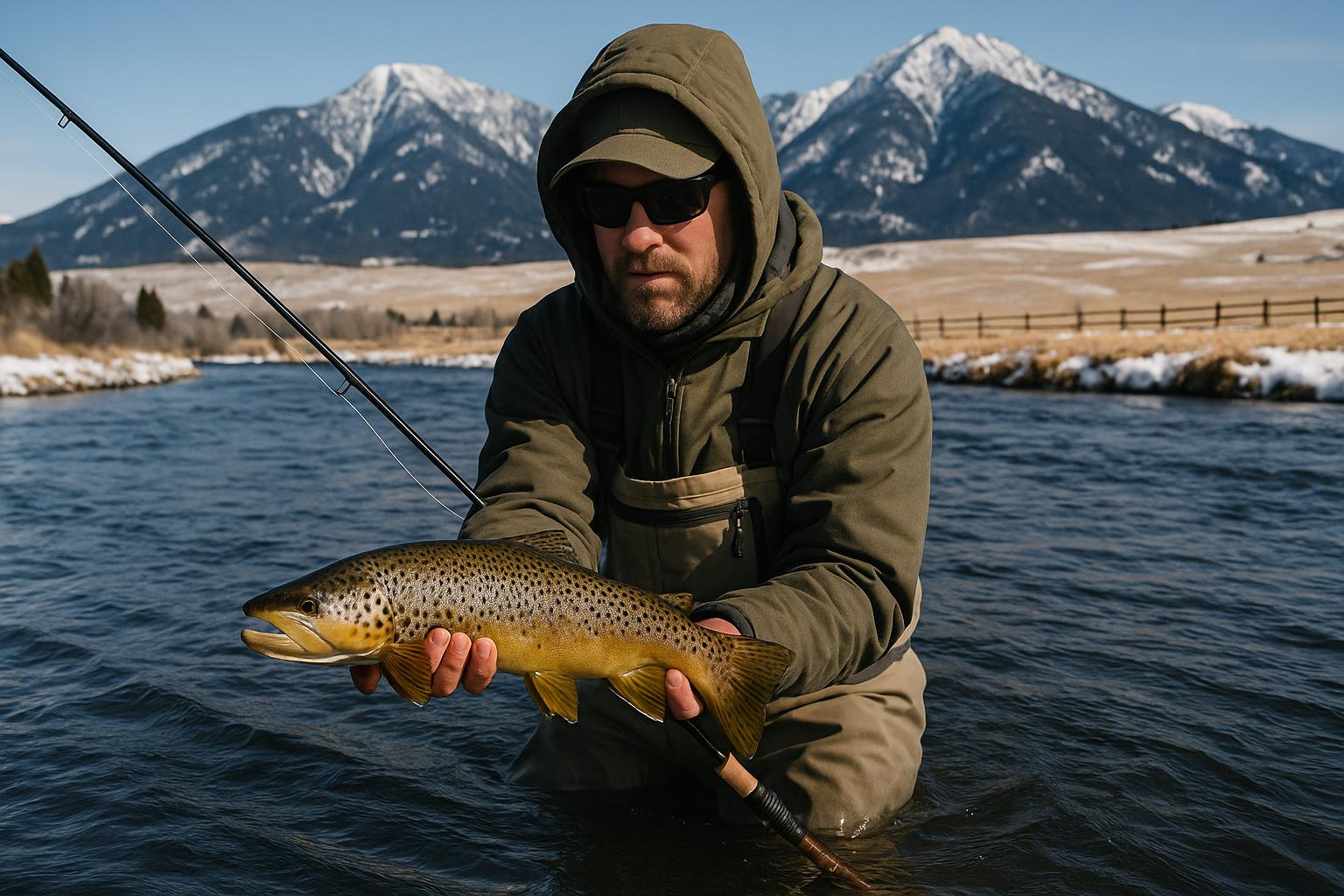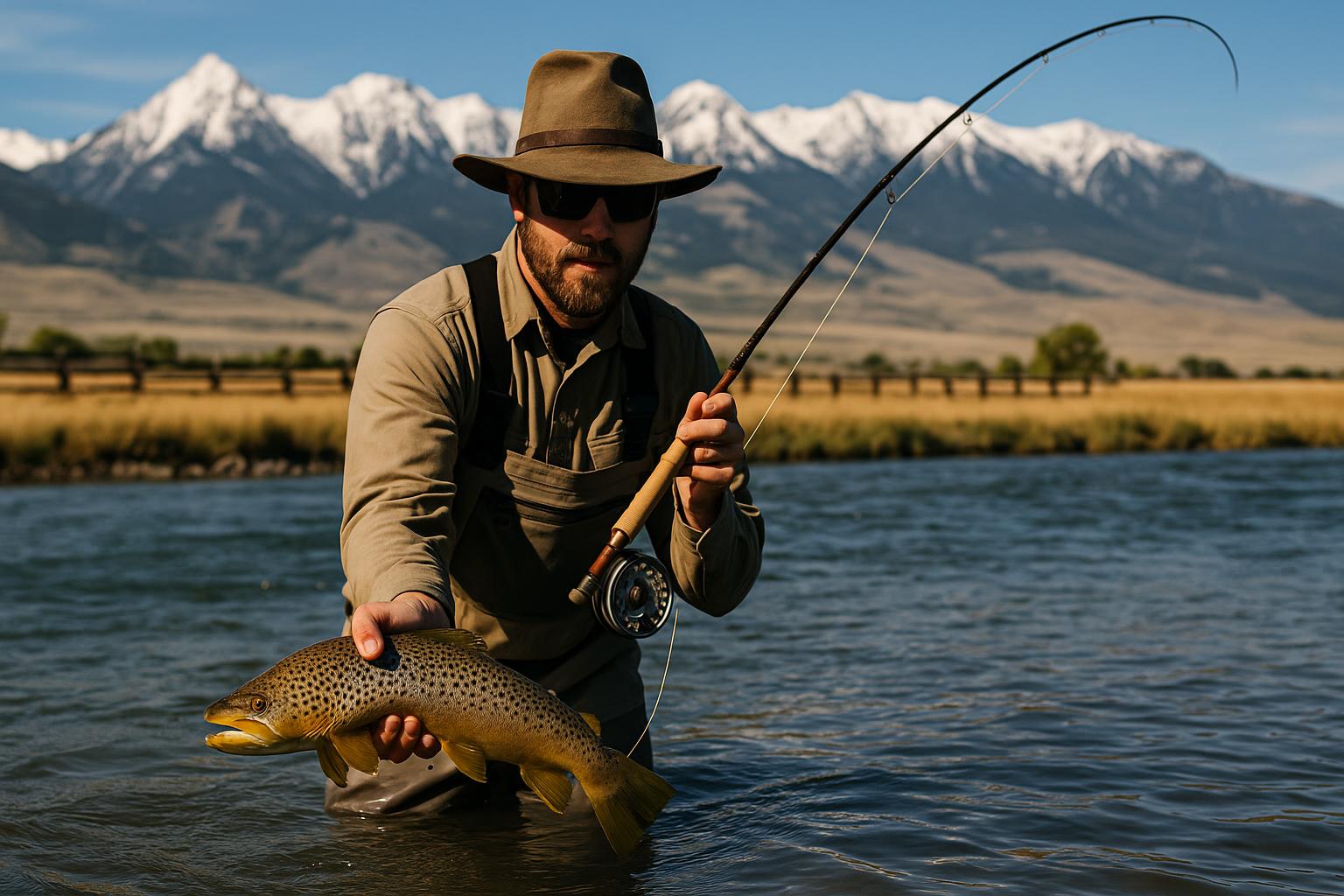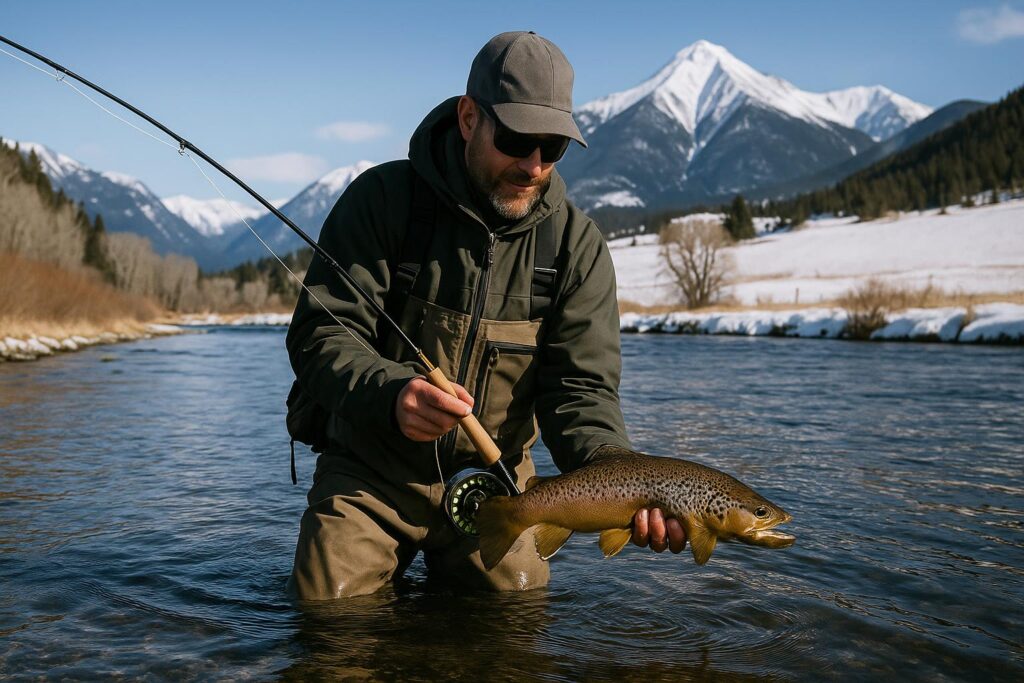
The Boulder River (southwest Montana) is in its winter mode: cold water, generally clear conditions, and fishing that can be very good in short windows—then quiet for hours. Reports indicate the best results are coming from anglers who time their day around the warmest part of the afternoon, keep drifts slow and near the bottom, and treat wading with extra caution.
This report is intended as a practical, boots-on-the-ground guide for planning a day on the Boulder. Conditions can change quickly with weather, ice, and upstream releases, so check current flows and forecasts before you go.
Current conditions: what anglers are seeing
In mid-winter, the Boulder commonly runs low and clear with cold overnight lows. That combination typically pushes trout into slower water and makes them less willing to move far for a meal. When the sun hits the water and air temps rise, even a small bump in water temperature can trigger a brief feeding window.
- Water clarity: Often clear in winter unless a warm spell, rain-on-snow event, or bank erosion adds color.
- Water temperature: Cold enough that trout conserve energy—expect soft takes and fewer fish per hour than shoulder seasons.
- Ice: Shelf ice and anchor ice can show up in shaded runs and along slower edges. Use caution around undercut banks and boulder gardens.
For up-to-date flow information, anglers can reference the USGS Montana real-time water data and match the nearest gauge to the stretch you plan to fish.
Where to focus: winter water that produces
The Boulder is a classic freestone with plenty of pocket water, but winter success usually comes from slowing down and picking your spots. Reports indicate the most consistent action is coming from softer seams and deeper buckets where trout can hold without burning calories.
- Deep runs and tailouts: Fish the slower inside seams and the last third of the run where food funnels.
- Soft edges near structure: Boulder-dotted banks, logjams, and undercut edges can hold fish, especially where current slackens.
- Drop-offs below riffles: Short, steep transitions can concentrate fish when the rest of the river feels “empty.”
- Midday sun zones: If you can, prioritize stretches that get direct sunlight—those areas can warm a degree or two and matter more than you’d think.
If you’re new to the river, consider calling a local fly shop in the area for access pointers and recent observations. For broader regional patterns and seasonal tips, Montana Fish, Wildlife & Parks also posts resources on fishing ethics, regulations, and aquatic invasive species prevention.
Best tactics right now
Winter on the Boulder is about precision. Put the fly in the right lane, get it down, and keep it there. If you’re not occasionally ticking bottom, you’re probably too high in the water column.
- Nymphing: The go-to. Use enough weight to maintain contact and adjust frequently as depth and speed change.
- Short drifts: Work one run thoroughly, then move. In cold water, trout may be stacked in a small piece of prime holding water.
- Set on anything: Takes can be subtle—hesitations, slight stops, or a tiny twitch of the indicator.
- Streamer windows: Streamers can work, but reports indicate the better odds are during warmer afternoons or ahead of a weather change. Fish them slow and close to structure.
Fly suggestions: keep it simple and seasonal
Exact “hot flies” change week to week, but winter trout food doesn’t. Think small mayflies, midges, and occasional stonefly nymphs. A two-fly rig with a small attractor up top and a midge or mayfly nymph below covers a lot of water.
- Top fly (attractor/anchor): stonefly-style nymphs (black/brown), perdigon-style nymphs, or a larger mayfly nymph to help carry weight.
- Dropper: small midge patterns (black, red, or zebra-style), small mayfly nymphs in natural tones.
- When fish are picky: downsize, lighten tippet, and reduce split shot if you’re snagging constantly.
- Streamers (select windows): small to medium profiles in olive, black, or white; fish them slow with pauses.
Tip: If you’re seeing fish but not hooking up, change one variable at a time—depth first, then fly size, then color. In winter, being six inches too high can be the difference between a good day and a long walk.
Timing your day: when to be on the water
On many winter days, the Boulder’s most reliable bite is compressed into a few hours. Reports indicate the most consistent action often happens after the sun has been on the water for a while.
- Best window: late morning through mid-afternoon, especially on stable weather days.
- Cloudy days: can still fish well, but the “warming bump” may be smaller—focus even more on deep, slow water.
- Before/after a storm: pressure changes can spur feeding; if the river stays clear and safe, it can be worth timing a trip around a mild front.
Wading, access, and safety notes
The Boulder’s boulders don’t get any friendlier in winter. Add ice shelves, slick rocks, and cold water, and it’s a place where caution pays off. If you’re fishing solo, consider conservative wading choices and keep to reachable seams rather than pushing for the far bank.
- Traction: studs or a wading staff can make a major difference on frozen cobble.
- Ice hazards: avoid stepping onto shelf ice; it can break without warning and dump you into fast current.
- Cold-water safety: dress for immersion, not just air temperature, and keep a dry layer in the truck.
- Respect land access: use established pullouts and be mindful of private property boundaries. When in doubt, verify access points before you go.
Also: clean, drain, and dry gear between waters to help prevent the spread of invasive species. Montana’s AIS requirements and inspection information are available through FWP’s AIS program.
What this means for Montana
Winter fishing on rivers like the Boulder is more than a pastime—it’s part of the year-round outdoor economy that keeps small-town gas stations, cafes, and fly shops moving during the quiet season. When conditions are stable, anglers can find quality fishing close to home without the crowds of summer.
It also highlights a broader Montana reality: freestone rivers are tightly tied to weather. A warm spell can open up water and improve fishing, while rapid thaws or rain-on-snow events can spike flows and add turbidity. For anglers, that means flexibility—having a backup plan, watching forecasts, and prioritizing safety.
Finally, winter is a good time to practice low-impact ethics: keep fish wet, handle them minimally, and consider fishing barbless when possible. Cold water helps fish recover, but the goal is still the same—healthy trout and healthy rivers for the long haul.
Quick game plan for a Boulder River day
- Start late, fish the warmest part of the day.
- Target deep runs, soft seams, and tailouts—slow water near fast water.
- Nymph with enough weight to tick bottom; adjust depth often.
- Carry small midges and mayfly nymphs; add a stonefly-style anchor fly as needed.
- Wade conservatively and avoid ice shelves.
Inspiration: www.montanaangler.com