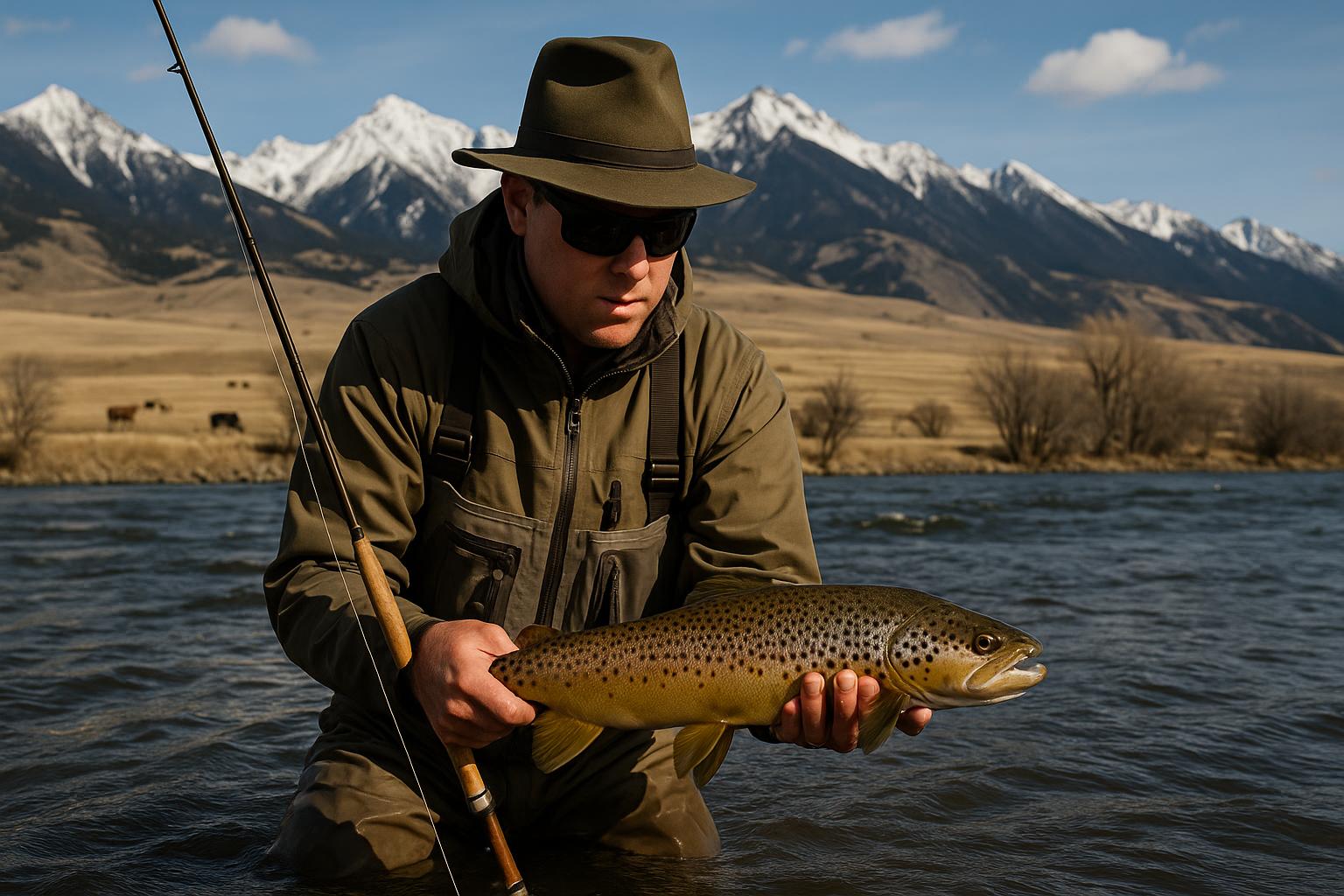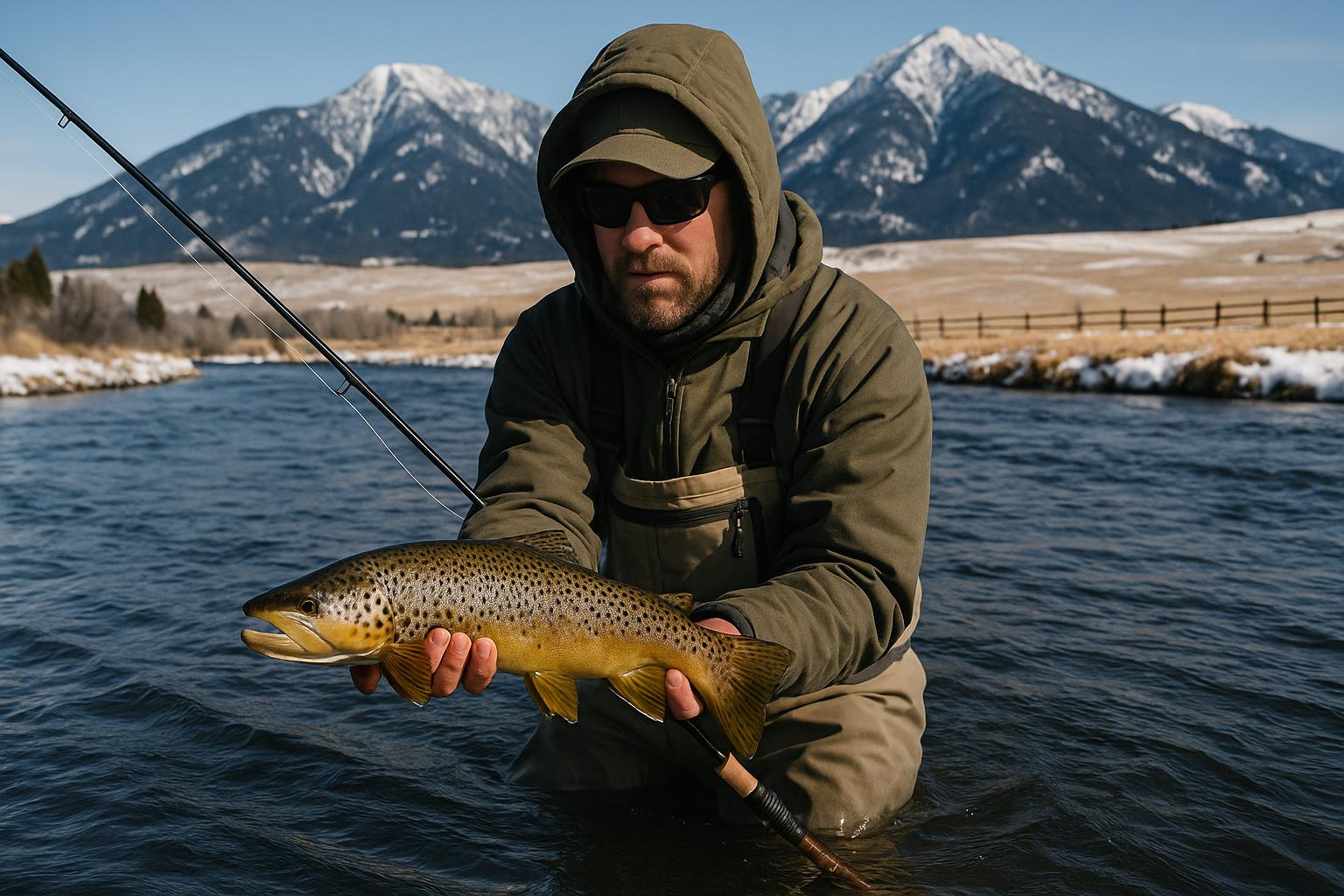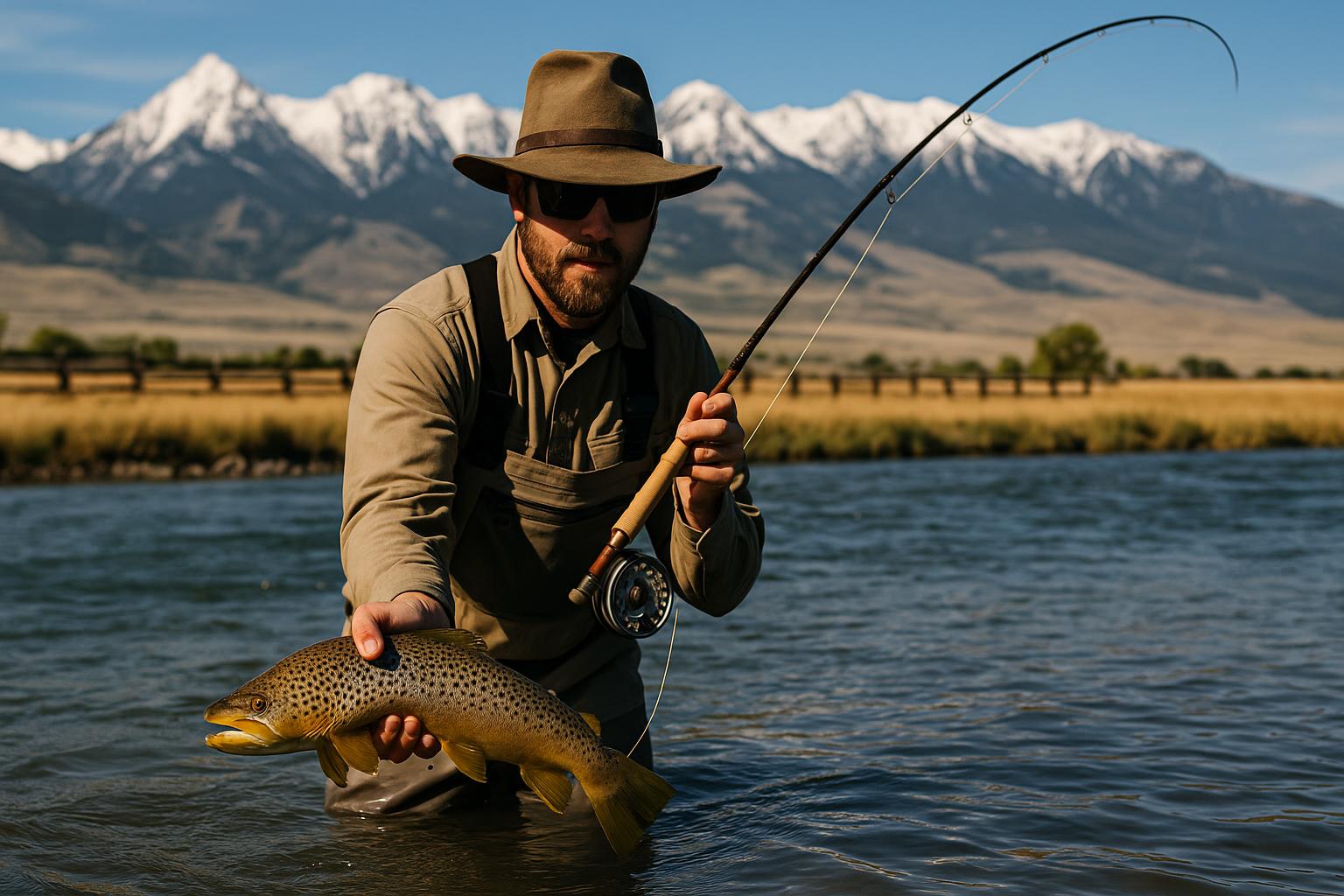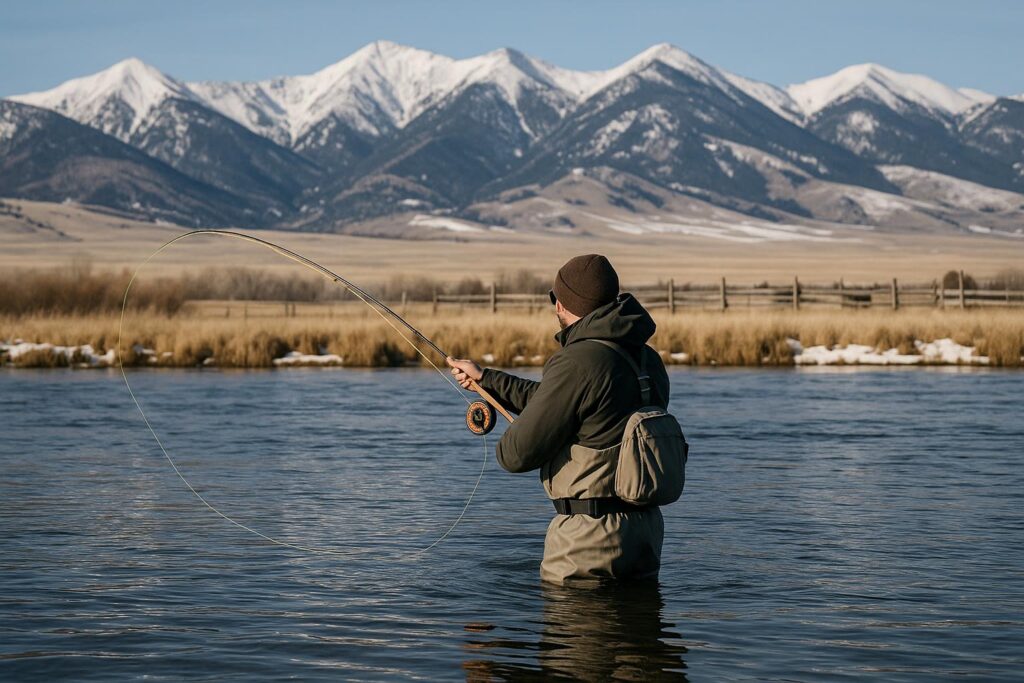
The Lower Madison is a year-round option for anglers who don’t mind cold hands and careful presentations. Between Ennis and Three Forks, this stretch can fish well in winter and early spring when conditions line up: stable flows, clear water, and trout holding in predictable soft edges. That said, day-to-day success can swing with weather, wind, and how much shelf ice develops in slower margins.
This report focuses on practical, on-the-water considerations—where fish tend to set up, what to expect from water clarity and temperature trends, and what flies and techniques are most consistent right now. For official updates and safety info, check USGS stream gauges and Montana regulations via Montana Fish, Wildlife & Parks.
Current conditions: what anglers are seeing
Reports indicate the Lower Madison is running clear to lightly tinted most days, with cold water temperatures that keep trout metabolism low. In these conditions, fish typically won’t move far for a meal, and the best windows often line up with the warmest part of the day—generally late morning through mid-afternoon—especially after a few days of stable weather.
- Water temperature: Cold, often near the low-to-mid 30s to low 40s depending on weather and time of day. Expect the “bite window” to be short.
- Clarity: Usually good; any cloudiness is more likely after wind events, brief thaws, or localized runoff.
- Wading and edges: Be cautious around shelf ice and undercut banks. Even when the main channel is open, margins can be slick and unstable.
If you’re planning a float, keep an eye on wind forecasts. The Lower can become a different river when the valley wind stacks up waves, slows boat control, and makes drift management tougher—especially for nymphing.
Where the trout are: winter holding water
In cold water, trout on the Lower Madison generally favor energy-saving lies. Think “soft and close to food.” Rather than spreading out across fast riffles, fish often settle into slower seams adjacent to the main current.
- Inside bends and softer shelves: Look for walking-speed current with depth and a nearby conveyor belt of food.
- Seams below riffles: The tailouts and transition water can be productive when fish slide up to feed briefly.
- Deep runs with structure: Boulder pockets, ledges, and darker slots can hold fish all day.
One consistent theme: precision matters. A drift that’s six inches off the lane can be the difference between nothing and a couple of solid fish. When you find a pod, it’s often worth working that water thoroughly before moving on.
Best techniques right now
For most anglers, nymphing remains the most reliable approach in mid-winter through early spring conditions. Dry-fly opportunities can happen, but they’re typically brief and more common on calmer afternoons when midges show up in numbers.
Nymphing: keep it slow and near the bottom
On cold days, trout are usually glued to the softest part of the lane and close to the substrate. Use enough weight to tick bottom occasionally, but not so much that you’re snagging every drift.
- Rig: Indicator or tight-line (Euro) both work; pick what you can control best in wind.
- Depth: Start deeper than you think, then adjust up if you’re hanging too much.
- Drift: Prioritize a dead drift; add a subtle lift at the end of the drift if fish seem sluggish.
Productive nymph patterns (general winter staples):
- Small mayfly nymphs in #16–#20 (Pheasant Tail-style, Baetis-style)
- Midge larvae and pupae in #18–#22 (zebra midge-style, midge pupa)
- Attractor nymphs in #14–#18 when you need visibility (stonefly-style nymphs, perdigon-style)
Color and size adjustments matter more than fancy details. If you’re getting follows or short takes, go smaller before you go heavier.
Streamers: pick your moments
Streamer fishing can pay on the Lower Madison, especially during low-light periods or when water has a hint of color. But in very clear, cold conditions, it can be feast-or-famine. If you commit to streamers, focus on slow presentations and structure: banks, boulders, and deep slots.
- Retrieve: Slow strips with pauses; let the fly hover and swing.
- Size: Moderate profiles often outproduce huge patterns in clear winter water.
- Best water: Edges with depth, slower buckets, and any place that offers ambush cover.
Dry flies and hatches: midges lead the way
When the sun has been on the water for a few hours and the wind lays down, midges are the most likely hatch to bring fish up. These rises can be subtle—sips and dimples rather than splashy takes.
- What to watch for: Tiny adults over slow seams, noses poking in gentle tailouts, or fish “porpoising” just under the surface.
- Go-to dries: Small midge adults and clusters in #18–#24.
- Plan B: If fish won’t fully commit to the surface, try a midge pupa 12–24 inches under a small dry.
If you do find consistent risers, approach carefully. Winter fish in clear water can be spooky, and heavy wading in slow flats can shut down the pod.
Access and safety notes
Winter on the Lower Madison is manageable, but it demands respect. Ice conditions can change quickly, and cold water is unforgiving. If you’re floating, consider how quickly you can get to shore if weather turns.
- Wading: Use studs and a wading staff; avoid stepping onto shelf ice.
- Floating: Dress for immersion, not the air temp. A PFD is a smart baseline in any season.
- Roads and ramps: Some access points can be slick or drifted in after storms; give yourself extra time.
For land status and public access guidance, Montana anglers often reference tools like the FWP planning resources and local maps, especially where private land borders the river corridor.
What this means for Montana
The Lower Madison’s shoulder-season fishery is part of what makes southwest Montana a true four-season destination. When conditions are stable, winter angling can spread pressure away from the peak summer months and keep some business moving for small towns and outfitters in the Madison Valley and around Three Forks.
It also highlights a practical reality for Montana’s cold-season recreation: safety and stewardship matter. Responsible winter fishing—staying within legal access, minimizing bank damage on thawing days, and handling trout gently in cold air—helps protect the resource and keeps relationships strong between landowners, local communities, and anglers.
Quick game plan for your next trip
- Start late: plan to fish the warmest part of the day.
- Lead with nymphs: small mayflies and midges, fished deep and slow.
- Move with purpose: target soft seams near depth; don’t burn time in fast water.
- Watch the surface: if midges show and wind drops, be ready to switch to tiny dries.
- Stay flexible: if you’re not getting clean drifts, adjust weight and depth before changing flies.
Inspiration: www.montanaangler.com