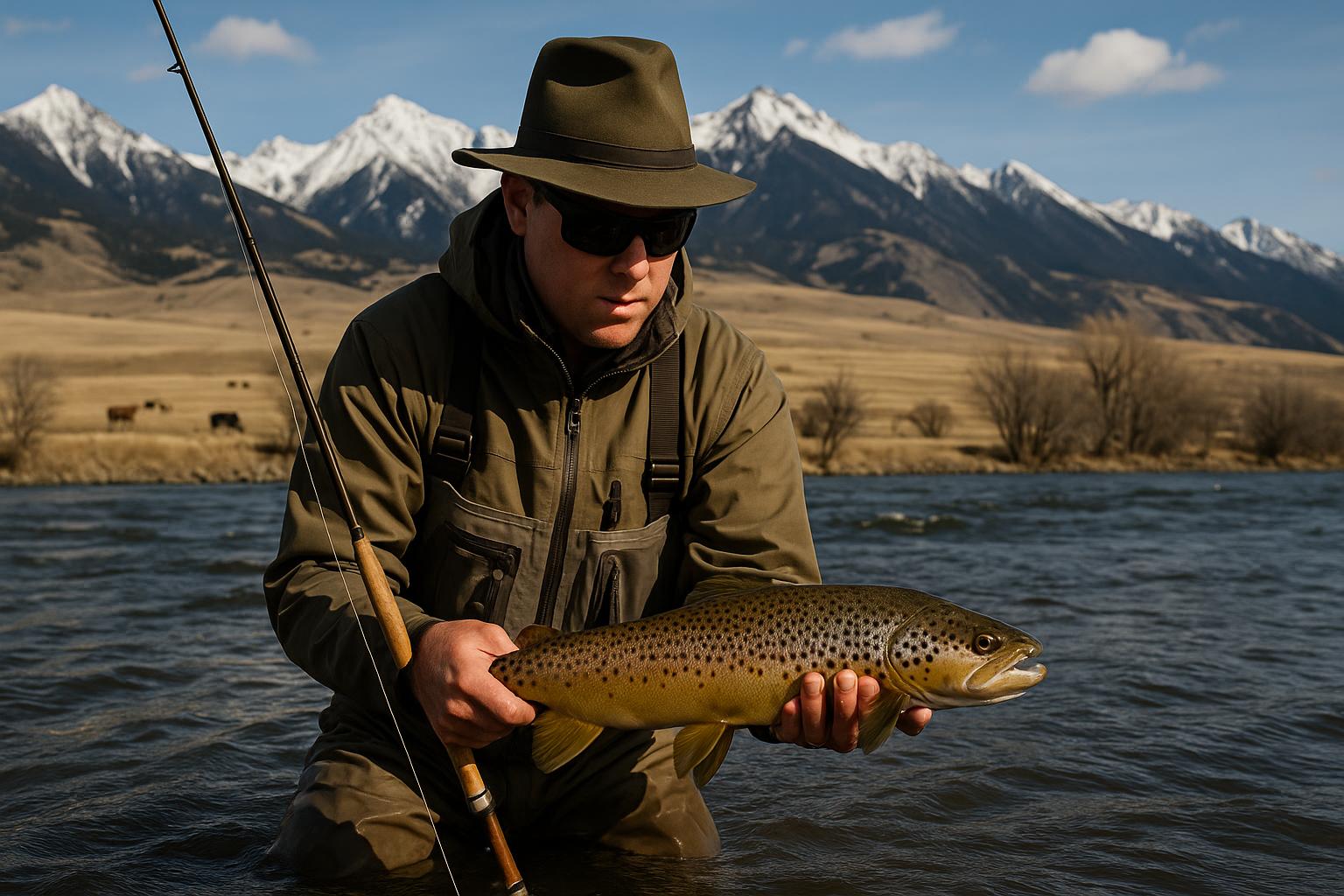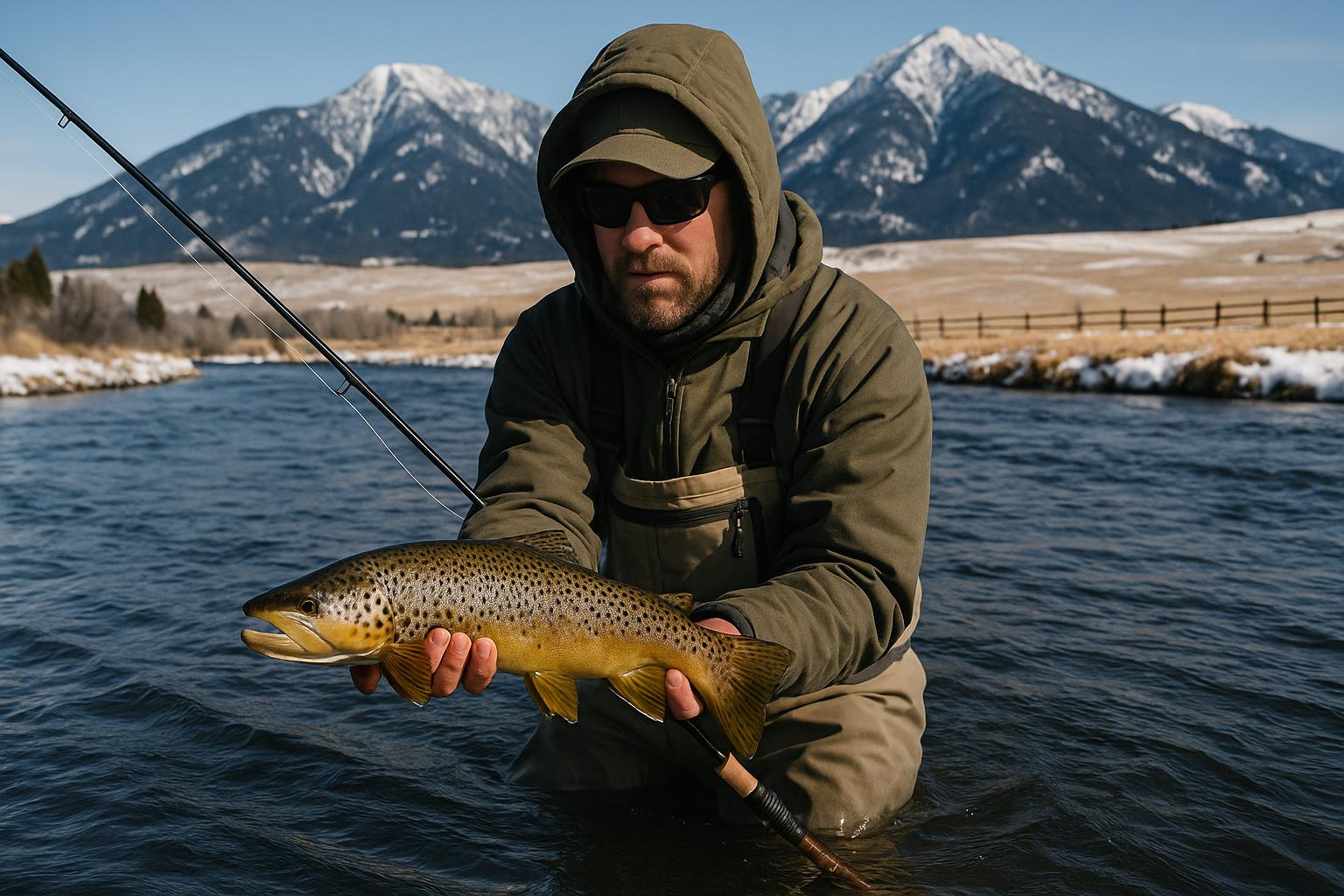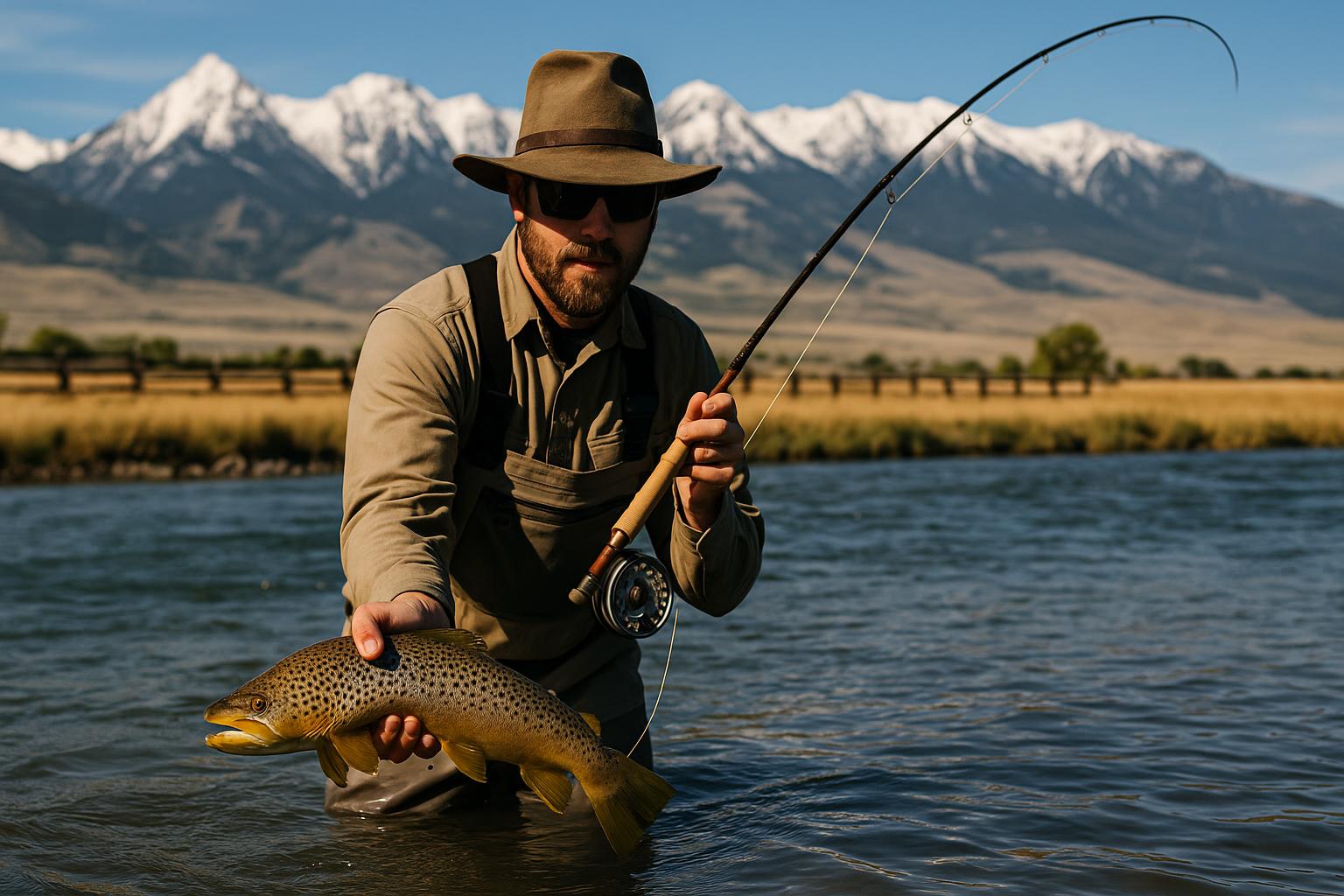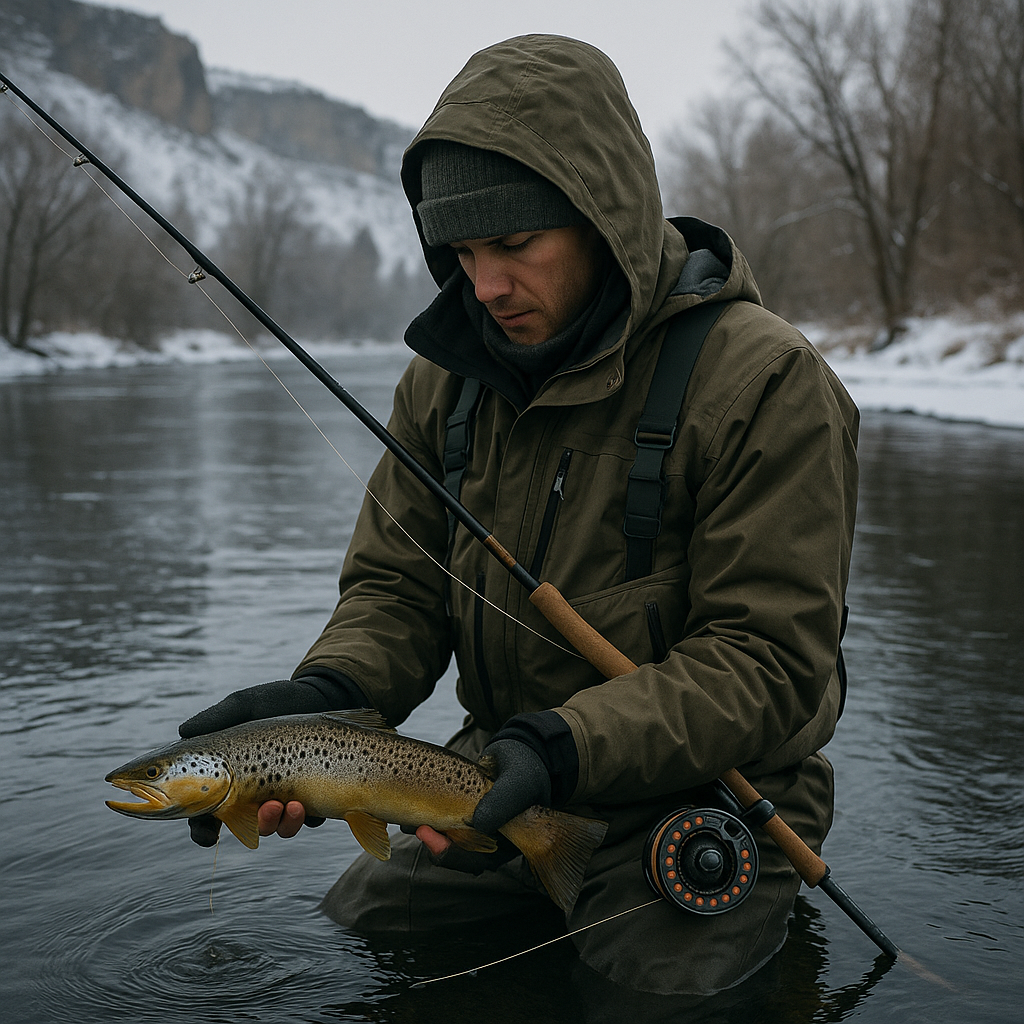
Winter on the Bighorn River isn’t about covering miles of water or forcing fast eats. It’s about precision: getting your flies down where trout are holding, slowing everything down, and fishing with the kind of quiet confidence that matches cold, clear conditions. Recent reports indicate rainbow and brown trout are still very catchable, but they’re often pinned to deeper lanes and can be picky when flows are stable and the water’s running cold.
Quick takeaways
- Depth matters most: plan on fishing close to the bottom in slower winter holding water.
- Nymphing is the workhorse: heavier rigs and controlled drifts tend to outproduce.
- Streamers can pay off: slow retrieves and smaller profiles often make more sense in cold water.
- Stealth is a tactic: low, quiet approaches and longer leaders can help in clear conditions.
- Timing helps: the warmest part of the day can bring a short window of more active fish.
What winter trout are doing on the Bighorn
When water temperatures drop, trout metabolism slows. That generally means fewer aggressive movements and more time spent in comfortable, energy-efficient lies—think deeper runs, softer seams, and slow edges adjacent to main current. Reports indicate fish are often grouped up, which can make a run feel empty until you hit the right lane, then suddenly it’s steady action.
Expect rainbows and browns to be selective. That selectivity doesn’t always mean they’re keyed on one tiny bug; it can simply mean they won’t move far, won’t chase fast, and won’t tolerate a sloppy presentation. In practical terms: if your flies aren’t near the bottom and drifting naturally, you’re likely fishing above them.
Deep nymphing: the most consistent winter play
If you only bring one plan, bring a nymph rig designed to get down and stay down. The Bighorn’s winter trout often respond best to a controlled drift through deeper slots and soft seams. A few adjustments can make the difference between occasional bumps and regular hookups.
- Weight like you mean it: add enough split shot (or use heavier flies) to tick bottom occasionally. If you never touch, you’re probably too high.
- Indicator placement: set depth so your flies ride near the bottom. In deeper runs, that can mean a surprisingly long distance from indicator to flies.
- Two-fly rigs: a slightly heavier lead fly with a smaller dropper can cover both “food” and “look” without constantly retying.
- Drift control: mend early, keep a tight connection, and avoid dragging the indicator faster than the current lane you’re targeting.
In cold weather, subtle takes are common—sometimes it’s just a pause, a slight tilt, or the indicator hesitating. If you’re unsure, set the hook. Winter fish often don’t crush a nymph; they just inhale it and sit there.
Slow streamers: fewer eats, bigger attitude
Streamers can still be a legitimate winter option, especially if you’re targeting browns or hoping to move a better fish. The key is resisting the urge to fish them like it’s October. Reports indicate slower presentations tend to outperform fast strips when water temps are low.
Consider these winter streamer approaches:
- Down-and-across with a crawl: cast slightly downstream, let the fly sink, then retrieve with short, slow pulls.
- Swing the soft edges: target inside bends and slower banks where fish can slide out with minimal effort.
- Shorten the profile: smaller streamers or less bulky patterns can look more “reasonable” in cold water.
- Give it time to sink: count it down and keep it in the zone longer than you think you need to.
If you’re drifting from a boat, it can help to pick a few high-confidence streamer runs rather than trying to force streamer fishing over every piece of water. Winter success often comes from choosing the right spots and fishing them deliberately.
Where to focus: winter water that makes sense
Without pretending there’s one magic run, winter trout water often shares a few traits: depth, softer current, and nearby food delivery. On the Bighorn, that typically means deeper runs with defined seams, tailouts that aren’t too shallow, and slower inside edges adjacent to faster current.
Good winter targets often include:
- Seams below riffles: where food funnels and fish can sit just off the main push.
- Deeper buckets: especially where the current softens and the bottom is consistent.
- Inside bends and soft banks: classic winter lies with reduced energy cost.
- Transitions: where gravel meets silt, or where depth changes create a defined lane.
One caution: winter wading can be deceptive. What looks like a gentle edge can drop off quickly, and shelf ice can hide undercuts. If you’re unsure, fish from safer angles or consider floating with an experienced oarsman.
Stealth and presentation: the winter multiplier
Clear water and slow fish can make the Bighorn feel like a technical spring creek in winter clothing. Stealth is less about being “sneaky” and more about eliminating the obvious mistakes: heavy footfalls, repeated false casting over the run, and wading too close to the lane you want to fish.
- Approach low and quiet: take your time walking in; avoid splashing and sudden movements.
- Lengthen where needed: a bit more leader and finer tippet can help, especially on brighter days.
- Reduce false casts: cold guides and wind already complicate things; make fewer, more purposeful casts.
- Repeat the good drift: winter fish may need multiple clean passes before committing.
If you’re seeing fish but not getting eats, consider changing one variable at a time: add a touch of weight, adjust depth, then change fly size or color. In winter, depth and drift usually beat pattern changes.
Weather, river conditions, and safety notes
Winter on the Bighorn can swing from calm and mild to raw and dangerous quickly. Wind can turn a manageable float into a long day, and cold air can freeze guides, stiffen lines, and slow knot work. If you’re planning a trip, check the latest forecasts and be prepared for changing conditions.
Before you go, it’s worth checking official info sources for updates and access details:
- National Weather Service for local forecasts and wind.
- Montana Fish, Wildlife & Parks for regulations, access sites, and statewide fishing info.
And the basics still matter: wear a PFD when floating, pack dry gloves, keep a spare warm layer in a dry bag, and let someone know your plan. Hypothermia doesn’t require dramatic conditions—just time and wet clothing.
What this means for Montana
The Bighorn is one of Montana’s signature winter fisheries, drawing local anglers and out-of-state visitors when many other waters are locked up or fishing slow. When reports indicate consistent winter trout action, it can be a bright spot for small businesses in nearby communities—guides, fly shops, lodging, and cafés that rely on shoulder-season traffic.
For Montana anglers, it’s also a reminder that our fishing calendar doesn’t stop after elk season. Winter success often comes from adapting expectations and tactics: fewer fish in some stretches, more technical presentation, and a heavier emphasis on safety. Done right, a cold day on the Bighorn can still deliver the kind of trout fishing that keeps you thinking about the next trip all week.
Simple winter setup to consider
If you’re looking for a straightforward place to start, here’s a practical winter approach many anglers lean on:
- Rod: 9-foot 5-weight for nymphing; a 6-weight if you plan to throw streamers regularly.
- Nymph rig: indicator + split shot + two nymphs, adjusted to reach bottom in the run you’re fishing.
- Streamer plan: one box of smaller to medium streamers, fished slow with time to sink.
- Cold-weather extras: line dressing, de-icer paste (if you use it), and a small towel for frozen guides.
Most importantly: be willing to change depth first. In winter, the right fly fished too high is often just the wrong fly.
Inspiration: Montana Outdoor