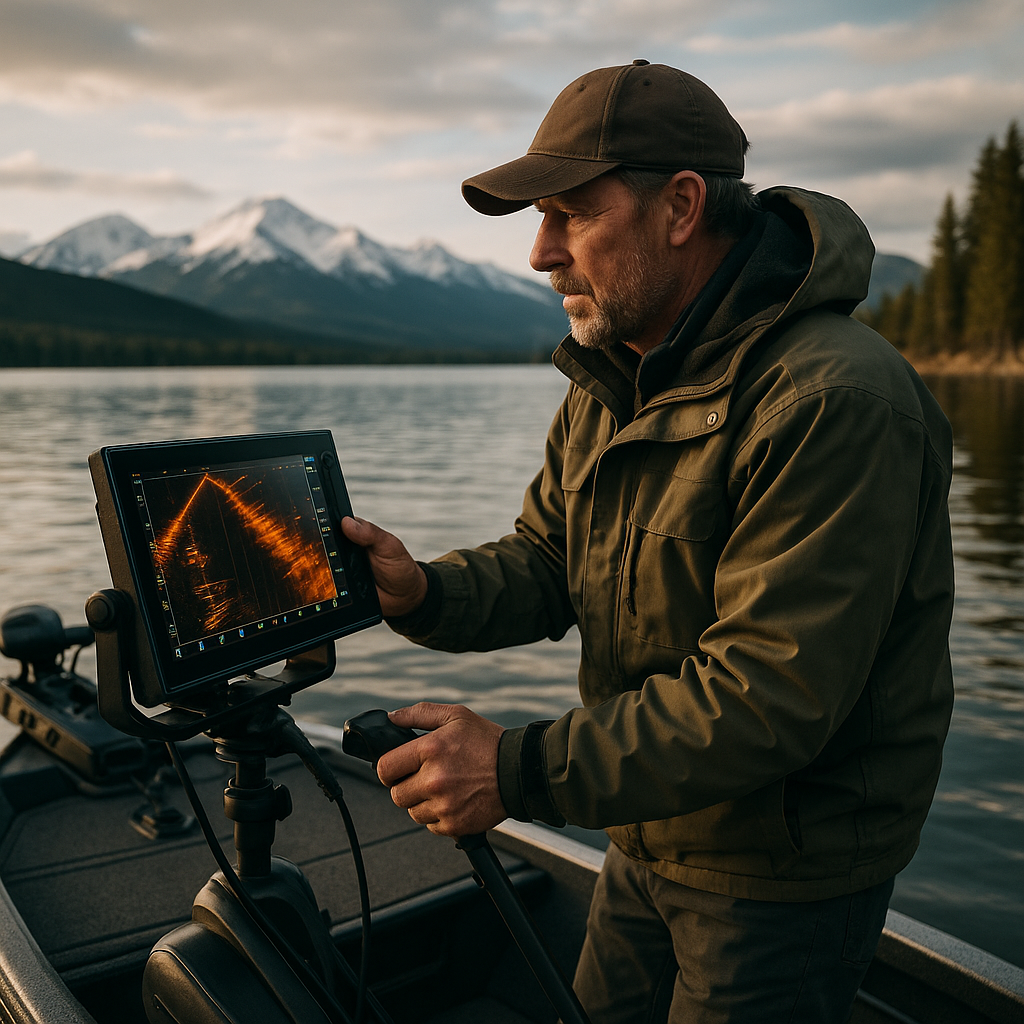
Forward-facing sonar—often called “live sonar” or “live scope”—has changed the way many anglers fish. It can show fish and structure in real time, letting a skilled operator adjust lure depth, speed, and position on the fly. Supporters say it’s simply the next step in electronics, like GPS mapping and side imaging. Critics argue it can tip the scales too far, especially in competitive settings where money and prestige are on the line.
Now, reports indicate at least one Texas tournament circuit is moving toward banning forward-facing sonar. Whether you love live sonar, hate it, or just don’t care, the larger trend matters: tournament rules often foreshadow broader debates about fair chase, fish handling, and what “sport” should look like in the electronics era.
Quick takeaways
- Reports indicate a Texas tournament circuit is set to ban forward-facing sonar, adding to a national conversation about high-tech fishing.
- Most discussions focus on tournament fairness, but concerns also include fish stress, crowding, and how quickly information spreads on popular waters.
- Montana doesn’t currently have a statewide ban on forward-facing sonar for general angling, but tournament rules can change faster than regulations.
- If restrictions spread, expect them to show up first as event-specific rules (what you can use during competition hours), not necessarily as statewide law.
- Anglers can get ahead of the curve by learning both electronics-based and traditional approaches so they’re not locked into one style.
What forward-facing sonar actually does (and why it’s controversial)
Forward-facing sonar differs from traditional 2D sonar or down imaging because it projects a sonar beam out in front of the boat and updates rapidly—close to real time. On many setups, anglers can watch a lure drop, see fish react, and make immediate adjustments. In clear water, on schooling fish, or around suspended fish, it can be especially effective.
The controversy isn’t just about whether it works—it’s about how it changes the whole chessboard:
- Skill shift: Some argue it rewards electronics proficiency over water-reading fundamentals; others say it’s simply a new skill set.
- Efficiency: Fish can be targeted more precisely, potentially increasing catch rates in certain scenarios.
- Pressure concentration: When a few tournament boats can quickly locate fish, it can intensify pressure on specific areas.
- Perception: Even when legal, it can create friction at the ramp—especially on smaller waters where traditional anglers feel outgunned.
Reports of a Texas tournament ban: why it matters beyond Texas
According to reporting circulated via Google News, a Texas fishing tournament circuit is set to ban forward-facing sonar. Tournament circuits have the flexibility to adjust rules quickly, and they often do so to address member concerns about fairness, participation, or the “spirit” of competition.
It’s worth emphasizing that tournament rules are not the same thing as state regulations. A circuit can ban a tool even if it’s legal for the public to use on the same water. In many outdoor sports, that’s common: think of archery-only seasons, weapon restrictions for certain hunts, or fly-fishing-only stretches of river. The point is to create a particular type of competition or experience.
If more circuits adopt restrictions, the bigger effect may be cultural rather than legal—shaping what anglers consider acceptable in competitive fishing, and influencing how sponsors, clubs, and local events structure their rules.
Why tournaments are the first place rules change
In Montana, most fishing regulations are set through public processes and are designed to apply across many waters and many user groups. Tournament organizations, on the other hand, can react fast if participants are unhappy or if turnout drops. Here are a few reasons live sonar debates show up first in tournaments:
- Level playing field: Not every competitor can afford the latest transducer, screen, mount, batteries, and wiring upgrades.
- Comparability: Tournament anglers want to feel like they’re competing on decision-making, not just on equipment.
- Enforcement practicality: A circuit can set clear boundaries (for example, “no forward-facing sonar during tournament hours”) and police it via on-the-water checks, observer rules, or post-event scrutiny.
- Member-driven pressure: If enough anglers believe a technology is changing outcomes too much, organizers respond to keep the circuit healthy.
What this means for Montana
Montana is not Texas. Our fisheries, access patterns, and angling culture vary widely—from walleye and perch on prairie reservoirs to trout on big rivers, to salmonids on high-elevation lakes. Still, the same questions are starting to echo at Montana boat ramps and club meetings: How much tech is too much? And who decides?
Here are a few Montana-specific angles to watch:
- Smaller waters, bigger impact: On many Montana lakes, a handful of boats can cover a lot of water quickly. If live sonar concentrates effort on specific schools, it can change how those fish behave—at least in the short term.
- Walleye and bass growth: As warmwater tournament scenes expand in the region, rules debates tend to follow. If Montana events draw anglers from multiple states, organizers may adopt rules that mirror other circuits.
- Trout culture differences: Much of Montana’s trout identity is tied to rivers, wading, and fly fishing—areas where forward-facing sonar is less central. But on larger lakes and reservoirs, it’s a different story.
- Access and crowding: Electronics don’t create fish, but they can compress time—meaning more anglers may key in on the same bite windows and locations.
If you fish Montana tournaments (or are thinking about it), don’t be surprised to see more event packets include language about sonar modes, transducer placement, or “screens off” rules during certain hours. That’s not a prediction of statewide regulation—just a realistic look at how these debates typically evolve.
Ethics, conservation, and fish handling: the quieter part of the debate
Most of the public argument centers on fairness: “Is it still sporting?” But there’s another layer that deserves attention—fish stress and handling, especially in summer tournaments or on waters where fish are already dealing with warm temperatures and low oxygen.
Forward-facing sonar can make it easier to stay on fish longer. That can be good (more selective targeting, fewer random drifts) or it can lead to repeated presentations to the same fish or the same school. Whether that meaningfully changes mortality or behavior depends on species, water temperature, hooking methods, and how events manage livewells and release.
In Montana, where conditions can swing from cold, windy spring to hot, still midsummer days, tournament organizers already have to think hard about timing, weigh-in procedures, and best practices. Electronics are just one piece of that puzzle.
If you’re an angler: practical ways to navigate the trend
Regardless of where you land on the issue, a few practical steps can keep you adaptable:
- Know your event rules early: If you’re fishing a derby, read the tech rules before you rig the boat. “No forward-facing sonar” can mean different things depending on how it’s written.
- Keep traditional skills sharp: Wind-driven structure fishing, seasonal movement patterns, and reading water color and temperature still matter—especially when electronics are limited by depth, turbidity, or waves.
- Budget realistically: If you’re considering a live sonar setup, remember it’s rarely just one purchase. Screens, mounts, batteries, and trolling motor integration add up.
- Be a good neighbor on the water: Tech debates get heated. Ramp talk goes a lot better when anglers focus on courtesy, spacing, and resource stewardship.
Could Montana ever regulate forward-facing sonar?
Statewide regulation is possible in any state, but it typically takes time and a clear justification. Most fishing rules are designed around seasons, limits, gear types, and conservation outcomes. A technology-specific ban would likely require strong public support and a clear management rationale.
For now, the more immediate arena is tournaments and local groups. If you’re passionate either way, the most constructive place to engage is through event feedback, club meetings, and the public process when fisheries issues come up for discussion.
As with any rapidly evolving gear trend, the conversation will keep changing. What doesn’t change is Montana’s core reality: we’re all sharing the same waters. Whether you’re scanning ahead with a transducer or casting a jig off a windswept point the old-fashioned way, the long game is healthy fisheries and respectful access.
Inspiration: “forward facing imagery fishing live scope” – Google News (link)