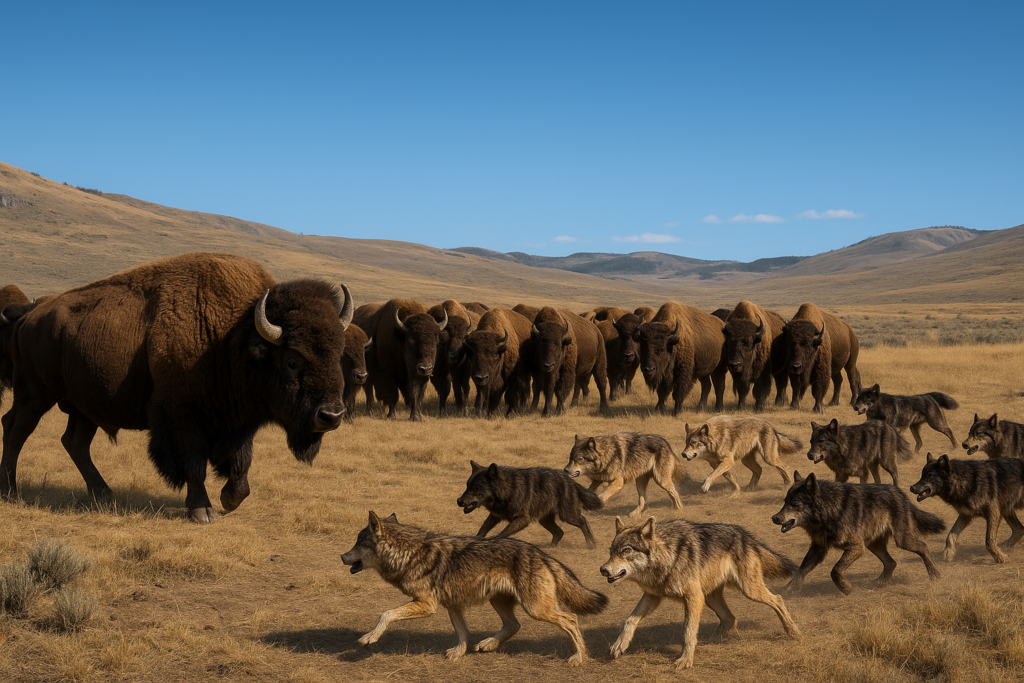
In an unforgettable display of nature’s raw power, a bison herd recently faced off against a pack of 23 wolves in Yellowstone’s Lamar Valley. The dramatic encounter—captured on video—offers a rare, clear look at the constant push-and-pull that shapes life in one of America’s most iconic national parks.
Key Takeaways
- A bison herd in Yellowstone’s Lamar Valley confronted a pack of 23 wolves in a tense standoff.
- Video captured defensive bison behavior and probing wolf tactics during the encounter.
- The moment highlights Yellowstone’s predator–prey balance and the ecosystem role wolves play.
- Wolves were reintroduced to Yellowstone in 1995 after being eradicated from the region by the 1920s.
- Encounters like this can help researchers better understand predator–prey dynamics and inform management decisions.
What’s Happening in Lamar Valley
The heart of Yellowstone National Park—Lamar Valley—became the stage for an extraordinary wildlife encounter that unfolded in front of lucky onlookers. A large bison herd confronted a formidable pack of 23 wolves, offering a vivid snapshot of the natural balance of predator and prey that defines this wilderness.
Witnesses captured the scene on video, illustrating a tense standoff between the massive bison and the wolves. Both sides displayed strategic behavior: the bison formed a defensive circle, while the wolves tested their resolve. Interactions like this are part of life in Yellowstone, but it’s far less common to see one play out with such clarity.

Want to go deeper? If you’re planning a trip, consider reading our guides on Lamar Valley wildlife viewing tips and how far to stay from wildlife in Yellowstone to watch responsibly.
Why This Encounter Matters
This showdown underscores the intricate—and often fragile—balance of Yellowstone’s ecosystem. Wolves, reintroduced to the park in 1995, play a crucial role in maintaining that balance by influencing populations of large herbivores like bison and elk. With apex predators on the landscape, no single species can dominate unchecked, helping preserve biodiversity.
Just as importantly, moments like this can provide useful observations for researchers studying predator–prey dynamics. Understanding these relationships supports better wildlife management and conservation strategies aimed at keeping the park ecologically healthy for future generations.
For context, you may also like: Wolves reintroduced in 1995: a Yellowstone turning point explained and Predator–prey dynamics 101: why these encounters matter.
The Bigger Picture: Wolves, Bison, and Yellowstone’s “Living Laboratory”
Yellowstone functions as a living laboratory, where wildlife interactions reveal how complex natural systems really are. The park’s wolf history is a major part of that story: after wolves were eradicated from the region by the 1920s, their reintroduction in 1995 sparked debate—and ongoing study—about their impact. Since then, wolves have been associated with restoring aspects of ecological balance, including influencing the behavior and population of elk and other species.
This bison-versus-wolves showdown also highlights the resilience of bison. Once on the brink of extinction, bison have made a remarkable recovery thanks to conservation efforts. Their ability to withstand natural pressures like predator challenges speaks to their importance in the park’s ecosystem.
If you’re curious about what you’re seeing in videos like this, check out: Bison behavior basics: defensive circles, herd dynamics, and warning signs and How wolf packs hunt: strategy, testing, and teamwork.
What to Watch For Next
Looking ahead, wildlife enthusiasts and researchers alike will continue to watch these encounters for clues about Yellowstone’s ecological health. Wolf hunting patterns and bison defensive tactics can be revealing indicators of how animals adapt to shifting pressures over time.
At the same time, wolf management remains contentious, particularly where human interests come into play outside park boundaries, including livestock protection. Add in the broader influence of climate change on habitats and food availability, and monitoring predator–prey dynamics becomes even more relevant. Lessons drawn from Yellowstone can inform conservation conversations far beyond the park.
For more detailed coverage of this event, visit the original report by Montana Outdoor.
Related Reading
- Living With Wolves in Yellowstone: What Changes—and What Doesn’t
- Lamar Valley Wildlife Viewing Tips: How to Watch Responsibly
- Bison Behavior Basics: Defensive Circles, Herd Dynamics, and Warning Signs
- How Wolf Packs Hunt: Strategy, Testing, and Teamwork
- Wolves Reintroduced in 1995: A Yellowstone Turning Point Explained
- Predator–Prey Dynamics 101: Why These Encounters Matter
- Ethics of Wildlife Photography: Give Animals Space, Get Better Images
- Yellowstone Visitor Safety: How Far to Stay From Wildlife
Frequently Asked Questions
- Why do bison and wolves interact in Yellowstone?
- Bison and wolves interact as part of the natural predator–prey dynamics within Yellowstone’s ecosystem.
- What happened in Lamar Valley during this encounter?
- Observers witnessed a bison herd confronting a pack of 23 wolves in a tense standoff, captured on video.
- What did the bison do during the standoff?
- Observers recorded the bison forming a defensive circle while the wolves tested their resolve.
- How do wolves hunt bison?
- Wolves often target weaker or isolated bison, using pack strategies to outmaneuver and tire their prey.
- What role do wolves play in Yellowstone?
- Wolves help influence populations of large herbivores, supporting ecological balance and biodiversity in Yellowstone.
- When were wolves reintroduced to Yellowstone?
- Wolves were reintroduced to Yellowstone in 1995 after being eradicated from the region by the 1920s.
- Why is the Lamar Valley significant for wildlife viewing?
- Lamar Valley is a hotspot for wildlife sightings in Yellowstone, offering a unique vista for observing natural behaviors.
- Why do encounters like this matter beyond Yellowstone?
- They offer insight into how ecosystems function and can inform broader conservation and management strategies, especially as habitats and food availability change over time.