There’s a moment in this episode of Flying V Waterfowl where a four-year-old named Deke watches ducks work the decoys, and you can see it happening in real time — that thing that hooks a person for life. No amount of slick production or trophy footage comes close to it. The MeatEater crew clearly knew it, too, because they let the camera linger.
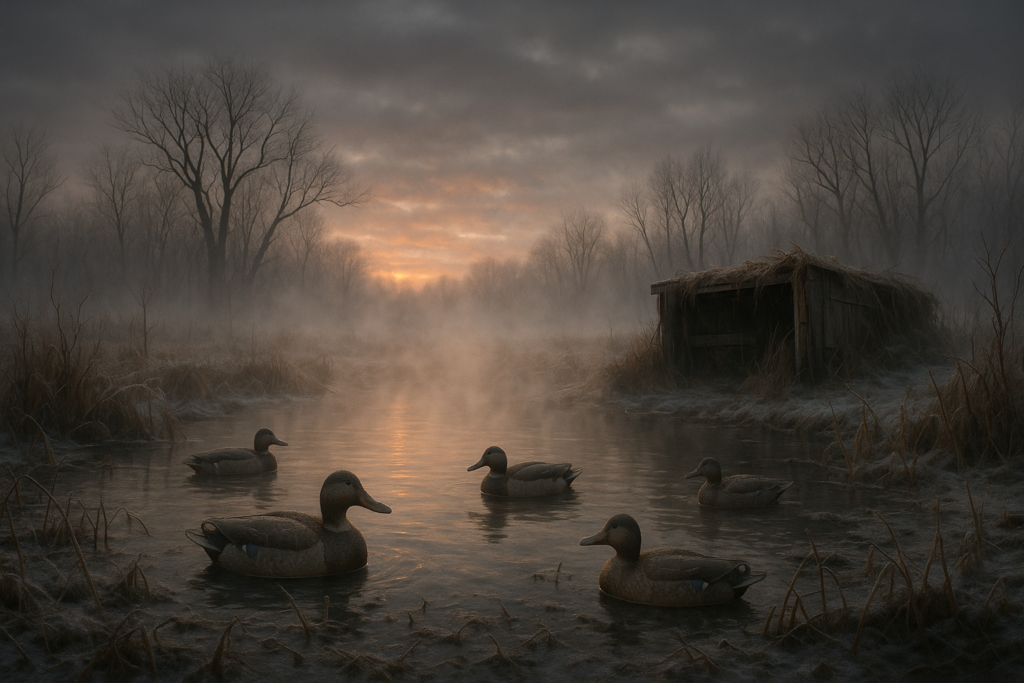
The episode centers on a spot the Flying V crew calls “The Redneck” — a raw pocket of hot water that, when temperatures crater and ice locks up everything else in the county, becomes the only open water for miles. Birds stack into it the way ducks do when they have no other choice, and over time what started as a scrappy little honey hole has grown into one of the crew’s most anticipated cold-weather hunts. It’s exactly the kind of place that doesn’t look like much on a map but earns a permanent spot in a hunter’s mental rolodex.
This particular trip to The Redneck is different, though. Matt brings his wife Camille and their son Deke — four years old, which is barely old enough to sit still for a cartoon, let alone a duck blind. And yet.
What a Four-Year-Old Sees That We’ve Forgotten
Watching Deke experience the hunt is a little disorienting if you’ve been doing this long enough that it’s become routine. The cold doesn’t bother him the way it bothers adults who’ve learned to dread it. The waiting isn’t tedious — it’s electric. When birds appear over the tree line, his reaction is completely unfiltered. There’s no practiced calm, no effort to look cool. Just a kid absolutely losing his mind over ducks.
That’s the thing about bringing young kids into the field that experienced hunters sometimes underestimate: they recalibrate your own experience. You stop running on autopilot. You start noticing the sounds again, the way the steam rises off the hot water, the specific moment a drake commits to the decoys. Deke notices all of it because everything is new. And if you’re paying attention, you notice it again too.
Camille’s presence adds another layer. Hunting families know this dynamic well — the spouse who maybe didn’t grow up hunting but shows up anyway, cold and game, because it matters to someone they love. There’s something genuinely moving about that. The Flying V crew doesn’t oversell it or turn it into a Hallmark moment. They just let it be what it is.
The Redneck: Why Ugly Water Holds the Best Birds
The backstory of The Redneck is worth paying attention to, because it’s a lesson a lot of waterfowlers learn the hard way. The most productive duck holes are rarely the picturesque ones. They’re thermal springs, drainage ditches, cattle ponds with a slow seep — places that stay open when everything else is frozen solid. When that happens, you don’t need to be a great caller or have a perfect spread. The birds come because they have to.
Cold-weather hunting on hot-water holes is its own discipline. The birds that pile into those spots are often pressured, educated, and call-shy by late season. But they’re also desperate for open water, which means they’ll commit in ways they wouldn’t earlier in the year. It creates a particular kind of hunting — tense, fast, and often over quickly. Not a lot of margin for error, but not a lot of waiting either, which, as it turns out, is ideal when you’ve got a four-year-old in the blind.
The Flying V Waterfowl series has built a following by documenting hunts with this kind of texture — real places, real conditions, real people who clearly love what they’re doing. It sits comfortably within the broader MeatEater universe, which has always prioritized the experience and the meaning of hunting over pure kill-shot content. This episode is maybe the clearest expression of that philosophy the series has produced.
At one point, after birds are down and the retrieves are done, Deke is just standing there in his waders looking out at the water. He’s not asking for his phone or complaining about being cold. He’s just present in a way that most adults spend years trying to get back to. Matt watching his son in that moment — you don’t need narration to understand what’s happening there.
If you’ve ever tried to explain to someone who doesn’t hunt why you do it, this episode is a better answer than anything you could put into words. It’s not about the ducks, exactly. It’s about the cold morning and the dog and the person next to you and the way time slows down when something wild happens in front of you. Deke gets all of that on his first try. Some people hunt for decades and never quite get there.
The episode was presented by Scheels Outdoors, and it’s the kind of content that makes you want to call your dad, or your kid, or whoever it was that first took you out before you knew enough to be nervous about it.
Frequently Asked Questions
What age can kids go duck hunting?
In most states, children can accompany licensed hunters in the field at any age, though they must have a hunting license to participate once they reach a certain age (varies by state). Many families start bringing kids as young as 3-5 just to observe and absorb the experience.
What is a hot water hole for duck hunting?
A hot water hole is a natural or man-made source of warm water — like a thermal spring or industrial discharge — that stays unfrozen during cold weather. In late season, these spots concentrate ducks because they’re often the only open water available in the area.
How do you keep a young child warm on a duck hunt?
Layering is key — start with a moisture-wicking base layer, add insulating mid-layers, and finish with a waterproof outer shell. Insulated waders, hand warmers, and keeping kids moving or engaged helps significantly. Short hunts are also more practical with very young children.
What is Flying V Waterfowl on MeatEater?
Flying V Waterfowl is a waterfowl hunting series produced under the MeatEater brand. It follows a crew of dedicated duck and goose hunters through various hunts, focusing on real locations, cold-weather conditions, and the culture surrounding waterfowl hunting.
Why do ducks stack up in cold weather?
As temperatures drop and water freezes, ducks are forced to concentrate on whatever open water remains. This makes late-season cold snaps some of the best hunting opportunities of the year, as birds have fewer options and will commit to available habitat more readily.