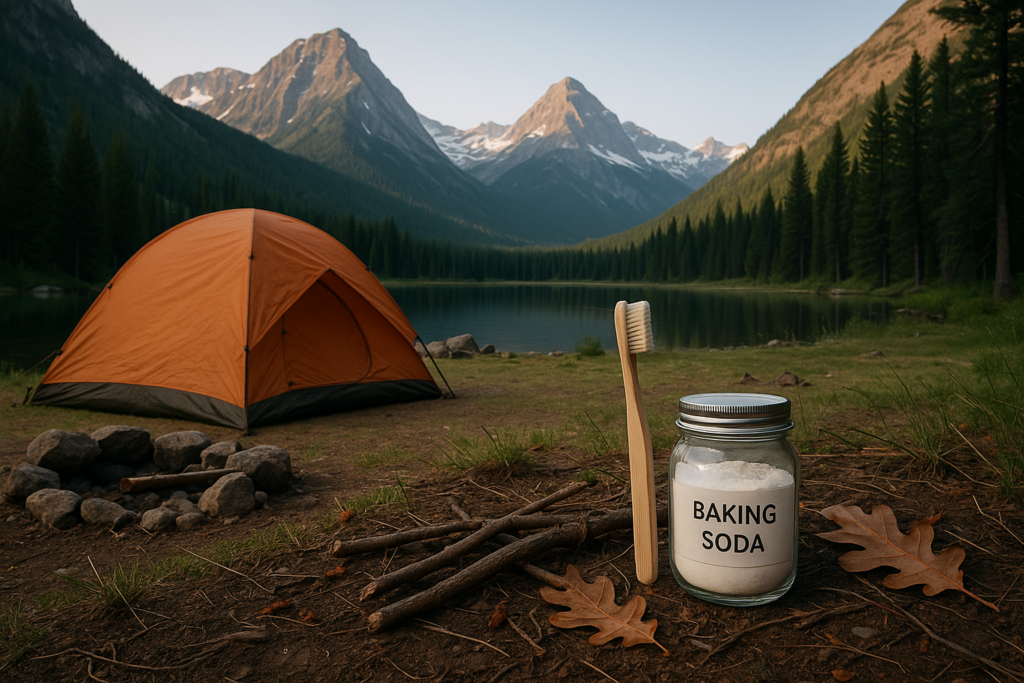
Picture this: you’re deep in the Montana wilderness, surrounded by stunning vistas and the call of wild creatures. You’re committed to preserving this pristine environment, adhering to Leave No Trace (LNT) principles with every step and action. But when it comes to brushing your teeth, you find yourself in a dilemma: traditional toothpaste can leave behind chemicals that may harm delicate ecosystems, yet oral hygiene is non-negotiable—especially on long treks.
Key Takeaways
- Brushing (the mechanical action) does most of the work—on many trips, water alone can be enough.
- Baking soda is a simple, low-impact option if you want gentle abrasion without conventional toothpaste.
- Chewing sticks can work when done carefully with safe, non-toxic local plants.
- If you use toothpaste, reduce impact by dispersing spit widely, diluting it, or packing it out.
- Children’s or “safe to swallow” toothpaste may be lower impact than harsher formulas.
So, how can you clean your teeth responsibly in the backcountry without compromising the environment? Fortunately, there are several practical solutions that align with LNT principles and keep your teeth healthy.
Embrace the Power of Water (and Brushing)
First off, let’s bust a myth: you don’t always need toothpaste to maintain your dental hygiene. The mechanical action of brushing is the primary factor in removing plaque and food particles. On short trips—or even multi-week adventures—brushing with water alone can be sufficient. It also saves weight in your pack and eliminates the risk of chemical residues impacting the wild.
If you prefer a bit of abrasion (or you’re in doubt about skipping toothpaste entirely), consider using a small amount of baking soda. This natural substance is an excellent, eco-friendly alternative that provides effective cleaning without harming the environment. It dissolves rapidly, especially in rain, breaking down into harmless components.
Consider Natural Tooth-Cleaning Methods
For those looking for more traditional and natural methods, consider the ancient practice of using a chewing stick. In many cultures, twigs from certain trees like neem are used to clean teeth. These twigs offer alkaline and astringent properties that help maintain oral health. To use one, simply chew one end until it frays into bristles, then brush away.
While neem trees aren’t native to Montana, the idea can be replicated with local, non-toxic plants. The key is choosing safe, non-toxic material and using it carefully.
Another natural approach is to use wood ash or lemon juice to enhance brushing. These materials have been used historically for their mild abrasive properties. Apply a small amount to your toothbrush or rub it directly on your teeth.
Minimize Impact When Using Toothpaste
If you can’t part with your toothpaste, there are ways to reduce its environmental impact.
Try the “broadcast spray” technique
One effective method is the “broadcast spray” technique—spit out the toothpaste in a fine mist over a wide area. This prevents creating concentrated blobs that could attract wildlife or damage vegetation.
Dilute your spit
Alternatively, you can dilute your toothpaste spit with water or urine, especially in sensitive areas where animals might be tempted to investigate.
Pack it out when needed
If these options aren’t feasible, consider packing it out. Just like you would with other trace-forming activities, coordinate tooth brushing with packing out waste. It’s a commitment, but it ensures no trace is left behind.
To further reduce impact, consider using toothpaste formulated for children or those designed to be swallowed. These tend to have fewer harmful chemicals and are often safer for the environment.
Ultimately, maintaining oral hygiene in the backcountry doesn’t have to come at the expense of the environment. With a little creativity and commitment to Leave No Trace principles, you can enjoy the wilderness without leaving a harmful impact.
Frequently Asked Questions
What is the best way to brush teeth in the backcountry?
Use water and a toothbrush for effective cleaning. If you want a little extra abrasion, use a small amount of baking soda. Chewing sticks can also work when adapted safely with non-toxic local plants.
Is brushing with water alone actually enough?
In many cases, yes. The mechanical action of brushing is the primary factor in removing plaque and food particles, and water-only brushing can be sufficient on short trips or even multi-week adventures.
Can I use baking soda as a toothpaste alternative?
Yes. Baking soda is a safe, effective, and eco-friendly alternative for brushing teeth in the backcountry, and it dissolves rapidly.
How do chewing sticks work for cleaning teeth?
You chew one end of a twig until it frays into bristles, then brush with it. Some traditional examples include neem, though it isn’t native to Montana, so the concept would need to be adapted with local, non-toxic plants.
Are wood ash or lemon juice viable options for brushing?
They’ve been used historically for mild abrasive effects. Use a small amount on your toothbrush or rub it directly on your teeth.
How can I dispose of toothpaste waste responsibly in the wilderness?
Use the broadcast spray method, dilute it, or pack it out to minimize environmental impact.
What is the “broadcast spray” method?
Instead of spitting toothpaste in one spot, you spit it out in a fine mist over a wide area to avoid creating a concentrated blob that could attract wildlife or impact vegetation.
If I bring toothpaste, what type is lower impact?
Consider toothpaste formulated for children or toothpaste designed to be swallowed, which tends to contain fewer harmful chemicals and may be safer for the environment.
