By the middle of June most cows are out on green grass, calves are growing, and the bulls are working. That’s exactly when a lot of producers ease off on mineral, figuring lush forage covers everything. It doesn’t. Summer grass is heavy on energy and protein but short on the trace minerals that keep cows cycling, calves gaining, and immune systems sharp through fly and pinkeye season. The cheapest thing you can do for the herd this month is keep a good loose mineral in front of them where they’ll actually use it.
The catch is consumption. A mineral program only works if cows eat close to the target the tag calls for, and on green grass they often don’t. They’re full, they’re satisfied, and that tub you set out in May might sit untouched for two weeks. Then everybody points at the mineral and says it’s no good, when the real problem is that the cows never put it in their mouths.
Why summer grass leaves holes
Montana range carries plenty of forage in June, but a lot of our ground runs low on a handful of trace minerals no matter how green the grass looks. Selenium is the big one across much of the state — large stretches of Montana sit on selenium-deficient soils, and that shows up in weak calves and poor breed-back if you’re not supplementing. Copper and zinc tend to run short too, and high-sulfur or high-iron stock water can tie up copper so the cow can’t use what little she gets.
You won’t see these shortfalls the way you see a downer cow. They show up quietly: cows that take an extra cycle to settle, calves that don’t gain like they should, hair coats that look rough in July, herds that seem to catch every case of foot rot and pinkeye going around. By the time the symptoms are obvious, the breeding season that mattered is already half over.
Getting them to eat it
Salt is the lever. Most loose minerals are formulated to be eaten alongside a cow’s natural craving for salt, which is why feeding plain white salt on the side wrecks consumption — the cows fill their salt need at the block and walk away from the mineral. Pull the straight salt during the months you want them on mineral. If they’re eating way over target, you can add a little salt back into the mineral to slow them down. If they won’t touch it, a more palatable product or a different location usually fixes it faster than anything.
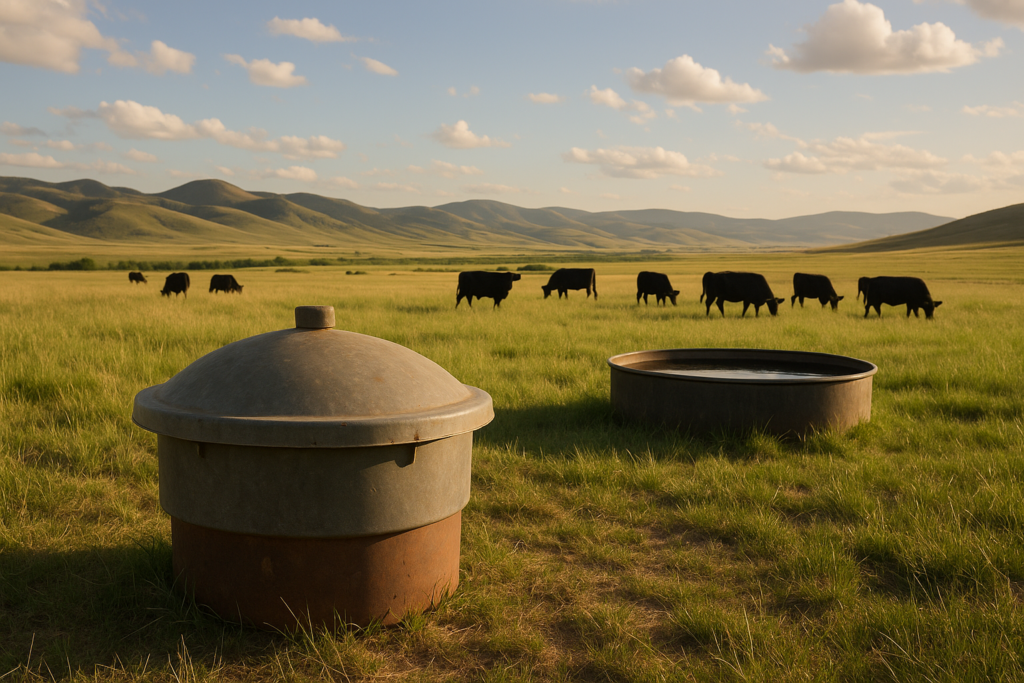
Placement does most of the work. Cows graze around water and loaf in the shade, so that’s where the mineral belongs — near the tank, near the loafing spots, near the gates they walk through. Out on a big summer pasture, set feeders in more than one spot so the cattle on the far end aren’t hiking a mile and a half for a lick. Move the feeder if a corner of the pasture isn’t getting grazed; cattle will travel to mineral, and you can use that to pull them off a beat-up creek bottom onto higher ground.
Keep it dry and keep it covered. A weatherproof feeder that sheds rain pays for itself, because mineral that sets up into a brick or washes into a crust gets refused. Check the feeders when you’re out checking water or bulls anyway, and note roughly how fast it’s disappearing. That number tells you more than the label does.
Match the mineral to the season
You don’t need the same bag year-round. Through breeding season, a mineral with good levels of trace minerals — and the right form, since chelated or organic sources are absorbed better than cheap oxides — earns its keep on reproduction. Magnesium matters most in spring on fast-growing cool-season grass when grass tetany is a risk; by deep summer that pressure backs off. If your water tests high in sulfates or iron, talk to a nutritionist or your vet about bumping copper, because those waters pull it right back out.
An injectable trace mineral going into the cows at turnout or branding can cover a gap, but it’s a supplement to a free-choice program, not a replacement. The cow needs a steady supply, and the only way she gets that on summer range is a feeder she visits on her own.
Run the rough math: a sack of mineral spread across a cow herd for a month costs a fraction of one open cow or one light calf in the fall. Few things you buy in June pay back that well, and almost none of them are this easy. Just make sure the cows are eating it — set the feeders where they live, pull the loose salt, and keep an eye on how fast it goes down.