The grass is good, the calves are growing, and then the first real heat wave rolls across the Hi-Line or up the Yellowstone valley and the whole picture changes in an afternoon. Cattle that handled May fine start bunching, breathing hard, and crowding the one shaded corner of the pasture. June heat is sneaky because nobody’s braced for it yet. The cows haven’t fully shed their winter hair, the dirt tanks are still cold, and you’re more worried about flies and bulls than about a thermometer.
Heat doesn’t kill cattle the way bloat or larkspur does, where you find one dead before breakfast. It works slower. It pulls gain off calves, knocks bulls back on fertility, and stacks a cow’s risk right when she’s trying to breed. By the time you see open-mouth breathing, the animal has already been fighting heat load for hours.
What heat load actually looks like
Cattle don’t sweat much, so they dump heat by breathing. Watch the respiration. A cow standing in the shade with her flanks pumping fast and shallow is working. When she drops her head, lets her tongue hang, and breathes with her mouth open, she’s in trouble and needs to be left completely alone.
A few things make it worse than the air temperature suggests. High humidity after a thunderstorm keeps cattle from cooling off overnight, and the night recovery matters more than the daytime peak. If it doesn’t drop into the 60s after dark, animals start the next day already behind. Still air with no breeze, dark-hided cattle, heavy fleshed feeders, and any animal that’s already fighting pneumonia or foot rot will all show heat before the rest of the bunch.
Cattle also lag the weather. The hottest part of the day for the air is mid-afternoon, but the hottest part for the cow is a couple hours later, because she’s been loading heat all day and can’t shed it fast. That’s why a herd can look fine at noon and be piled up at the gate by five.
Water is the whole game
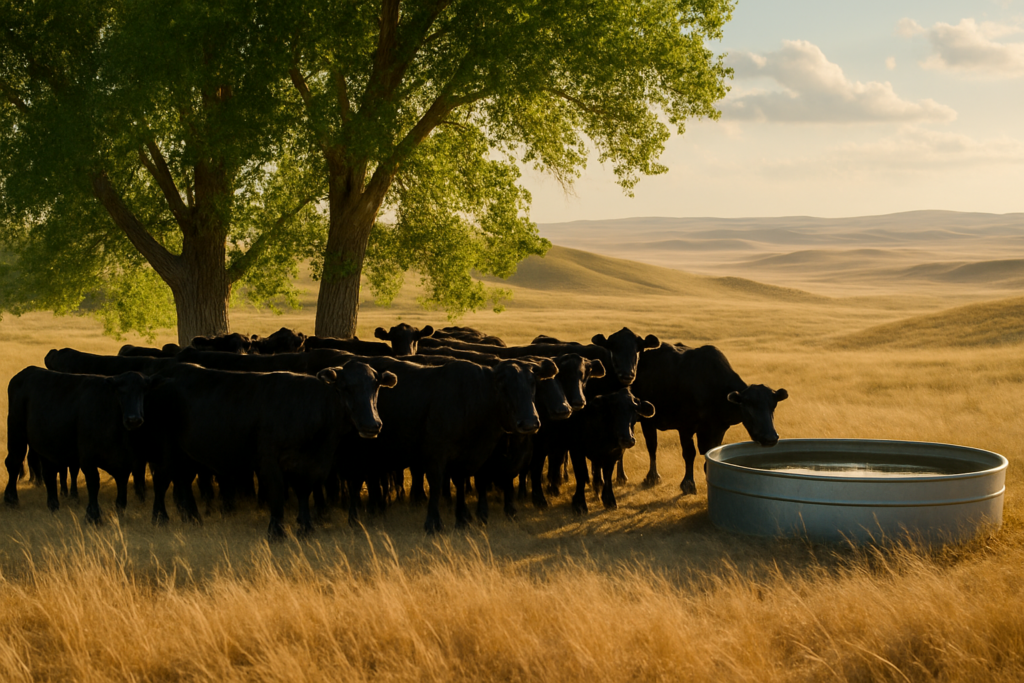
A cow’s water need can roughly double from a cool day to a hot one, and a lactating cow drinks more than a dry one. The trouble usually isn’t the total volume in the tank — it’s flow and access. If forty pairs are trying to drink from one float valve that fills slow, the boss cows water and the timid ones and the calves wait. On a big summer pasture where cattle have to walk to one tank, the far side of the herd may not drink enough.
Check that your tanks recover fast enough to keep up with peak demand, not average demand. Walk the floats and clean the moss out of the line screens. If you’re running solar wells out on the range, make sure the storage tank carries enough buffer to cover a cloudy afternoon when the pump backs off. Cold, clean water that’s actually reachable does more for heat-stressed cattle than anything else you can do.
Shade helps when you’ve got it — a coulee, a windbreak belt, a stand of cottonwoods along the creek. But shade pulls cattle off the creek bottom and concentrates manure and bugs, so it’s a trade. If your pasture has no natural shade, water and air movement carry the load.
Don’t make a hot day worse
The biggest heat wrecks on ranches are man-made. You gather pairs at ten in the morning to brand or work the late calves, hold them in a dusty corral with no water through the heat of the day, and run them through a chute. That’s piling stress on top of stress.
If a hot stretch is coming, get your working done at first light and be turning out by mid-morning. Don’t gather in the afternoon. Give cattle a chance to cool overnight before you ask anything of them, not after. Move them slow and let them stop and blow. A bunch you pushed hard in the heat won’t settle, won’t mother up, and the calves you were trying to help will be the ones that break with pneumonia next week.
Heat is one of those things you handle by paying attention to the forecast and the cattle, not by reacting after they’re down. Watch the respiration, keep the water cold and flowing, and let a hot afternoon be a day you stay out of their way.